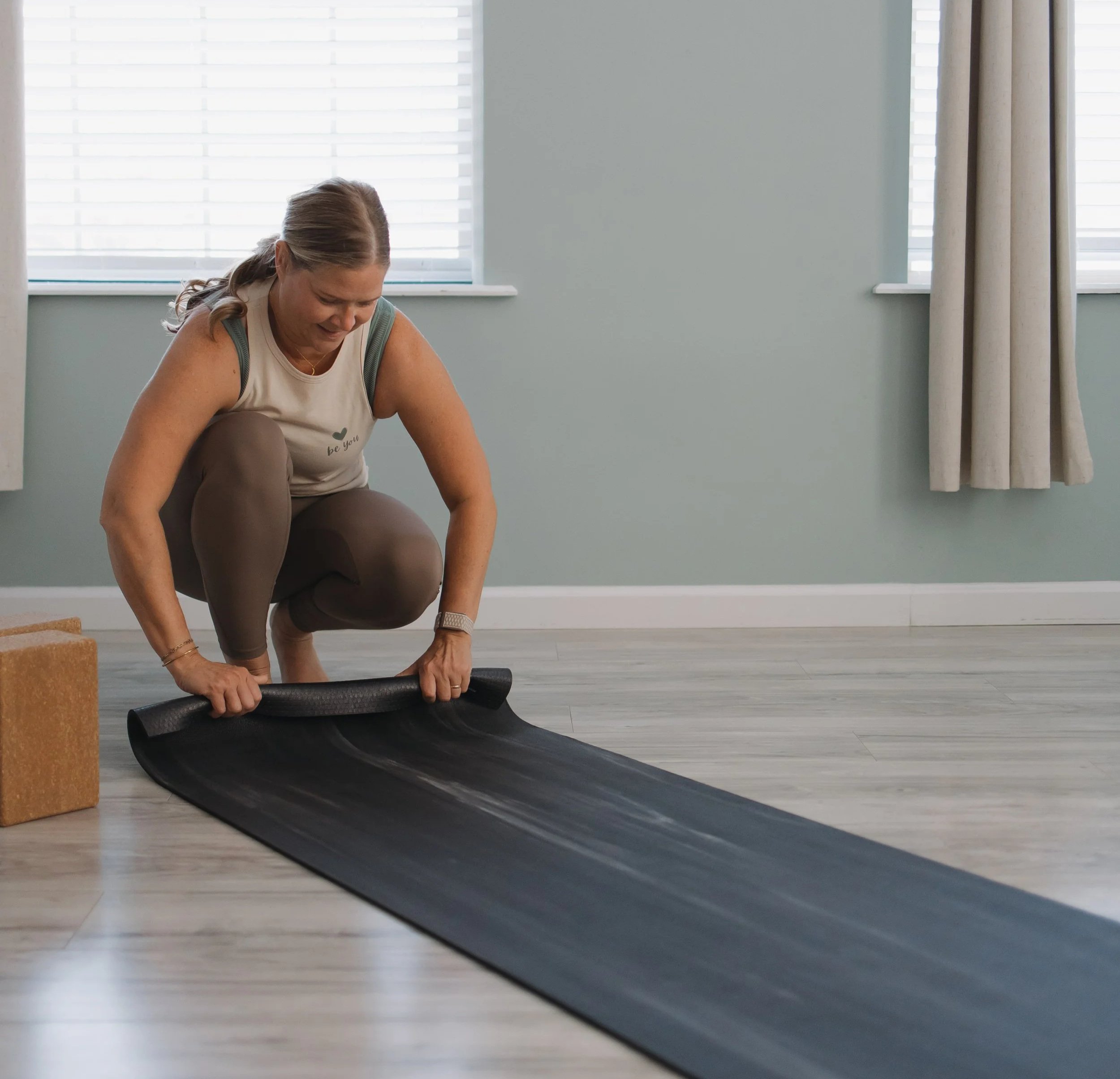
AUGUST: FLOWING
“Be Water, My Friend.” Bruce Lee
Look at how far you have come. In January, you asked who you are becoming and planted the seeds of intention. In February, you learned you don't grow alone, and leaned into connection and sangha. In March, you found clarity, learning to see and trust what is true. In April, you put down roots and built a foundation strong enough to hold everything that came after. In May, you learned to nourish yourself, to tell the difference between what feeds you and what only fills time. In June, you bloomed, letting yourself open at your own pace instead of forcing it. And in July, you learned to thrive, discovering that sustainable energy comes not from burning hot but from directing your vitality with intention. And, if you’re new here, you can always catch up or just start here!
Now, in August, it's time to ask a different question.
Not how do I build more. Not how do I try harder. But what happens when I stop gripping so tightly?
Everything you have built this year, your intentions, your connections, your foundation, your energy, needs somewhere to go. A river with strong banks but no movement is just a pond. This month is about letting what you've built actually move. About trusting the current instead of forcing the direction.
Welcome to Flowing. Welcome to the practice of loosening your grip.
-
Flowing is the practice of moving with what is instead of fighting against it. It's the art of full engagement without a white-knuckled grip on the outcome. Water doesn't force its way through a landscape. It moves around what it can't move through, and over time, it wears down what once seemed immovable. That is flow: soft, adaptable, and quietly unstoppable.
Think about the last time you tried to force something, a conversation, a pose, a plan for your life, and it simply would not go the way you wanted. Now think about a time you stopped pushing and let something unfold instead. Notice the difference in your body. One creates tension. The other creates ease, even when the outcome is uncertain.
Flowing this month means:
Adaptability, sensing what a moment actually calls for rather than what you planned for it. Emotional movement, letting feelings move through you instead of damming them up or being swept away by them. Creative openness, trusting inspiration and pleasure as legitimate parts of a well-lived life, not indulgences to earn. Release, practicing the difference between commitment and clinging. Trust, believing that you don't have to control every outcome for things to work out.
For many of us, especially those who have spent years being the reliable one, the responsible one, the one who holds it all together, flowing can feel unfamiliar, even unsafe. Letting go looks a lot like losing control if you've never practiced it. This month is where we practice it anyway, in small, manageable ways, until it starts to feel less like risk and more like relief.
-
The arc of this year builds in stages, and August marks a turn.
January (Becoming): Who am I becoming? We plant the seed of intention. February (Connecting): Who supports my becoming? We recognize we grow in relationship. March (Clarifying): What do I see as my path forward? We gain clarity about our direction. April (Rooting): How do I ground myself? We establish the foundation that will support all future growth. May (Nourishing): What feeds my growth? We learn to tend to ourselves with genuine care. June (Blooming): What does it look like when I blossom? We embrace our growth with joy. July (Thriving): How do I sustain this? We learn to direct our energy wisely instead of burning out. August (Flowing): What happens when I stop forcing it? We learn to move with what is instead of gripping what we wish it were.
Here is why this order matters. Every month before this one was about building something: intention, connection, clarity, foundation, nourishment, growth, energy. August is not about building. It's about releasing your grip on how all of that has to look. A tree with strong roots still has to bend in the wind, or it breaks. You've built something sturdy this year. Now you learn that sturdy and rigid are not the same thing.
July and August are two halves of the same teaching. In July, we practiced Abhyasa: consistent, dedicated effort, the engine that keeps you moving toward what matters. This month, we practice its partner, Vairagya: letting go of your attachment to exactly how and when the results show up. Effort without release becomes exhausting. Release without effort becomes drifting. Together, they are how anything actually moves forward.
-
Winter (Jan-Mar): Becoming, Connecting, Clarifying - We awaken and orient ourselves
Spring (Apr-Jun): Rooting, Nourishing, Flourishing - We establish and grow
Summer (Jul-Aug): Thriving, Flowing - We express and surrender
Fall (Sep-Nov): Grounding, Releasing, Harvesting - We transition and gather
Winter (Dec): Stilling - We rest and integrate
-
Sunset Sanctuary: A Floating Sound Bath Mini-Retreat with Annie and Betty
Saturday, August 15th | 6pm
There may not be a more literal expression of this month's theme than floating. You can't force floating. The moment you tense up, grip, or try to control it, you sink. Floating requires you to trust the water, soften your body, and let something other than your own effort hold you up.
As the sun sets, we'll move from mat to water for a sound bath designed to help your nervous system do exactly what this month asks of all of us: release the grip.
What to Expect:
A gentle guided settling into the water, no swimming ability or experience required. Sound healing with instruments chosen to support deep relaxation and nervous system release. The natural transition of sunset light as a backdrop for letting the day go.
Why a Floating Sound Bath for Flowing?
Every part of this event mirrors the month. Water asks you to trust instead of control. Sound moves through you rather than requiring effort from you. Sunset is the sky's own daily practice of letting go. Come experience what it feels like when your body finally believes it doesn't have to hold on so tight.
Can I trust the current?
I flow with
what is.
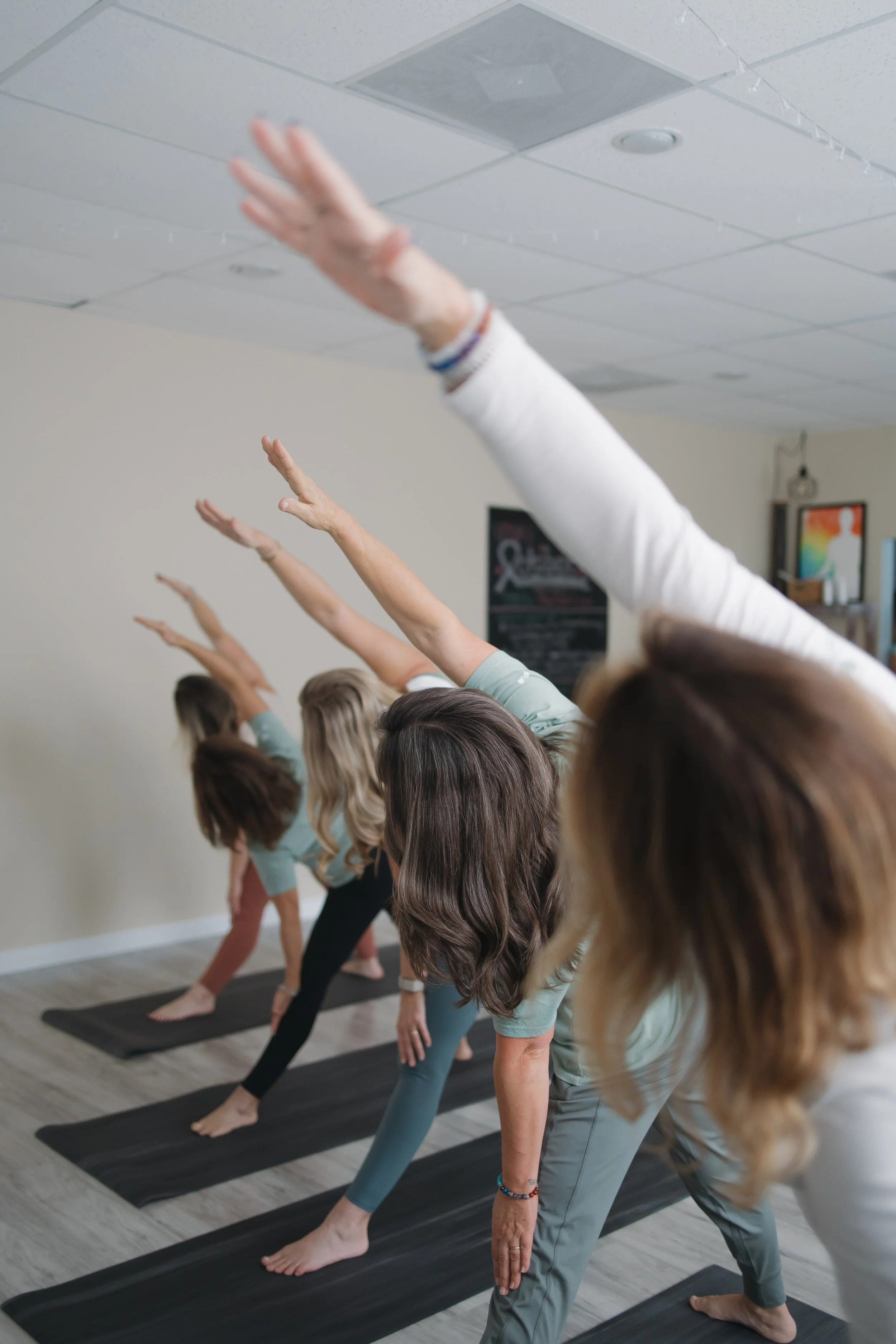
Say this when a plan changes, when a pose asks for adjustment, when a conversation doesn't go where you expected, or when you notice yourself gripping something that has already let go of you. It's not resignation. It's not giving up. It's the recognition that fighting the current rarely gets you downstream faster, it just tires you out.
This affirmation is Vairagya in a single breath. Not detachment from caring, but detachment from needing a specific outcome in order to feel okay. Carry it into class, into your inbox, into the moments this month when something doesn't go according to plan. You built the plan with intention. Now let the plan meet reality with grace.
Yoga Philosophy: The Foundation of Flowing
This month's practices draw on wisdom that speaks directly to movement, release, and the energy that runs beneath both. Every concept below points to the same idea: what flows freely stays strong, and what is gripped too tightly eventually breaks.
Building on Previous Months
In July, you practiced Brahmacharya, the right use of energy, and began exploring Abhyasa, consistent practice, the sustained effort that keeps a practice alive. That effort built something real this year: intentions, foundations, nourishment, growth, vitality.
If your Abhyasa slipped a little in July, you're in good company. Summer is genuinely hard on routine. Schedules scatter, travel interrupts the rhythm you built all spring, the heat alone can make showing up feel like more than you have to give. Consistent practice is difficult to sustain even in the best conditions, and summer rarely offers the best conditions. That's not a failure of discipline. It's just what summer does.
Which is exactly why August matters so much. As summer starts to loosen its grip and fall begins to take shape ahead of us, this is the month to really rebuild Abhyasa, not by forcing your way back with intensity, but by returning to your practice the way water returns to its bed after a storm: steadily, without drama, finding the familiar path again. Now in August, all of that needs somewhere to go. Effort without release becomes gripping. A practice held too tightly stops being a practice and starts being a performance. This month asks: can you recommit to showing up (Abhyasa), especially as routine becomes possible again, while also loosening your hold on exactly how it has to look (Vairagya)?
The shift to August: January: Who am I becoming? February: Who supports me? March: What do I see clearly? April: What ground am I standing on? May: What feeds all of this? June: What does it look like to bloom? July: How do I sustain this? August: What happens when I stop gripping it so tightly?
Svadhisthana Chakra
Svadhisthana, the sacral chakra, sits just below the navel, roughly at the pelvis, and it governs everything associated with flow: creativity, pleasure, emotion, sensuality, and adaptability. Its name translates roughly to "one's own place" or "the dwelling place of the self," which is fitting, because this is the energetic center where we learn to feel at home in our own changeability. Its element is water, its color is orange, and its sound is the bija mantra VAM.
Where Muladhara, the root chakra we met in April, is about stability and staying put, Svadhisthana is about movement and adaptation. A balanced sacral chakra feels like emotional flexibility rather than emotional flooding or emotional shutdown. It feels like creativity that moves easily, pleasure you can receive without guilt, and relationships that can bend without breaking. When this center is blocked, we tend to see it as either rigidity, an inability to feel or express emotion, or the opposite, being swept away by every feeling that arises with nothing to hold it steady.
This month, every time you notice yourself softening around a feeling instead of suppressing or drowning in it, every time you let yourself enjoy something without needing to justify it, every time you let your body move instead of holding it still, you are tending Svadhisthana.
On the mat, this shows up in hip openers, in fluid transitions between poses, in sequences that move like water instead of holding like stone.
Off the mat, it shows up whenever you let yourself feel a full emotion and trust that it will move through you rather than staying forever.
Jala: The Water Element
Water is the element of Svadhisthana, and it is arguably the most fitting element pairing of the entire year. Water has no fixed shape. Poured into a cup, it becomes the cup. Poured into a river, it becomes the river. Yet water is also one of the most powerful forces on earth, capable of carving canyons given enough time. Its power comes not from rigidity but from persistence and adaptability.
This is the paradox worth sitting with this month: softness and strength are not opposites. Lao Tzu wrote in the Tao Te Ching that nothing in the world is as soft and yielding as water, yet nothing can surpass it for wearing down what is hard and inflexible. Water teaches us that you don't have to be unbending to be strong. You just have to keep moving.
On the mat, water shows up as fluid transitions, as breath that moves without force, as the willingness to adjust a pose when your body asks for something different than what you planned.
Off the mat, water shows up as the willingness to let a plan shift, a conversation take an unexpected turn, or a season of life look different than you imagined, without treating any of it as failure.
Vairagya: Non-Attachment
Vairagya is the second half of one of the most quoted lines in all of yoga philosophy, Yoga Sutra 1.12: "Abhyasa vairagyabhyam tannirodhah," the fluctuations of the mind are stilled through practice and non-attachment. Last month we lived inside Abhyasa, the practice half of that sutra: consistent, devoted effort. This month, we turn to Vairagya, its necessary partner.
Vairagya is often mistranslated as indifference, and that mistranslation causes a lot of confusion. Vairagya is not about not caring. It's about caring fully while releasing your grip on exactly how or when the outcome arrives. You can want something deeply and still hold it with an open hand. In fact, Patanjali suggests you have to, because a closed fist can't receive anything new, and a mind wrapped around a single outcome can't stay present to what is actually happening.
Think of it like a river. The riverbanks (your effort, your practice, your commitment) give the water direction and boundaries. But the water itself moves freely within those banks, adapting to every rock and bend without resistance. Abhyasa is the riverbank. Vairagya is the water moving inside it. You need both. Structure without flow becomes stagnant. Flow without any structure just spreads out and goes nowhere in particular.
This month, notice where you're gripping. A timeline you're attached to. An outcome you've decided is the only acceptable one. A version of yourself you're forcing instead of allowing. Practicing Vairagya doesn't mean abandoning the goal. It means loosening your hand around it enough to let it breathe, and trusting that showing up (Abhyasa) is still worth doing even when you can't control exactly how it unfolds.
Pranamaya Kosha: The Energy Body
In yogic philosophy, we are made of five layered sheaths, called koshas, that wrap around each other like the layers of an onion, from the physical body outward (or inward) to the most subtle. Annamaya Kosha is the physical body, the food sheath. Just beyond it is Pranamaya Kosha, the energy body, the layer made of prana (that we learned about last month!), our life force, moving through subtle channels called nadis.
If Annamaya Kosha is the riverbed, Pranamaya Kosha is the water moving through it. This is the layer where flow actually happens, where energy either moves freely or gets stuck. When Pranamaya Kosha is flowing well, you feel energized without being wired, calm without being sluggish. When it's blocked, energy pools in some areas and runs dry in others: tension in the shoulders, fatigue that doesn't match your activity level, a sense of being simultaneously overstimulated and depleted.
This month, your breath is the most direct doorway into Pranamaya Kosha. Breath is prana made visible. When you consciously lengthen an inhale or soften an exhale, you are not just managing oxygen, you are directing the flow of your own life force. Every pranayama practice this month, every moment you pause to notice your breath instead of holding it, is a chance to unstick something and let energy move the way water moves: finding the path of least resistance, not the path of most force.

Reflection Prompts for Journaling
What Does Flowing Mean to Me?
When in my life have I felt most in flow, moving easily instead of forcing?
What does my body feel like when I'm gripping something versus when I've let it go?
Where in my life right now do things feel stuck rather than moving?
What would it look like to trust the current instead of fighting it?
Where Am I Gripping?
What outcome am I holding onto so tightly that I've stopped noticing what's actually happening?
Where does my need for control show up most in daily life?
What am I afraid would happen if I loosened my grip?
Is there a version of myself, or a plan, that I'm forcing instead of allowing?
Trusting the Current
What has Abhyasa, my consistent effort this year, already built that I can trust is there?
Where in my life could I do the work and then genuinely release the outcome?
What does it feel like in my body when I trust something instead of controlling it?
What is one small area of my life where I could practice letting go this month?
What Am I Carrying Into September?
What did I learn this month about the difference between effort and gripping?
Where did I surprise myself by flowing instead of forcing?
What do I want to release before the month ends?
What foundation do I want to stand on again as I move into September (Grounding)?
Home Practices to Deepen Into the Theme
As you deepen your yoga practice at the studio, these additional home practices are designed to complement what you're learning in class and deepen your connection to this month's theme of Flowing
Morning Practice: Flowing Into Your Day (5-10 minutes)
Start each day with movement instead of a rigid checklist. This practice is about letting your morning unfold rather than forcing it into a fixed shape.
Settle and sense (1-2 min). Before reaching for your phone, place a hand on your lower belly, just below the navel. Take a few breaths here, in Svadhisthana's territory. Notice, without judgment, how you feel this morning: tight, open, tired, restless.
Gentle spinal waves (2 min). Sitting or standing, let your spine move like water: gentle circles, soft side bends, a slow cat-cow if you're on the floor. No pose to hold, no destination. Just movement for the sake of movement.
Affirmation (1 min). Say this month's affirmation aloud or silently: "I flow with what is." Let it settle before you stand up and start your day.
Journal (3-4 min). Write on one of this month's reflection prompts, or simply finish the sentence: "Today, I am willing to let go of..."
Set your intention (1 min). Choose one small way you'll practice flow today. Something like, "When my plans change today, I'll notice my breath before I react."
Practice: The Loosening Practice
Time: 10 minutes | When: Once a week, or whenever you notice yourself gripping | What you need: Your journal
This practice brings Vairagya into direct contact with your actual life. It's not about giving up on things you care about. It's about noticing where care has quietly turned into control.
Sit with your journal and ask yourself: what am I holding onto right now that I could hold more loosely? It might be a timeline, an expectation of someone else, a story about how something has to go. Write it down. Then ask: what would it feel like in my body to loosen my grip on this, even slightly, while still caring about the outcome? Write one sentence describing that feeling. You don't have to act on it yet. Simply naming where you're gripping is often the first place the grip starts to soften.
Practice: Breath as River (Pranamaya Kosha Practice)
Time: 5-10 minutes | When: Midday, or whenever you feel stuck or scattered | What you need: A quiet place to sit
This practice works directly with your energy body. When you feel stuck, the instinct is often to push harder. This practice asks you to work with your breath instead, letting prana move the way water moves, around obstacles rather than through them by force.
Sit comfortably with a long spine. Breathe in slowly through the nose for a count of four, picturing the inhale as water filling a riverbed. Hold gently for a count of two. Exhale for a count of six, longer than the inhale, imagining the water finding its path and moving on. Repeat for eight to ten rounds. Notice, without trying to change it, where your breath moves easily and where it feels caught. That information alone is useful. You don't have to fix anything. You just have to notice where the current is running and where it's pooling.
Altar Practice: Refreshing Your Grow with the Flow Space for Flowing
Last month, your altar focused on sustainable energy and Brahmacharya. This month, we're refreshing it for water, movement, and release.
What Stays: Your candle. Sacred objects that feel meaningful to your practice. The Grow with the Flow graphic.
Remove or Store: July's energy-focused items, anything that felt like it represented drive, heat, or push.
Add for Flowing:
Your August intention, written on paper: this month's affirmation, "I flow with what is," or your own version of it. Water element items: a small bowl of water, sea glass, shells, or river stones. Something blue or aqua, honoring Svadhisthana's watery nature. Symbols of movement: a small fountain, an image of a river or the ocean, a feather, anything that moves easily in a breeze. Something orange, Svadhisthana's color: a candle, a cloth, a flower.
Monthly Altar Ritual (5-10 minutes): Clear July's items with gratitude for the energy you tended. Cleanse the surface, perhaps with water itself. Sit before your altar and place a hand on your lower belly. Add your August items mindfully. Light your candle, and place your other hand over the bowl of water. State your intention aloud: "This space holds my practice of flowing with what is, and releasing what I cannot control."
Using Your Altar Throughout August: Begin your morning practice here. When you notice yourself gripping something during the day, return to your altar, touch the water, and take a few slow breaths. Before the Sunset Sanctuary event, sit here and set an intention for what you're ready to release..
Integration: Bringing It to the Studio
Your home practices support what you're building on the mat. Here's how to carry this month's theme into class.
Before Class: Arrive with a few minutes to spare and let your body settle before the class begins. Take a few breaths low in your belly, waking up Svadhisthana. Set an intention about how you move through the practice, not just what poses you'll do.
During Class: In hip openers, notice where you're holding rather than releasing. In flowing sequences, let your breath lead the movement instead of rushing ahead of it. When a pose doesn't come together the way you wanted, practice softening rather than forcing. Notice the difference between effort that moves you forward and effort that's really just gripping.
After Class: Before you rush back into your day, notice how your body feels when it's been allowed to move freely for an hour. Carry a little of that looseness with you into whatever comes next.
Remember, your studio practice is where you physically learn what flow feels like. Strong effort held loosely, this is Svadhisthana and Vairagya working together. Your home practices simply help that feeling travel with you off the mat.

Recommended Reading & Listening
Want to go deeper? Here are some resources:
Books:
The Alchemist by Paulo Coelho - A beloved parable about a shepherd who leaves the security of his routine to follow a recurring dream, and learns along the way to read the omens and detours that turn out to be the real path. Santiago's journey lives inside this month's exact tension: real devotion to a dream (Abhyasa) held loosely enough to let the unplanned turns actually guide him (Vairagya). A gentle reminder that flowing with what comes isn't the same as giving up on where you're headed.
Big Magic: Creative Living Beyond Fear by Elizabeth Gilbert A warm, encouraging case for creativity as something to be received rather than forced. Gilbert writes about ideas as living things that move toward whoever is open enough to receive them, and about letting go of perfectionism and fear so that creative flow, and pleasure, can move more freely. A natural companion to Svadhisthana's territory.
Blue Mind: The Surprising Science of How Being Near, In, On, or Under Water Can Make You Happier, Healthier, More Connected, and Better at What You Do by Wallace J. Nichols A marine biologist's research-based exploration of why water has such a powerful calming and restorative effect on the human brain and nervous system. Genuinely fascinating and directly relevant to this month's element. A great read before your Sunset Sanctuary float.
The Untethered Soul: The Journey Beyond Yourself by Michael A. Singer A widely respected guide to loosening the grip of the mind's constant commentary and learning to let energy and experience move through you instead of getting stuck. Singer writes in plain, accessible language about what it actually feels like to practice non-attachment in daily life, not as detachment from the world, but as freedom within it.
Podcasts:
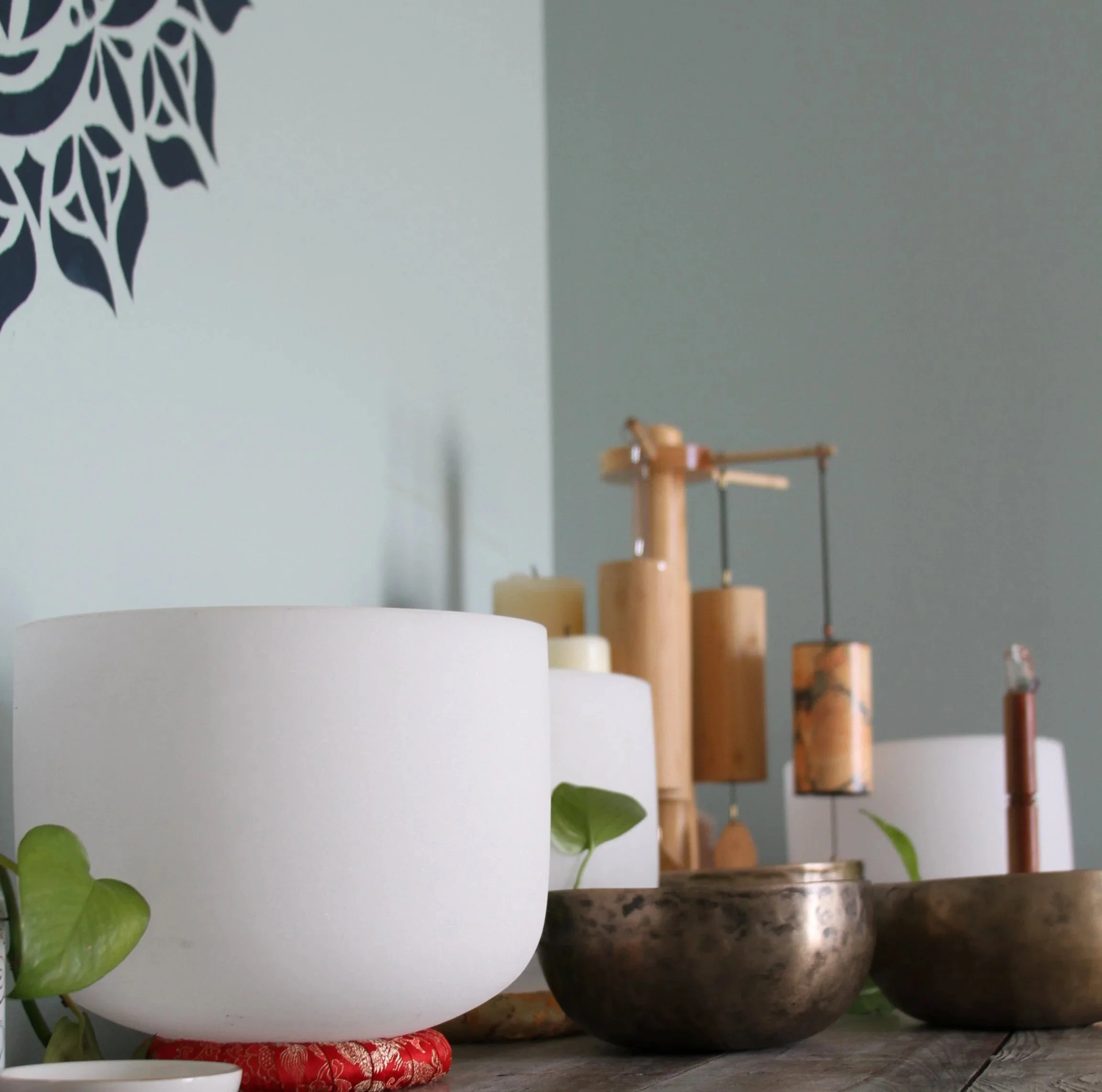
Let music support your practice of flowing this month. This playlist is curated to move like water: soft, adaptable, and steady, nothing rushed, nothing forced.
A Note from Annie
Hi Friends!
I have to tell you something that might surprise you coming from the person who owns the studio: my practice fell apart in July.
Between two out of town trips and a steady stream of relatives coming to visit for a bridal shower for my son’s upcoming wedding, my routine did not just wobble, it disappeared. No morning practice. No quiet time on my mat. Some weeks, barely any yoga at all, just whatever stretching I could sneak in wherever I was at. If you had asked me in the middle of it, I would have told you I was failing at the exact thing I ask all of you to commit to.
And underneath that, there was guilt. A quiet, nagging voice that said I am supposed to have this figured out. I am the one who teaches consistency. What does it say about me that I cannot even hold my own practice together for a month?
Somewhere in the middle of July, exhausted and far from my usual routine, I finally stopped fighting it. I let go of the version of the month I thought I was supposed to be having, and I let myself have the one I was actually having. I practiced when I could, however I could. Five minutes of breath before everyone woke up. A short walk instead of a full class. Most importantly, being present with the people I was visiting with instead of guilt about the mat I was missing. It was not the practice I had planned. It was the practice that was actually possible, and it turned out that was enough.
That is the whole lesson of this month, and I lived it before it’s even beginning. Abhyasa, the commitment, does not disappear just because it changes shape for a season. It was still there in July, just wearing a different outfit. And Vairagya, the letting go, was not giving up on my practice. It was releasing my grip on exactly what that practice had to look like in order to count.
Now August is here, and I am ready to rebuild, not out of guilt, but because a year of becoming, rooting, and nourishing myself does not undo itself in a few unpracticed weeks. I am simply picking back up what was already there.
If your summer scattered your routine too, you are not behind. You were flowing. That was the practice the whole time.
With ease and trust,
Annie
P.S. If you fell out of your routine this summer, consider this your permission slip to come back to it gently in August. No penance required, just your mat and a willingness to begin again.