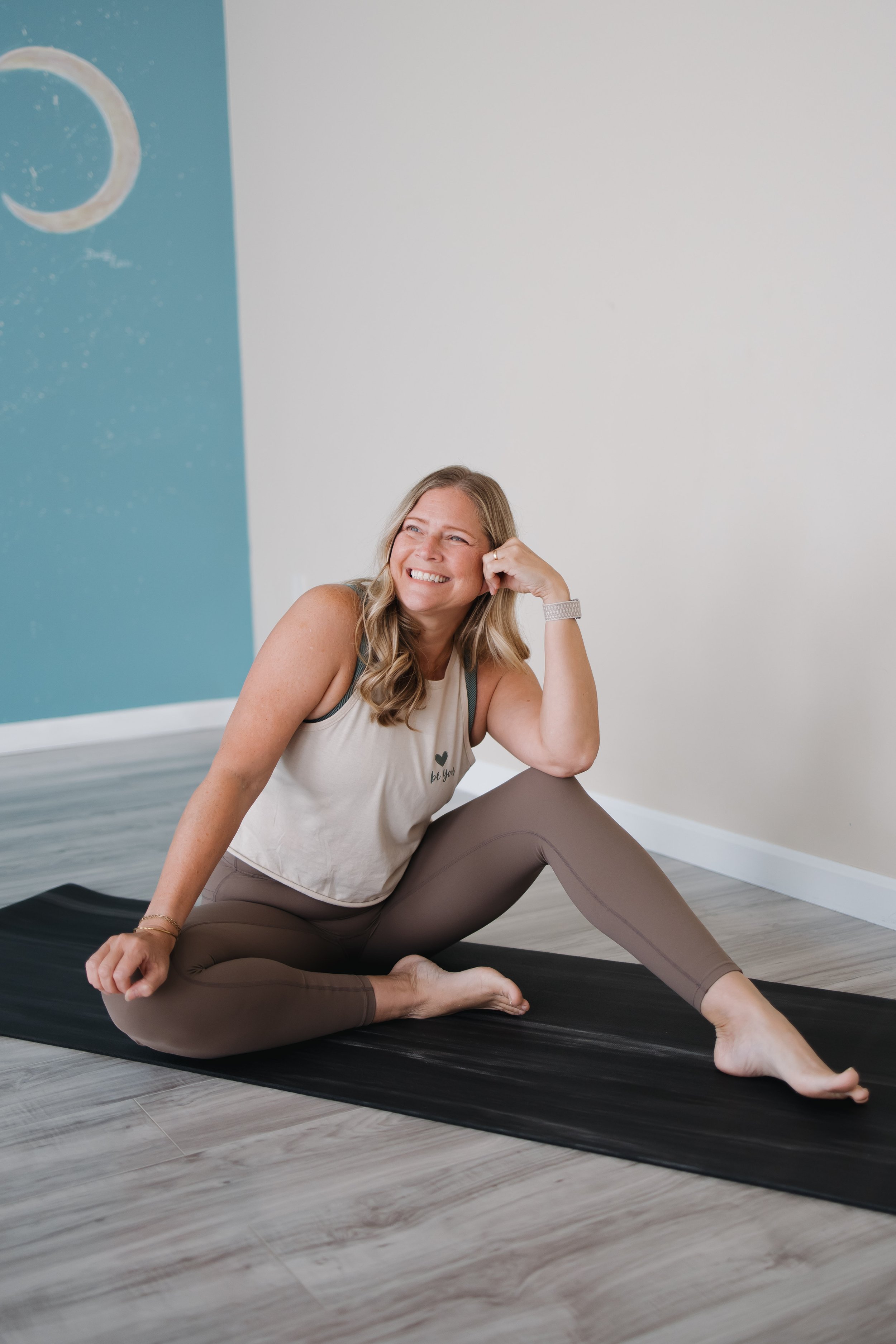
September: Grounding
Welcome to September, and welcome to month nine of our year long journey: Grow with the Flow.
Look at everything you have moved through this year. In January, you planted the seed of intention and asked who you are becoming. In February, you leaned into connection, learning you don't grow alone. In March, you found clarity, trusting what you could actually see to be true. In April, you rooted down and built your foundation. In May, you learned to nourish yourself, telling the difference between what feeds you and what only fills time. In June, you bloomed at your own pace instead of forcing it open. In July, you learned to thrive by directing your energy with intention instead of burning it recklessly. And in August, you practiced flowing, loosening your grip on outcomes and trusting the current to carry what you had already built.
Now, in September, it's time to ask a different question.
Not what do I need to add. Not what am I still missing. But what do I already have, right here, that is enough?
This is the month we come back down to earth, literally and otherwise. All year you have been building: intention, connection, clarity, roots, nourishment, growth, energy, movement. September isn't about adding one more thing to that list. It's about standing still long enough to notice that the ground beneath you is already solid, that what you've gathered is already sufficient, and that reaching for more isn't always the same as growing.
Welcome to Grounding. Welcome to the practice of trusting that you have enough.
-
Grounding is the practice of coming back to what is actually here instead of reaching for what isn't. It's the felt sense of your feet on the floor, your body in this room, this breath, this moment, and the quiet recognition that all of it is enough to stand on. Where April's Rooting was about building a foundation for the first time, September's Grounding is about returning to a foundation that already exists and trusting it.
Think about the difference between reaching for your phone the moment a feeling gets uncomfortable and instead staying seated with both feet on the floor until the feeling passes on its own. Both are ways of getting through a hard moment. Only one actually teaches you that you can hold your own weight.
Grounding this month means:
Sufficiency, recognizing that what you have, who you are, and where you stand right now is enough, without needing to prove or add to it. Presence in the body, coming back into the physical sensations of being here, rather than living entirely in plans, worries, or scrolling. Restraint, noticing the reflex to take more, want more, or hold more than a moment actually calls for. Trust in what's already built, resting on the intention, connection, roots, nourishment, and energy you have already cultivated this year instead of chasing something new. Stability without stiffness, staying grounded without becoming rigid or closed off to what's still moving around you.
For many of us, especially in a culture that measures worth by what we acquire, grounding in sufficiency can feel almost radical. We are trained to believe that more is always better, that rest has to be earned, that enough is a finish line that keeps moving. This month asks you to test that belief. Not by refusing everything new, but by pausing, before you reach, to ask whether you're reaching from lack or from genuine desire.
-
The arc of this year builds in stages, and September marks a homecoming. Don’t worry if you’re new here…you can always go back to previous months if you want!
January (Becoming): Who am I becoming? We plant the seed of intention. February (Connecting): Who supports my becoming? We recognize we grow in relationship. March (Clarifying): What do I see as my path forward? We gain clarity about our direction. April (Rooting): How do I ground myself? We establish the foundation that will support all future growth. May (Nourishing): What feeds my growth? We learn to tend to ourselves with genuine care. June (Blooming): What does it look like when I blossom? We embrace our growth with joy. July (Thriving): How do I sustain this? We learn to direct our energy wisely instead of burning out. August (Flowing): What happens when I stop forcing it? We learn to move with what is instead of gripping what we wish it were. September (Grounding): What do I already have that is enough? We come back down to earth and trust the ground we're already standing on.
Here is why this order matters. April gave you a foundation for the first time, raw and newly built. Everything since then, nourishment, blooming, thriving, flowing, has been what grew from that foundation. September is the moment you set both feet back on it and realize it's still there, sturdier now than it was in April, holding more than it did then. You're not starting over. You're coming home to something you already built.
August asked you to loosen your grip and trust the current. September asks a related but distinct question: once you've released control, what do you land on? The answer is Asteya's quiet promise: you land on enough. Not on scarcity, not on a hole you need to fill by reaching for something outside yourself, but on solid, sufficient ground. Flowing and Grounding are two halves of the same trust. One releases. The other receives what's already there.
-
Winter (Jan-Mar): Becoming, Connecting, Clarifying - We awaken and orient ourselves
Spring (Apr-Jun): Rooting, Nourishing, Flourishing - We establish and grow
Summer (Jul-Aug): Thriving, Flowing - We express and surrender
Fall (Sep-Nov): Grounding, Releasing, Harvesting - We transition and gather
Winter (Dec): Stilling - We rest and integrate
-
The Goddess Retreat: Fierce Grace: Awakening the Elements Within
Saturday, September 26th | 9am - 5pm
Robertsville, MO
Led by Annie Geile, Cindy Kostecki, and Betty Green
CLICK HERE FOR DETAILS
A full day, away from the studio and our busy lives, on a private wooded property forty five minutes out with hiking trails, a creek, a pool, and indoor space to gather. The Goddess Retreat moves through four sacred practices, each one guided by the energy of a Hindu goddess and rooted in one of the four elements: grounding with Parvati (Earth), flowing with Lakshmi (Water), power with Durga (Fire), and wisdom with Saraswati (Air).What to Expect:
Yoga sessions built around each goddess and element, mantra chanting, a sound bath, fun activities, and an optional guided hike through the property. Lunch, snacks, and pool access woven through the day, plus a swag bag to take home.
Yoga teachers in attendance can earn 6 CEUs.
How do I stay steady as seasons change?
I have enough. I am enough.
Say this when you notice yourself reaching for your phone out of restlessness rather than need. Say it when you compare your practice, your pace, or your life to someone else's and feel yourself coming up short. Say it with your feet flat on the floor, feeling their full contact with the ground, before you decide whether something actually requires more of you.
This affirmation is Asteya turned inward, which you’ll learn about below. Non-stealing doesn't only mean not taking what belongs to someone else. It means not stealing time, energy, or peace from yourself by living as though you're perpetually behind or lacking. Carry it into your practice, your inbox, and the quiet moments this month when the old story of not enough tries to speak up. You have built something real this year. Let yourself stand on it.
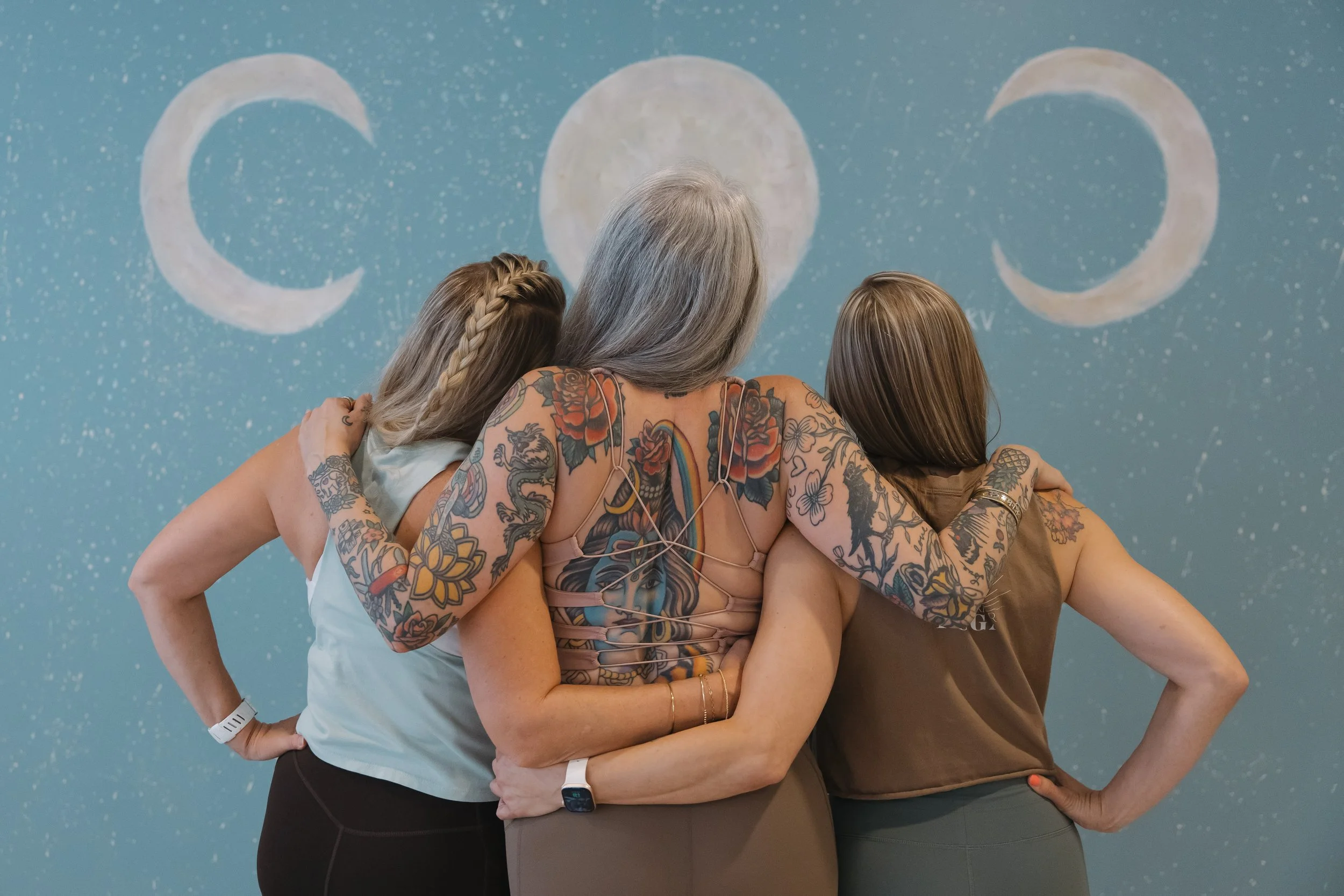
Yoga Philosophy: The Foundation of Grounding
This month's practices draw on wisdom that speaks directly to sufficiency, restraint, and the body as home. Every concept below points to the same idea: what you are looking for is very often already here.
Building on Previous Months
In August, you practiced Vairagya, loosening your grip on exactly how and when things had to unfold. That release asked something of you: trust. Trust that letting go wouldn't mean losing everything you'd built.
September is where that trust gets tested and, hopefully, confirmed. Once you stop gripping, you land somewhere. This month, you learn that where you land is solid. Not because nothing is still moving (plenty still is), but because the foundation underneath the movement, the intention from January, the connection from February, the roots from April, has been there all along, quietly holding you up.
If August's Pranamaya Kosha was the energy moving through the riverbed, this month we return to the riverbed itself. Annamaya Kosha, the physical body, is the densest and most literal of the five koshas, and this month it becomes our teacher. Before you can trust an abstract idea like sufficiency, it helps to feel it somewhere real: your feet on the floor, your weight held by the earth, your breath filling a body that has carried you through eight months of this practice already.
The shift to September: January: Who am I becoming? February: Who supports me? March: What do I see clearly? April: What ground am I standing on? May: What feeds all of this? June: What does it look like to bloom? July: How do I sustain this? August: What happens when I stop gripping it so tightly? September: What do I already have that is enough?
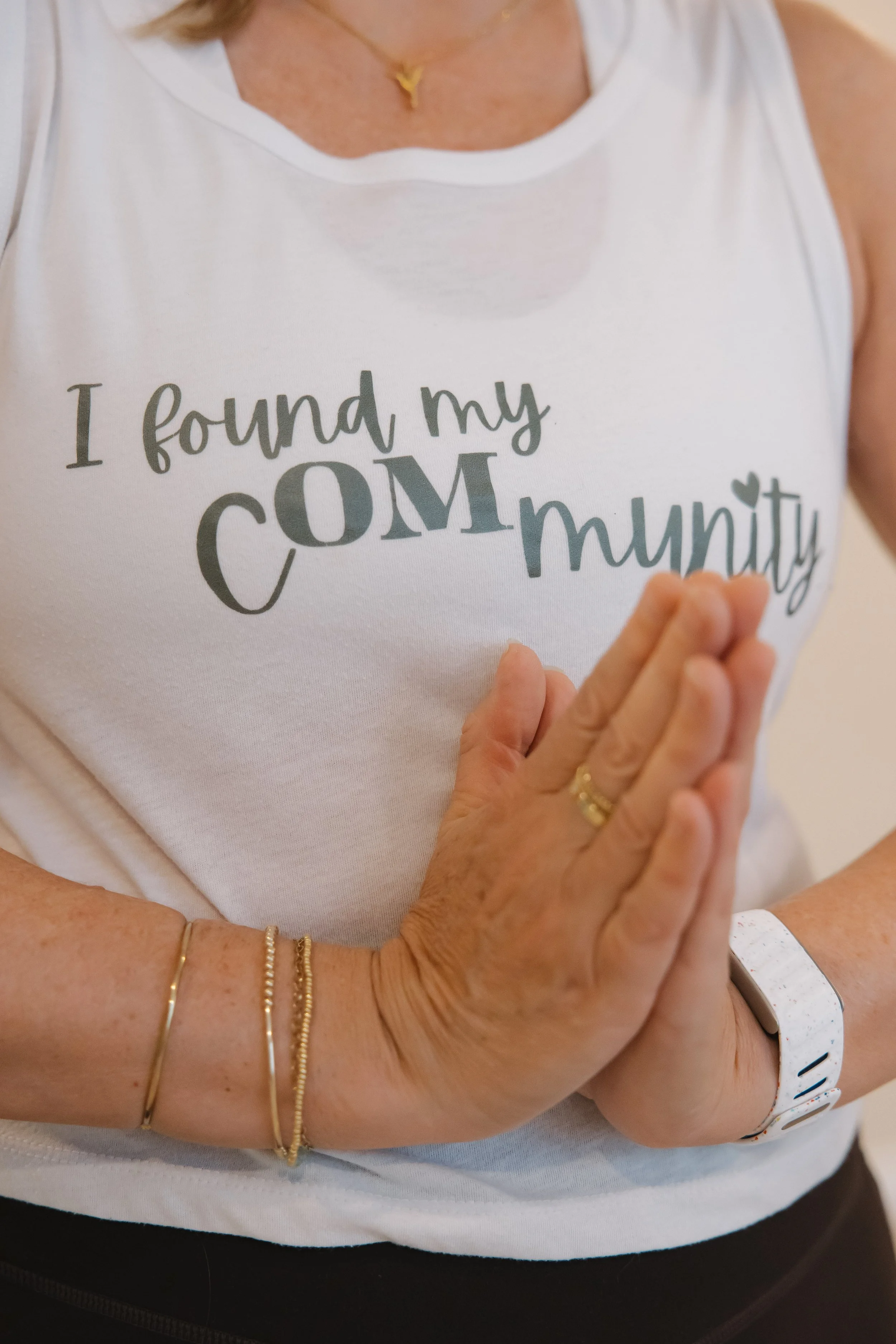
Asteya: Non-Stealing
Asteya is the third of the five Yamas, the ethical restraints Patanjali outlines at the very start of the eight limbed path. Literally translated, Asteya means non-stealing, and on its surface it sounds like the simplest yama to follow: most of us are not walking around taking things that visibly belong to someone else. But Asteya asks for something subtler and, honestly, harder. It asks us to examine every place we take more than we need, whether that's material things, credit for someone else's work, another person's time, or our own rest and peace.
At its root, Asteya is a practice of trust in sufficiency. We take more than we need, or hold on tighter than a moment calls for, when some part of us believes there won't be enough later. Practicing Asteya means noticing that belief and testing it against reality. Do you actually need to check your phone one more time, or say yes to one more obligation, or hold onto one more thing you don't use? Or is there, underneath the reaching, already enough?
This month, notice Asteya wherever restraint shows up naturally: taking only the space you need on your mat, listening fully instead of already composing your response, leaving something for someone else without keeping score. Small as these moments are, they are Asteya's actual practice ground.
Annamaya Kosha: The Physical Body
Last month, we spent time with Pranamaya Kosha, the energy body, the layer made of prana moving through us. This month, we come back to the layer just beneath it: Annamaya Kosha, the food sheath, the physical body itself. It is the most literal and tangible of the five koshas, the layer built from what we eat, made of bone and muscle and breath and skin, the one you can actually touch.
Annamaya Kosha is often treated as the least sophisticated layer, the one we move past quickly on our way to something more subtle. But this month asks you to slow down and sit with it instead. Your physical body is not just a vehicle for something more important happening elsewhere. It is, quite literally, the ground you stand on. Every other kosha, energy, mind, wisdom, joy, rests on top of this one.
Grounding into Annamaya Kosha means paying attention to the body as it actually is right now, not as a project to improve or a problem to fix. It means feeling your feet on the floor, your weight in the chair, your breath moving your ribs, and trusting that this body, exactly as it is today, is a sufficient and worthy home. On the mat, this shows up in standing poses, in postures that ask you to feel your foundation before you reach anywhere else. Off the mat, it shows up whenever you choose to actually inhabit your body instead of living entirely in your head.
Parvati: The Archetype Goddess of the Grounded Feminine
In the yoga mythology, Parvati's name comes from the Sanskrit word parvata, mountain, and she is often called the daughter of the Himalaya itself, born of stone and stillness. Where other forms of the Goddess appear as fire, motion, or fierce transformation, Parvati is Shakti settled into her most patient, rooted form. In the well known story of her courtship with Shiva, she did not chase him or force his attention. She practiced tapas, sustained, disciplined austerity, for years, simply becoming more herself, more steady, more whole, until he finally noticed her on his own. She won devotion not by reaching, but by standing still and trusting her own ground.
In archetypal psychology, the field that grew out of Carl Jung's work on the collective unconscious and was later popularized for goddess mythology by writers like Jean Shinoda Bolen, a figure like Parvati isn't only a deity to be worshipped. She's read as a pattern already living inside us: the part of the psyche capable of patient devotion, of staying rooted through difficulty instead of forcing an outcome, of trusting that steadiness itself is a form of power. Where a goddess like Durga meets a threat with a sword, Parvati's archetype meets it by not moving at all, by becoming so grounded that the threat eventually has to reckon with her stillness instead.
So what does actually working with a goddess like this look like day to day? It's less about devotion to a distant deity and more about borrowing her qualities as a practical tool. Naming a specific quality, Parvati's patience, her stillness, her trust in her own ground, gives you something concrete to reach for in an actual moment, instead of a vague instruction to just be calmer or trust more. In the middle of a hard conversation, a frustrating wait, or a day that wants to pull you into hurrying, you can simply ask what would Parvati do here. Not literally, but as a question that shifts you out of your own reactive pattern and into hers: steady, patient, rooted, unwilling to force what isn't ready yet. Some people work with a mantra or a mudra dedicated to her energy. Others just borrow the image itself, a mountain, unmoved by weather, still fully alive underneath its stillness. However you use it, the goddess stops being a figure to admire from a distance and becomes a working part of your own inner life, something you can call on the way you'd call on a trusted friend's example.
This is exactly the energy September asks you to practice. Not the dramatic kind of strength that pushes or performs, but the quieter kind that simply holds its ground, certain that what it's built is enough to stand on. If this idea of Parvati as an inner archetype speaks to you, you'll get to spend real time with her energy at the Goddess Retreat on September 26, where the day opens with a full practice devoted to Parvati and the Earth element before moving through Lakshmi, Durga, and Saraswati.
Bhu Mudra: The Mother Earth Gesture
Bhu Mudra, sometimes called the Mother Earth gesture, is a simple and direct grounding tools in yoga, and one you've likely practiced with us many times already. Bhu means earth. The gesture itself is just fingertips resting down, touching the floor or ground beneath you, a small physical handshake with the surface that holds you up every single day without asking for anything in return.
You've probably done a version of this with us before class or at the start of a grounding sequence. Here's the fuller shape of it. Sit comfortably with your spine long, either directly on the floor or in a chair with both feet flat on the ground. Turn your palms to face down, and bring the tip of your ring finger and the tip of your pinky finger in to touch your thumb, letting your index and middle fingers stay straight and relaxed. If you're seated on the floor, lower your hands so those two extended fingertips rest right on the earth. In a chair, let them rest lightly on your thighs instead. Close your eyes if that feels right, breathe slowly, and let your attention settle on the point of contact between your fingers and whatever is holding you up.
This month, let Bhu Mudra be your answer whenever the old story of not enough gets loud. Instead of arguing with the thought, simply bring the mudra back, even just resting your extended fingertips on your knee or the nearest surface for a few breaths if the full form isn't practical in the moment. You're not asking the earth for reassurance. You're just remembering it was already offering some.
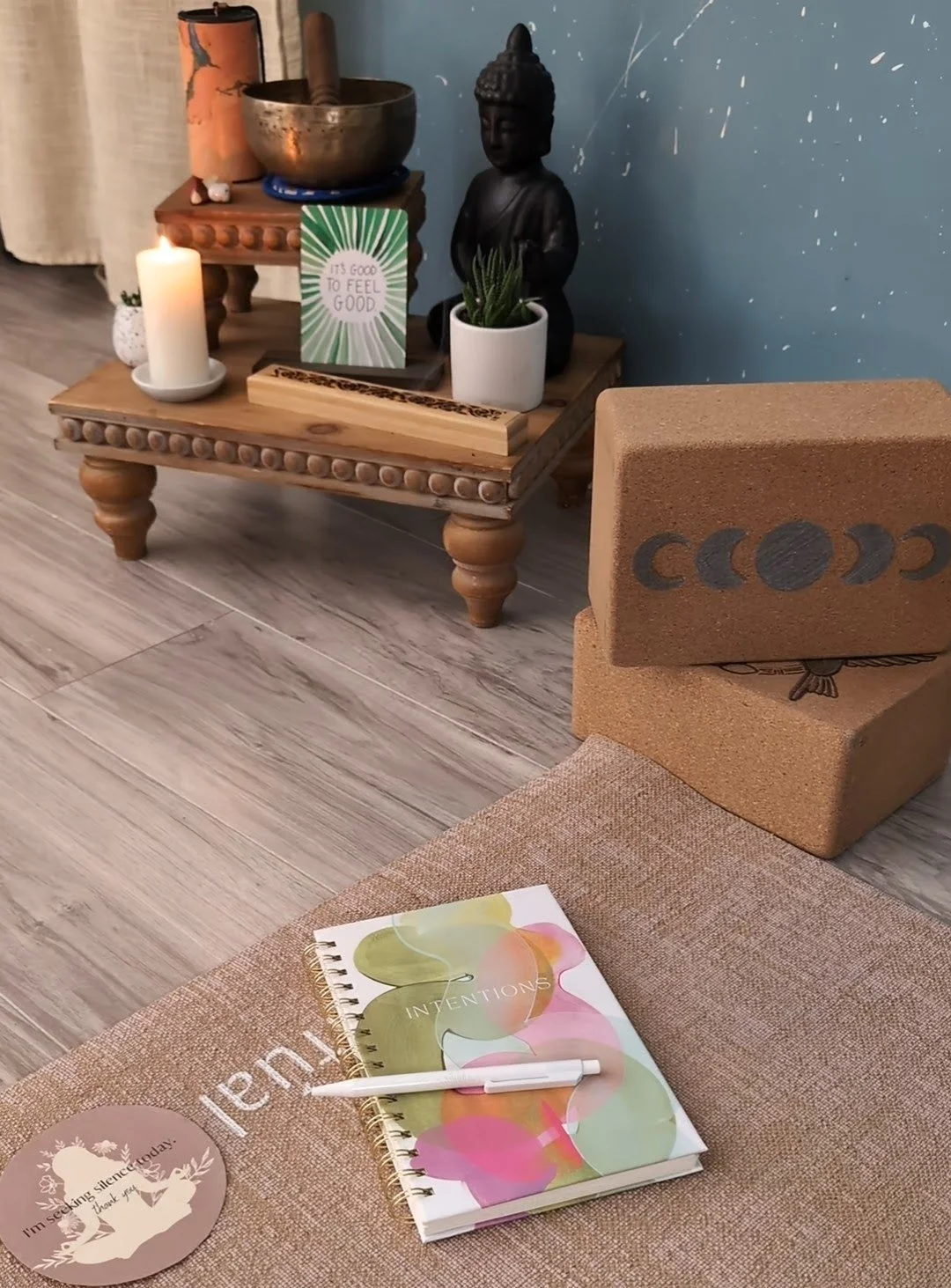
Reflection Prompts for Journaling
What Does Grounding Mean to Me?
When in my life have I felt most solidly held, most sure that I was standing on something real?
What does my body feel like when I'm grounded, versus when I'm scattered or reaching?
Where in my life right now do I already have enough, even if it doesn't always feel that way?
What would it look like to trust the ground I'm already standing on?
Where Am I Reaching From Lack?
What am I taking more of than I actually need, whether that's time, things, or reassurance?
Where does the belief "there won't be enough" show up most often in my life?
What would change if I trusted that I already have what this moment requires?
Is there something I'm holding onto out of fear rather than genuine want?
Trusting What's Already Built
What have I built this year, intention, connection, clarity, roots, nourishment, growth, energy, movement, that I can stand on right now?
Where in my life could I rest on what's already there instead of reaching for something new?
What does it feel like in my body when I trust that I have enough?
What is one small area of my life where I could practice sufficiency this week?
What Am I Carrying Into October?
What did I learn this month about the difference between need and reach?
Where did I surprise myself by finding enough where I expected to find lack?
What do I want to keep standing on as summer fully turns to fall?
What am I ready to release as I move into October (Releasing)?
New this month! Want a downloadable workbook for these prompts? Click Below!
Home Practices to Deepen Into the Theme
As you deepen your yoga practice at the studio, these additional home practices are designed to complement what you're learning in class and deepen your connection to this month's theme of Becoming.
Morning Practice: Grounding Into Your Day (5-10 minutes)
Start each day by feeling your foundation before you reach for anything else.
Feet first (1-2 min). Before reaching for your phone, sit up and place both feet flat on the floor. Press down gently through all four corners of each foot. Notice the floor holding you up without any effort on your part.
Body scan from the ground up (2 min). Starting at your feet, slowly bring your attention upward through your legs, hips, belly, chest, shoulders, and head. Notice what feels solid and what feels tense, without trying to change anything yet.
Affirmation (1 min). Say this month's affirmation aloud or silently: "I have enough. I am enough." Let it settle before you stand up and start your day.
Journal (3-4 min). Write on one of this month’s reflection prompts, or simply finish the sentence: "Today, I already have enough..."
Set your intention (1 min). Choose one small way you'll practice sufficiency today. Something like, "Before I check my phone out of restlessness, I'll take three breaths and ask what I actually need."
Altar Practice: Refreshing Your Grow with the Flow Space for Grounding
Last month, your altar focused on water, movement, and release. This month, we're refreshing it for sufficiency, the physical body, and rest.
Before you add anything new, try this: resist the urge to buy something for your altar this month. Look around your home first. What you need is very likely already here. That search is its own small practice of Asteya.
What Stays: Your candle. Sacred objects that feel meaningful to your practice. The Grow with the Flow graphic.
Remove or Store: August's water focused items, anything that felt like it represented movement without rest.
Add for Grounding:
Your September intention, written on paper: this month's affirmation, "I have enough. I am enough," or your own version of it. A full bowl, of rice, grain, stones, or anything you already own, as a symbol of sufficiency rather than scarcity. Something round or complete, honoring the feeling of wholeness rather than lack. A small object you can hold in your hand, something with real weight, to remind you what being grounded actually feels like. A photo or object representing your own body: something that reminds you it has carried you well this year.
Monthly Altar Ritual (5-10 minutes): Clear August's items with gratitude for the movement you practiced. Cleanse the surface. Sit before your altar with both feet flat on the floor. Add your September items mindfully, noticing that most of them were already in your home. Light your candle, and place a hand over the full bowl. State your intention aloud: "This space holds my practice of trusting that I have enough, exactly as I am, exactly where I stand."
Using Your Altar Throughout September: Begin your morning practice here. When you notice yourself reaching for more out of habit, return to your altar, touch the full bowl, and take a few slow breaths. Before the Goddess Retreat, sit here and name one thing you already have that you're grateful for.
Practice: Feet as Roots (Annamaya Kosha Practice)
Time: 5-10 minutes | When: Midday, or whenever you feel scattered or ungrounded | What you need: A quiet place to stand or sit
This practice works directly with your physical body. When you feel scattered, the instinct is often to think your way back to calm. This practice asks you to work with your body instead, letting the physical fact of the ground beneath you do the settling.
Stand or sit with your feet flat on the floor, hip width apart. Close your eyes if that feels comfortable. Slowly shift your weight forward and back, side to side, feeling the full shape of contact between your feet and the ground. Let the movement get smaller until you settle in the center. Take five slow breaths here, imagining roots extending down from the soles of your feet into the earth beneath the floor. With each exhale, let a little more of your weight release downward, trusting the ground to hold it. You don't have to fix anything or think your way anywhere. You just have to notice that you are already, literally, supported.
Practice: Earthing
Time: 10-15 minutes | When: A few times a week, or whenever you have access to bare ground | What you need: Bare feet and a patch of grass, dirt, or sand
Earthing, sometimes called grounding, is about as literal a practice as this month offers. Take off your shoes and socks and spend a few minutes with bare feet directly on natural ground, grass, dirt, and sand all work.
Walk slowly if you're able, feeling the texture change with each step, the temperature, the give of the earth under your weight. Or simply stand or sit still and let the contact itself be the whole practice. Notice what your feet feel that they don't feel through a sole of rubber and foam. Notice how quickly your attention drops out of your head and into your body once bare skin actually meets the ground.
There's nothing to figure out here. The earth does the work. You just have to show up for it, without shoes, without a plan, without your phone in hand. A short walk through your yard before work, a few minutes of standing in the grass after class, or bare feet in the sand on a weekend all count. Even five minutes is enough.
Integration: Bringing It to the Studio
Your home practices support what you're building on the mat. Here's how to carry this month's theme into class.
Before Class: Arrive with a few minutes to spare and feel your feet on the floor before you unroll your mat. Take a few breaths low in your belly, feeling your own weight. Set an intention about trusting your foundation, not about achieving anything new today.
During Class: In standing poses, notice your feet before you notice anything else, all four corners grounded, weight evenly spread. When a pose asks you to hold steady, notice whether you're gripping to prove something or resting because you trust your own stability. Practice taking exactly the space you need on your mat, no more, no less.
After Class: Before you rush back into your day, notice how your body feels when it has been allowed to simply be solid for an hour. Carry that sense of enoughness with you into whatever comes next.
Remember, your studio practice is where your physical practice helps you learn what grounded actually feels like. Steady weight, honest effort, no reaching past what the moment calls for, this is Asteya and Annamaya Kosha working together. Your home practices simply help that feeling travel with you off the mat.
Recommended Reading & Listening
Want to go deeper? Here are some resources:
Books:
Braiding Sweetgrass by Robin Wall Kimmerer A botanist and Indigenous scientist's meditation on reciprocity with the natural world, and on taking only what you need while giving something back. Kimmerer's writing on the Honorable Harvest, take only what is given, use it well, and never take more than half, is one of the clearest and most beautiful expressions of Asteya you will find outside a yoga text.
The Gifts of Imperfection by Brene Brown A short, widely loved guide to letting go of who you think you're supposed to be and settling into who you already are. Brown's research on worthiness speaks directly to this month's theme: enough is not something you earn, it's something you recognize.
Radical Acceptance by Tara Brach A compassionate, clear guide to meeting yourself and your life exactly as they are, rather than as you think they should be. Brach, a respected meditation teacher, writes about grounding in the present moment as the doorway to genuine peace, even when things are still uncertain or unfinished.
The Wisdom of Your Body by Hillary L. McBride A psychologist's exploration of embodiment, why coming home to the physical body, rather than treating it as a problem to fix, is central to healing and wholeness. A rich companion to this month's work with Annamaya Kosha.
Wherever You Go, There You Are by Jon Kabat-Zinn A foundational, plainly written introduction to mindfulness from the founder of Mindfulness Based Stress Reduction. Kabat-Zinn's central teaching, that the present moment is the only one you ever actually have, is Grounding distilled into a single idea.
Podcasts:
GetMerry Podcast, Episode 412: "The Practice of Asteya in Modern Life" Part of the Merrymaker Sisters' Yamas series, this episode walks through what non-stealing actually looks like in a modern life full of comparison, hustle, and quiet overconsumption. An accessible, practical entry point into this month's core theme.
Ten Percent Happier with Dan Harris: "Why You Always Want More, And How To Fix It" with Michael Easter A conversation with Scarcity Brain author Michael Easter about why more never quite satisfies, and what actually does. A grounded, research backed companion to this month's Asteya practice.
Elements of Ayurveda Podcast, Episode 037: "The 3 Bodies and 5 Koshas of Ayurveda and Yoga" Colette Kent walks through the layered model of the koshas, including Annamaya Kosha, in clear, approachable language. A helpful primer before you sit with this month's body based practices.

Let music support your practice of grounding this month. This playlist is curated to feel like solid ground: steady, warm, and unhurried, nothing that pulls you out of your body.
Use this playlist during your morning practice, an Earthing walk, the Feet as Roots practice, or simply as a reminder that steady and simple can still feel full.
A Note from Annie
Dear Friend,
For most of the years I've owned this studio, I have quietly kept a running tally of everything we don't have yet. Not enough members some months. Not enough space during our busiest classes. Not enough savings set aside for the slow seasons. Not enough props. Not enough of me to go around between teaching, the admin, the marketing and social media, the accounting, and actually being present with each of you.
That tally lived in the back of my mind for so long that I stopped noticing it was there. It just felt like reality. Running a small studio means always being a little bit short of something, right?
Then, a few weeks ago, I was closing up after our last class of the day, turning off lights in a room that had been full that morning, thinking about a member who told me this practice had gotten her through a genuinely hard year, and it hit me: we have enough. Not someday, not once we hit some number I've been chasing. Right now. A room full of people who show up. A practice that actually helps. A roof, a mat, our breath, a community. It was already here. I had just been too busy counting what was missing to notice what had already arrived.
I don't say this to pretend the practical stuff doesn't matter. Growth is still worth working toward, and I still have real goals for this studio. But I noticed something that night: reaching for more from a place of lack feels completely different than building toward more from a place of sufficiency. One is grasping. The other is just growth, unhurried and honest.
That's what I want for you this month. Not to stop wanting things, but to check, before you reach, whether you're reaching from lack or from genuine desire. To notice what's already solid beneath you before you go looking for one more thing to stand on.
You have built so much this year. Stand on it for a while. It will hold you.
With gratitude for what's already here,
Annie
P.S. If you catch yourself running your own version of that quiet tally this month, of everything you don't have yet, try setting it down for just one day. See what's still standing when you stop counting.