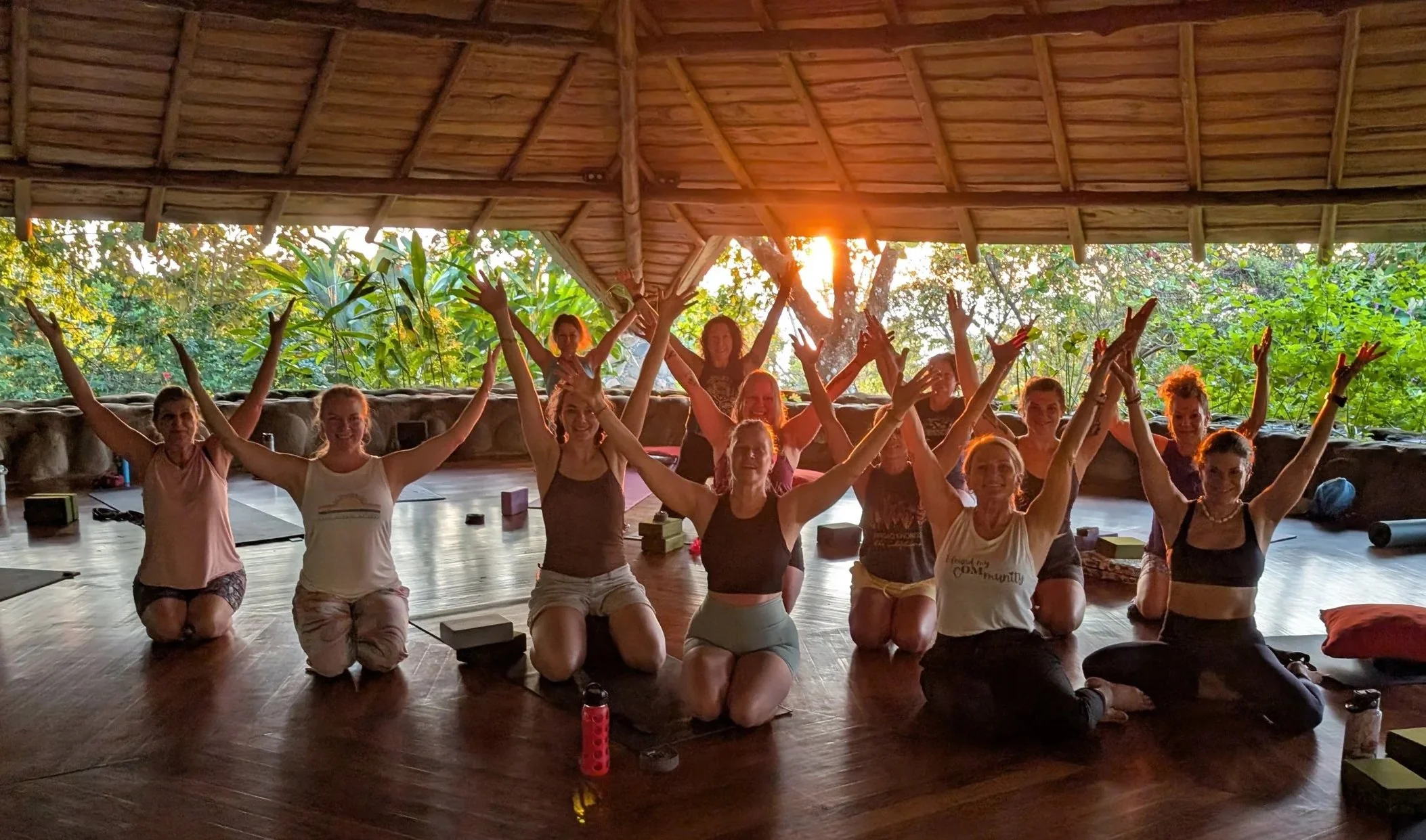
October: Releasing
"Let go, or be dragged." Zen proverb
Welcome to October, and welcome to month ten of our year long journey: Grow with the Flow.
Look at how far you've come. In January, you asked who you are becoming. In February, you learned you don't grow alone. In March, you found clarity. In April, you rooted down. In May, you learned what truly nourishes you. In June, you bloomed at your own pace. In July, you directed your energy with intention. In August, you loosened your grip and let things flow. And in September, you came back down to earth and found that what you already have is enough. If you’re new here, you can always go back to previous months to see what you missed!
Now the trees are about to show us what comes next.
Every October, they do the same quiet, brave thing. They let go of leaves that served them beautifully all summer. They don't cling. They don't argue with the season. They release what they no longer need so they can rest, conserve, and come back strong in spring.
This month we ask: What am I holding onto that I no longer need to carry?
Welcome to Releasing. Welcome to the practice of the exhale.
-
Releasing is the practice of setting down what you've been gripping, whether that's a thing, a habit, an old story about yourself, or a worry you've replayed a hundred times. It isn't about getting rid of everything or pretending nothing matters. It's about noticing where you're clutching out of fear, and choosing to open your hand.
Think about carrying groceries in from the car. You can try to haul every bag in one trip, fingers going numb, bags cutting into your wrists, refusing to set anything down. Or you can put a few bags on the counter and come back for the rest. You still get everything inside. You just stop hurting yourself to prove you can hold it all at once.
Releasing this month means:
Loosening your grip, holding what matters with an open hand instead of a clenched fist. Letting go of the extra, the stuff, obligations, and "someday" things that take up space without adding to your life. Quieting the mind's replay loop, noticing the old thoughts and stories you keep rehearsing, and letting them pass through instead of setting up camp. Trusting the exhale, remembering that your body already knows how to let go about twenty thousand times a day, every time you breathe out.
For many of us, especially women who have spent decades being the one who holds everything together, letting go can feel risky. If I set it down, who will pick it up? This month gently tests that fear. Not by dropping everything at once, but by practicing one small release at a time and noticing that you are still standing afterward.
-
January (Becoming): Who am I becoming? February (Connecting): Who supports my becoming? March (Clarifying): What do I see as my path forward? April (Rooting): How do I ground myself? May (Nourishing): What feeds my growth? June (Blooming): What does it look like when I blossom? July (Thriving): How do I sustain this? August (Flowing): What happens when I stop forcing it? September (Grounding): What do I already have that is enough? October (Releasing): What am I ready to let go of?
Here's why the order matters. You couldn't really let go in January. There wasn't enough underneath you yet. But now you've built roots, found your people, learned what nourishes you, and discovered in September that you already have enough. That sense of enough is exactly what makes releasing possible. When you trust the ground beneath you, you can finally open your hands. September gave you something solid to stand on. October lets you put down what you've been carrying so you can stand on it more freely.
-
Winter (Jan-Mar): Becoming, Connecting, Clarifying - We awaken and orient ourselves
Spring (Apr-Jun): Rooting, Nourishing, Flourishing - We establish and grow
Summer (Jul-Aug): Thriving, Flowing - We express and surrender
Fall (Sep-Nov): Grounding, Releasing, Harvesting - We transition and gather
Winter (Dec): Stilling - We rest and integrate
-
It’s PINK OCTOBER! We’re celebrating the survivors amongst us by offering several donation-based classes all supporting Pink Ribbon Good STL.
What am I ready to let go of?
I hold what matters and release the rest.
Say this when you catch your shoulders creeping up toward your ears. Say it when you're about to buy one more thing you don't need, or say yes to one more thing you don't have room for. Say it on a long, slow exhale, and let your body do the letting go before your mind catches up.
This affirmation is Aparigraha in one sentence. Non-grasping doesn't ask you to own nothing or care about nothing. It asks you to know the difference between what truly matters and what you're only clutching out of habit or fear. Hold the first gently. Let the second go. You’ll learn about Aparigraha below.
Yoga Philosophy: The Foundation of Releasing
This month's practices draw on four ideas that all point in the same direction: let go, and trust that you'll be okay when you do.
Building on Previous Months
In August, you practiced Vairagya, loosening your grip on how things have to turn out. In September, you practiced Asteya, trusting that you have enough and don't need to take more. October brings those two lessons together. Once you trust you have enough, you can stop clutching what you already hold.
We've also been working our way through the koshas, the layers of who we are. In August you met Pranamaya Kosha, the energy body. In September you came back to Annamaya Kosha, the physical body. This month we move one layer inward to Manomaya Kosha, the mind, because so much of what we hold onto isn't stuff at all. It's thoughts.
This month also completes our journey through the five elements. You've grounded with earth in April, tended fire in May, opened into space in June, and flowed with water in August. Now we meet Vayu, air, the element of movement and breath. And inside that element lives the most practical tool of the month: Apana Vayu, the downward, releasing current of breath you feel every time you exhale. Air shows us that letting go is natural. Apana Vayu shows us that our bodies already know how to do it.
Aparigraha: Non-Grasping
Aparigraha is the fifth and final Yama, the last of the ethical guidelines Patanjali lays out at the very beginning of the eight limbed path. The word breaks down simply: graha means to grasp or seize, pari means all around, and the a at the front means "not." So Aparigraha is not grasping on all sides. Not clutching. Not hoarding. Not holding so tightly that your hand cramps.
It's easy to mix this up with last month's Asteya, so here's the difference. Asteya is about not taking what you don't need. Aparigraha is about not clinging to what you already have. You can own a beautiful home, love your family fiercely, and be proud of your practice and still live Aparigraha. The question isn't whether you have things. It's whether they have you.
And this goes well beyond possessions. We grasp at how we used to look, at the way things were before, at our role as the one who handles everything, at being right in an argument, at a version of our kids or our parents that has already changed. Aparigraha asks you to notice the grip, and then gently loosen it.
This month, look for Aparigraha in small places: the closet you keep meaning to clean out, the grudge you've carried longer than it deserves, the pose you keep pushing into because you could do it five years ago. Each one is a chance to open your hand a little.
Vayu: The Element of Air
In yoga and Ayurveda (the sister science to yoga), everything is made from five great elements: earth, water, fire, air, and space. Vayu is the element of movement.
Air is light, mobile, cool, and hard to hold. Try to grab a handful of wind and you'll understand air completely. It's always moving. It goes where it wants. It cannot be kept. That's exactly why it belongs to a month about releasing. Air teaches us that the most alive things are the ones that keep moving through, not the ones we manage to trap.
Air is also the season. In Ayurveda, fall is the time of Vata, the energy made of air and space. Maybe you've noticed it already: drier skin, crisp wind, a racing mind, trouble settling down at night, a feeling of being a little scattered. That's air at work. The answer isn't to fight it. It's to balance it with warmth, routine, and slow, steady breath, which is exactly what this month's home practices offer.
And there's one more connection worth knowing. In yoga, air and mind are closely linked. An old hatha yoga text, the Hatha Yoga Pradipika, teaches that when the breath moves, the mind moves, and when the breath grows still, the mind grows still. Change your breath and you change your mind. Hold on to that. It's the bridge to everything else this month.
Apana Vayu: The Air That Moves Away
Here's where air gets personal. Yoga teaches that prana, your life force, moves through the body in five main currents called the prana vayus, or "winds." Two of them are easy to feel. Prana Vayu is the current of taking in, felt most on the inhale. Apana Vayu is the current of letting go, felt most on the exhale.
Apana roughly translates as "the air that moves away." It flows downward and outward, living mostly in the belly and pelvis. It's the energy behind every natural release your body makes: breathing out, digesting and eliminating, even giving birth. Your body is releasing things all day long without you having to think about it.
Apana isn't only physical. The same downward, letting go current helps us release emotions, tension, and old experiences. When Apana is strong, you feel grounded and able to let things pass. When it's weak or blocked, you might feel stuck, heavy, or restless, holding onto things that should have moved on by now.
The simplest way to work with Apana Vayu is the one you already have: your exhale. Every time you breathe out slowly and fully, you are practicing release at the most basic level of the body. That's why this month, we're asking you to pay special attention to the second half of every breath.
Manomaya Kosha: The Mind Body
Remember the koshas? They're the five layers of who we are, often pictured like nesting dolls, each one a little more subtle than the last. We've already visited the physical body (Annamaya Kosha) and the energy body (Pranamaya Kosha). Manomaya Kosha is the next layer in: the mental and emotional body, made of thoughts, feelings, memories, and the constant stream of reactions to everything we see and hear.
This is where most of our grasping actually happens. We don't just hold onto things. We hold onto thoughts about things. The comment someone made three weeks ago. The worry about next month. The story about who we are and what we can't do. Manomaya Kosha is where those thoughts live, and it's where they tend to get stuck on replay.
Here's the good news, and it's why this layer belongs with air. Thoughts are a lot like weather. They blow in, they swirl around, and if you don't grab them, they blow back out. You are not the clouds. You are the sky they move through. The practice this month isn't to stop thinking. It's to notice a thought, recognize it as weather, and let it keep moving instead of building it a house.
And because breath and mind move together, your exhale is your best tool here too. When a thought grips you, you don't have to argue with it. Just lengthen your exhale and feel the mind start to loosen along with the breath.
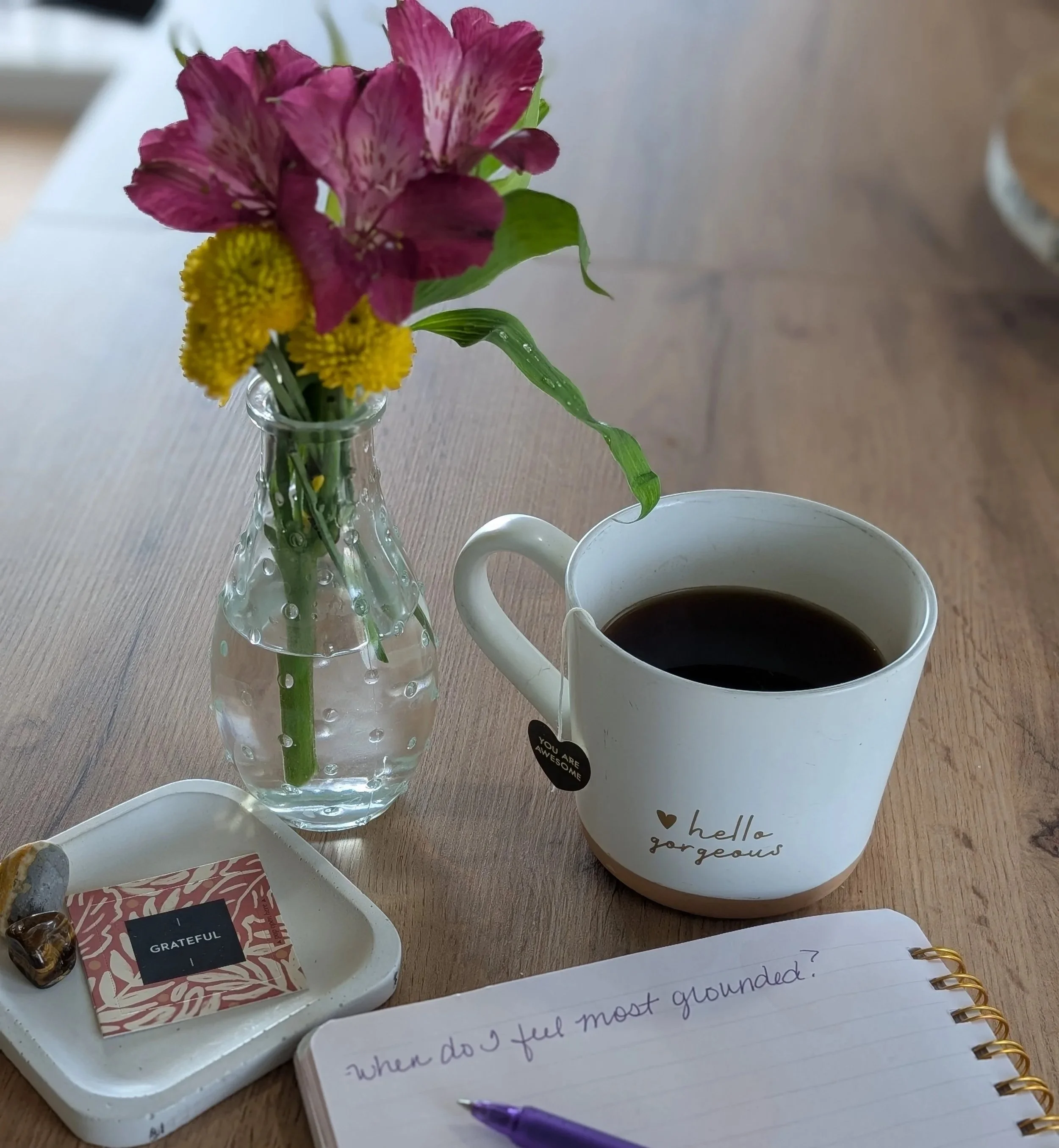
Reflection Prompts for Journaling
What Am I Holding?
What am I gripping tightly right now, in my home, my schedule, or my heart?
Where do I feel that grip in my body when I think about it?
What would happen if I held it a little more loosely?
What am I afraid would happen if I set it down completely?
What Is Ready to Fall?
Like leaves in October, what in my life has already done its job and is ready to go?
What am I keeping "just in case" or "for someday"?
What role or responsibility am I carrying that someone else could hold?
What old version of myself am I still trying to live up to?
The Weather of My Mind
What thought or story do I replay most often?
When I notice that thought, what does my breath do?
What would it feel like to watch that thought pass like a cloud instead of chasing it?
What is one belief about myself I'm ready to stop repeating?
What Am I Carrying Into November?
What did I let go of this month, even something small?
What surprised me about how it felt to release it?
With more space in my life now, what do I want to gather and honor?
As I move into November (Harvesting), what am I most grateful to have kept?
Want to print out these journal prompts, download the worksheet below?
Home Practices to Deepen Into the Theme
As you deepen your yoga practice at the studio, these additional home practices are designed to complement what you're learning in class and deepen your connection to this month's theme of Releasing.
Morning Practice: Exhaling Into Your Day (5-10 minutes)
Start each day by letting go before you pick anything up.
Long exhales (2 min). Before you reach for your phone, sit up with your feet on the floor. Breathe in through your nose for a count of four, then breathe out slowly for a count of six to eight. Let each exhale be longer than the inhale. Feel your shoulders drop a little more each time.
Notice the weather (ie, your thoughts) (1-2 min). Close your eyes and notice what thoughts are already here this morning. Don't fix them or follow them. Just name them silently, "planning," "worrying," "remembering," and let them keep moving.
Affirmation (1 min). Say this month's affirmation aloud or silently on an exhale: "I hold what matters and release the rest."
Journal (3-4 min). Write on one of this month’s reflection prompts, or simply finish the sentence: "Today, I'm ready to set down..."
Set your intention (1 min). Choose one small release for today. Something like, "When I feel myself clutching today, I'll take one long exhale before I respond."
Altar Practice: Refreshing Your Grow with the Flow Space for Releasing
Last month, your altar held the full bowl of sufficiency. This month, it becomes a place of letting go, so it should feel lighter, simpler, and a little more open.
Before you add anything, take something away. Clear your altar down to just a few essentials and notice how it feels to have more empty space. That's Aparigraha in action.
What Stays: Your candle. The Grow with the Flow graphic. One or two sacred objects that still feel meaningful.
Remove or Store: September's full bowl and heavier grounding objects. Anything you've kept on your altar out of habit rather than meaning.
Add for Releasing:
Your October intention, written on paper: this month's affirmation, or your own words about what you're ready to release. A fallen leaf, gathered on a walk, as a reminder that letting go is natural and beautiful. A feather, or anything light that moves with the air. A small empty dish, left intentionally empty, as a symbol of open space. A few slips of paper and a pen for your letting go ritual below.
Monthly Altar Ritual (5-10 minutes): Clear September's items with gratitude for the sense of enough they gave you. Wipe the surface clean. Sit before your altar and take five long exhales. Add your October items slowly, noticing how little you actually need. Light your candle. On a slip of paper, write one thing you're ready to release. Fold it and place it in the empty dish. State your intention aloud: "This space holds my practice of letting go, trusting that I am still whole when my hands are open."
Using Your Altar Throughout October: Each week, add a new slip of paper to the dish with something you're ready to release. At the end of the month, gather them up and let them go in whatever way feels right: tear them up, recycle them, or safely burn them outdoors. Watch them leave, and notice what's still here.
Practice: The Letting Go Breath (Apana Vayu Practice)
Time: 5 minutes | When: Evening, or anytime you feel stuck, tense, or scattered | What you need: A comfortable seat or a place to lie down
This practice works directly with Apana Vayu, the downward, releasing current of breath.
Sit or lie down comfortably. Place one hand low on your belly, just below your navel. Breathe in through your nose for a count of four, feeling your belly rise gently under your hand. Then breathe out slowly through your mouth with a soft sigh for a count of six or eight. As you exhale, imagine the breath flowing downward, through your belly, down through your hips and legs, and out through the soles of your feet into the earth.
With each exhale, let something go: tension in your jaw, the weight of the day, a conversation you keep replaying. You don't have to name it. Just let the breath carry it down and out.
If you'd like to add a mudra (hand gesture), try Apana Mudra: touch the tips of your middle and ring fingers to the tip of your thumb, keeping your index and pinky fingers extended. Rest your hands on your thighs, palms up. It's a simple, traditional gesture for supporting the body's natural release.
If six or eight counts feels like too much, start with four or five. The key is simply that the exhale is longer than the inhale. Five minutes of this in the evening is also a lovely way to calm the extra air energy of fall and settle into sleep.
Practice: Sky and Clouds (Manomaya Kosha Practice)
Time: 5-10 minutes | When: Midday, or whenever your mind won't stop spinning | What you need: A quiet place to sit, ideally where you can see the sky
This practice helps you work with Manomaya Kosha, the mind body, by learning to watch thoughts instead of chasing them.
If you can, sit near a window or step outside where you can see the sky. Take a few long exhales to settle. Then begin to simply notice your thoughts as they come. Each time a thought appears, picture it as a cloud drifting across the sky. You don't need to push it away or climb aboard. Just watch it float across and out of view.
Some clouds will be light and quick. Some will be heavy and slow and want to hang around. That's okay. Weather is weather. Your only job is to remember that you are the sky, wide and open and steady, no matter what's passing through.
If you catch yourself lost in a thought (and you will, that's normal), just notice, take one long exhale, and come back to watching. That moment of coming back is the practice.
Integration: Bringing It to the Studio
Your home practices support what you're building on the mat. Here's how to carry this month's theme into class.
Before Class: Arrive with a few minutes to spare. Sit on your mat and take three long exhales, letting the day fall off your shoulders. Set an intention to release something, not to achieve something.
During Class: Pay attention to your exhales. Let them lead you deeper into poses instead of forcing your way in. Notice where you grip, in your jaw, your hands, your belly, and see if you can soften there. If you find yourself comparing your pose to what you used to be able to do, or to the person on the next mat, take that as your cue to practice Aparigraha. Let that thought be a cloud.
After Class: Savasana is the ultimate release, so take it seriously. Let the floor hold every ounce of your weight. Afterward, notice how much lighter you feel, and carry that sense of open hands into the rest of your day.
Remember, your studio practice is where you physically learn what letting go feels like. Every long exhale in a twist, every softened grip in a balance, every surrendered Savasana is Aparigraha, Apana Vayu, and Manomaya Kosha working together. Your home practices simply help that feeling travel with you off the mat.
Recommended Reading & Listening
Want to go deeper? Here are some resources:
Books
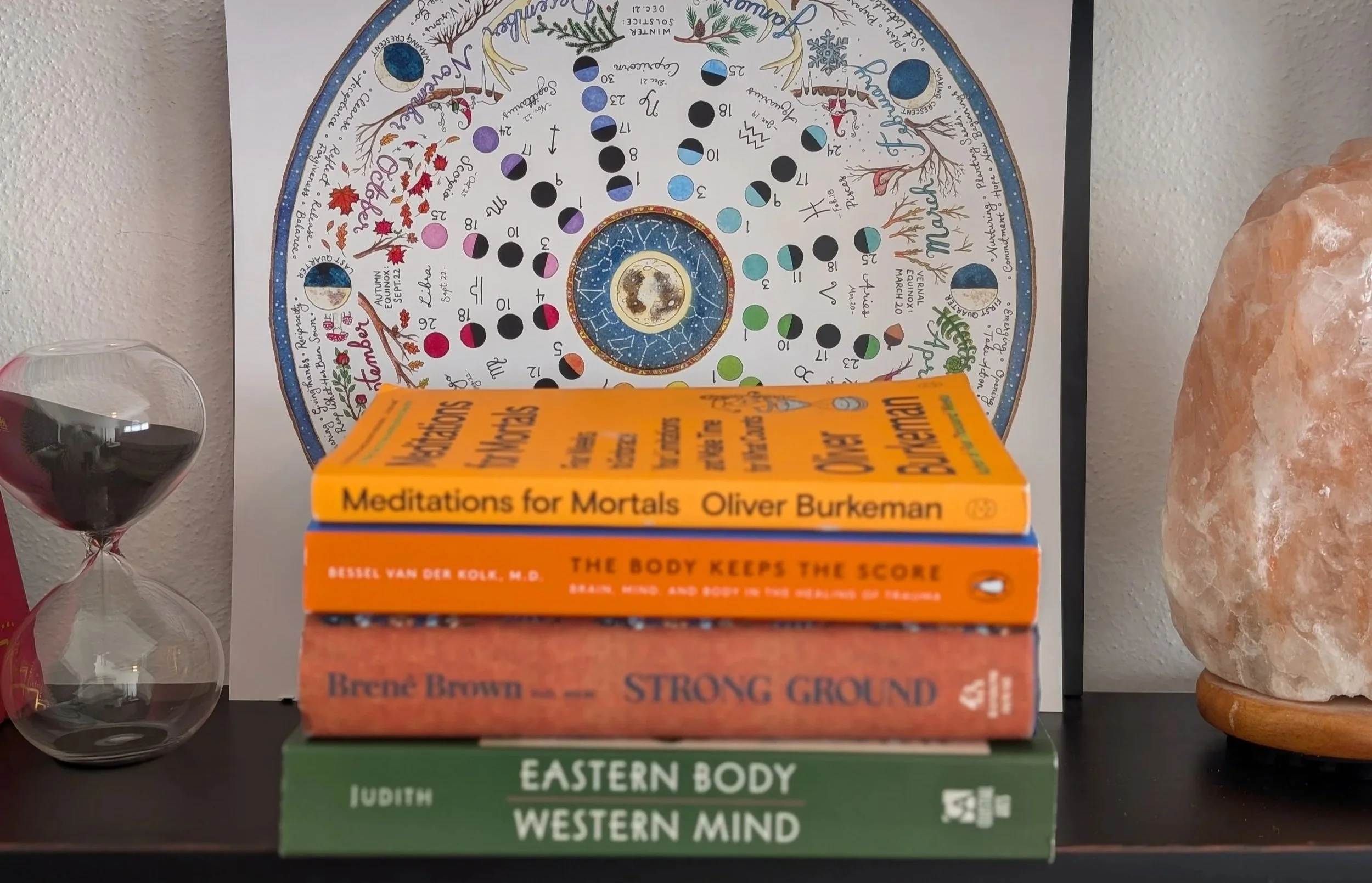
The Untethered Soul by Michael A. Singer A modern spiritual classic about the voice in your head and how to stop letting it run your life. Singer, who has spent decades practicing yoga and meditation, writes plainly about watching your thoughts instead of becoming them, and about letting old pain pass through rather than storing it. The perfect companion to this month's work with Manomaya Kosha.
When Things Fall Apart by Pema Chödrön A beloved Buddhist teacher's gentle, honest guide to what happens when life doesn't go as planned and there's nothing left to hold onto. Chödrön's teachings on leaning into uncertainty instead of clutching for control are Aparigraha at its most tender and practical. Especially meaningful if you're walking through a season of loss or change.
Breath: The New Science of a Lost Art by James Nestor A journalist's fascinating, very readable exploration of how we breathe and why it matters so much more than we think. Nestor blends science, history, and his own experiments to show that slow, full breathing, especially long exhales, can transform our health. A fun, grounded way into this month's element of air and Apana Vayu.
Goodbye, Things by Fumio Sasaki A short, surprisingly moving book by a Japanese writer who gave away almost everything he owned and found more peace than he expected. You don't have to become a minimalist to benefit. Sasaki's honest reflections on why we hold onto things, and what we gain when we let them go, are Aparigraha applied to the closet and the garage.
Unwinding Anxiety by Judson Brewer A psychiatrist and neuroscientist explains why our minds get stuck in worry loops and how curiosity, rather than willpower, helps us release them. Clear, research based, and practical, it's a helpful secular companion to this month's Sky and Clouds practice.
Podcasts
#GetMerry Podcast, Episode 414: "The Art of Detachment, Aparigraha in Yoga" If you listened to episode 412 on Asteya last month, this is the next step in the same Yamas series. A short, accessible introduction to what non-grasping actually looks like in everyday life.
The Uplifted Yoga Podcast, Episode 385: "The 5 Vayus: How Energy Moves Through Your Body (Part 1)" Brett Larkin explains the prana vayus in clear, practical terms, including Apana Vayu, the current of elimination and release, and how stuck energy can show up as feeling heavy or "off." A great primer before you try this month's Letting Go Breath.
Insights at the Edge (Sounds True): "Michael Singer: Living Untethered" Tami Simon's conversation with Michael Singer about the busy mind, stored impressions from the past, and practical ways to let go when something inside us gets stuck. A warm listen if The Untethered Soul speaks to you.
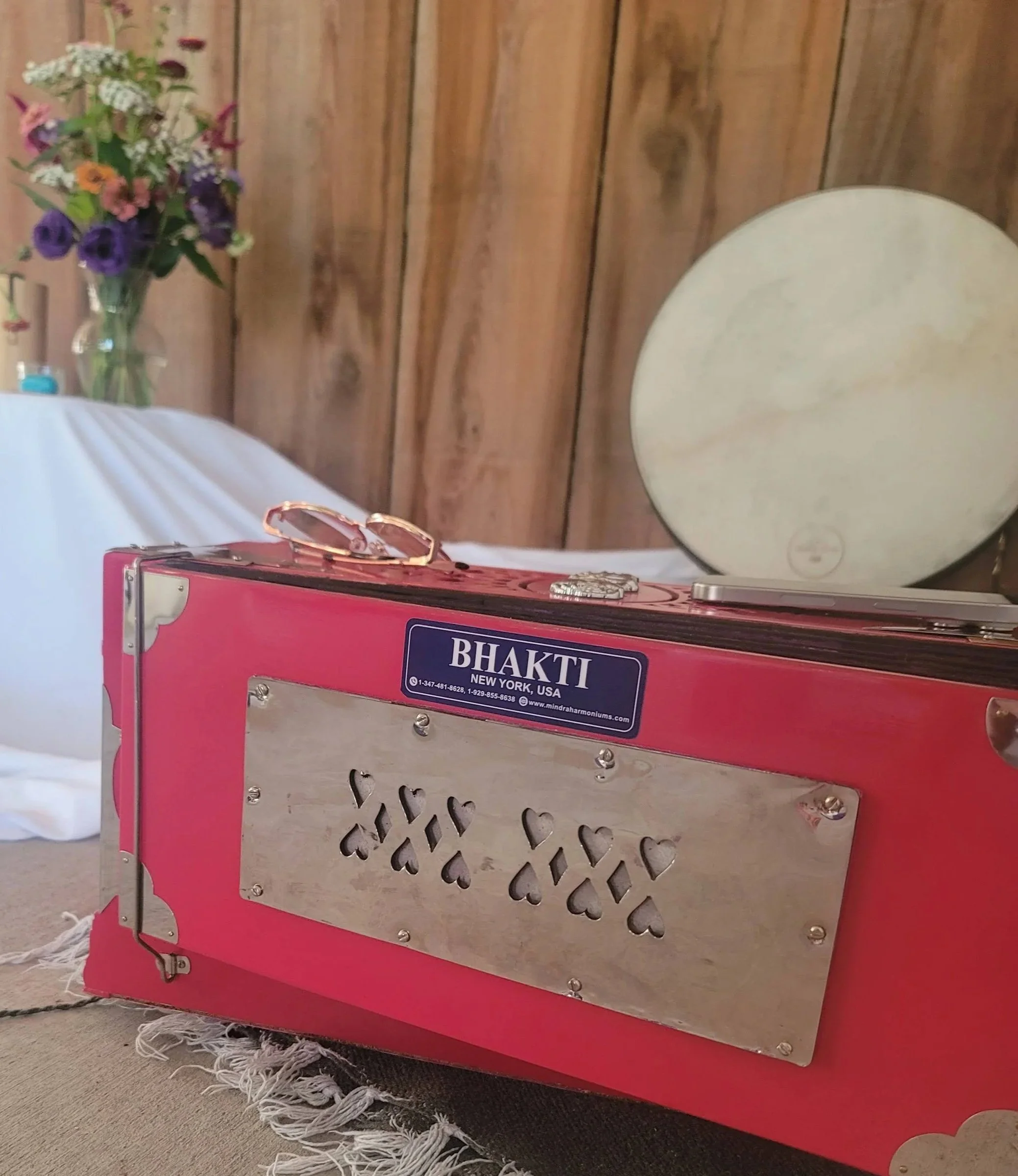
Let music support your practice of releasing this month. This playlist is curated to feel like a long exhale: airy, open, and unhurried, the kind of music that helps your shoulders drop.
A Note from Annie
Dear Friends,,
I planned our 2026 Costa Rica retreat for over a year. Spreadsheets, packing lists, backup plans for the backup plans. I was nervous, and when I'm nervous, I plan.
And then the weather forecast changed everything. A massive winter storm was headed for the States, and if we waited, none of us were getting out. So we had to rearrange flights and hotels for every single person and leave an entire day early. We landed in Costa Rica a day ahead of schedule and spent an extra night in a hotel before we could even head to the resort.
It was stressful. It was chaotic. And my first instinct was to grip harder, to fix it, to get us back on the plan.
But somewhere in that extra day, I stopped fighting it. I stood outside, listening to the wind move through the trees, and realized I'd been holding my breath for about a year. So I let it out. Long and slow.
The storm did hit, exactly as predicted. And the thing I'd been so worried about turned into a blessing. We had a whole extra day in paradise. An extra day to start the retreat early. An extra day to get to know each other before we headed to the resort. An extra day to exhale. None of it was in my spreadsheet, and it ended up being a great part of the trip, and something we may not add into our Belize trip in 2028 (here’s a link if you’re curious!).
I think a lot of us live like that, holding our breath and gripping the plan, afraid of what happens if we loosen up. This month, notice where you're doing that. Then exhale, and let one thing unfold on its own.
With open hands, Annie
P.S. The wind doesn't hold on to anything. Maybe that's why it's so free.