

November: Harvesting
"To every thing there is a season... a time to plant, and a time to pluck up that which is planted." Ecclesiastes 3:1-2
Welcome to Your Journey
Welcome to November, and welcome to month eleven of our year long Grow with the Flow journey.
Think back to January for a second. You set an intention and asked who you were becoming. Since then, you've connected, clarified, rooted, nourished, bloomed, thrived, flowed, grounded, and just last month, opened your hands and let go.
That's a lot of planting. Now it's time to see what grew.
Farmers don't harvest by accident. They walk the rows, notice what came up strong, notice what didn't, gather what's ready, and give thanks. Then they share it. A harvest isn't meant to sit in the barn. It's meant to feed people.
This month we ask: What has this year grown in me, and how will I share it?
Welcome to Harvesting. Welcome to the practice of gathering and giving.
-
Harvesting is the practice of pausing to notice what your effort has produced. Not just the big, obvious wins, but the quiet ones too: the extra patience you didn't have a year ago, the friend you made in class, the morning you chose to breathe instead of react.
Think about a garden in late fall. Some plants gave you more tomatoes than you could eat. Some never really took off. A few surprised you by coming up in places you never planted. A good gardener doesn't only count the tomatoes. She notices all of it, learns from all of it, and is grateful for the whole season.
Harvesting this month means:
Gathering, taking honest stock of what the year has given you, including the lessons you didn't ask for. Giving thanks, letting gratitude be a daily practice instead of a once-a-year holiday. Offering, sharing what you've grown through small acts of service, without needing credit or a particular result. Discerning, noticing the wisdom you've earned this year and trusting it.
For a lot of us, especially women who have spent years being the one who takes care of everyone, this month may stir up an old pattern: give, give, give, and forget to receive. So here's an important note up front. A real harvest feeds the farmer too. Service in yoga is never meant to empty you out. You get to fill your own basket first.
-
January (Becoming): Who am I becoming? February (Connecting): Who supports my becoming? March (Clarifying): What do I see as my path forward? April (Rooting): How do I ground myself? May (Nourishing): What feeds my growth? June (Blooming): What does it look like when I blossom? July (Thriving): How do I sustain this? August (Flowing): What happens when I stop forcing it? September (Grounding): What do I already have that is enough? October (Releasing): What am I ready to set down? November (Harvesting): What has grown, and how will I share it?
Here's why the order matters. You couldn't harvest well in October with your arms full. Letting go cleared space. Now, with open hands, you can actually gather what's real and good from this year, and you can hold it lightly enough to share it.
-
Winter (Jan-Mar): Becoming, Connecting, Clarifying - We awaken and orient ourselves
Spring (Apr-Jun): Rooting, Nourishing, Flourishing - We establish and grow
Summer (Jul-Aug): Thriving, Flowing - We express and surrender
Fall (Sep-Nov): Grounding, Releasing, Harvesting - We transition and gather
Winter (Dec): Stilling - We rest and integrate
-
The Practice Lab (Members Only) Saturday, November 21, 1:00pm to 2:30pm
Spend 90 minutes exploring your own practice at your own pace, with Jami and Annie nearby for questions and guidance. Choose from four stations (wall work, props, rolling and recovery, and meditation and pranayama) and stay at one or visit them all. After a year of planting seeds on your mat, it's your chance to walk the rows and see what grew. Best for students comfortable with the foundations of yoga.
Included with your membership!
Small Business Saturday Vendor Fair Saturday, November 28 | 10:30am - 2pm | South River Yoga
This is is our largest vendor fair yet! With over 30 vendors between South River Yoga, Center of Sound, and The Nest. Shopping small is a simple, joyful form of seva: every purchase supports a neighbor's livelihood and keeps our community strong. Get your girlfriends together for a fun day out of shopping and socializing!
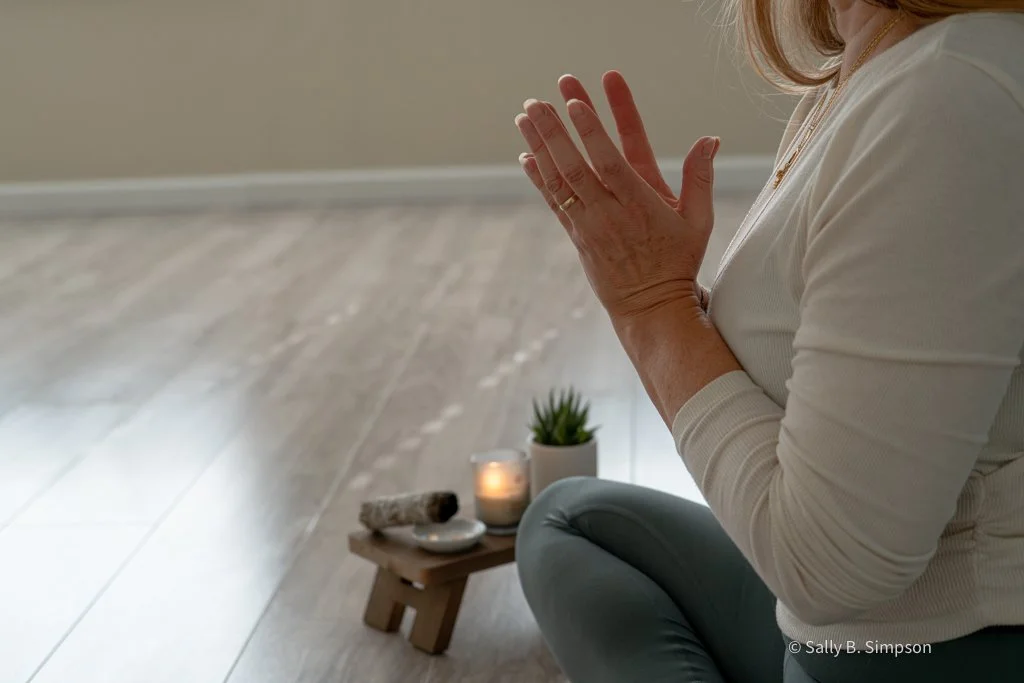
I gather with gratitude and give with an open heart.
Say this when you sit down to a meal. Say it when you finish a task nobody will ever thank you for. Say it on Thanksgiving, and on the ordinary Tuesday after it. Let the first half slow you down long enough to notice what you have, and the second half remind you that what you have is meant to be shared.
This affirmation is Karma Yoga in one sentence. Gathering is the gratitude. Giving is the service. And the open heart is the part that matters most: you give because you want to, not because you're keeping score.

Yoga Philosophy: The Foundation of Harvesting
This month's practices draw on three ideas that fit naturally with the season of harvest: the many ways we can walk the path of yoga, how we act, and the wisdom that grows when we pay attention.
Building on Previous Months
In October you practiced Aparigraha, loosening your grip. November takes that one step further. Karma Yoga asks you to keep working, keep showing up, keep giving your best, and then loosen your grip on the results. You plant. You tend. You let the harvest be what it is.
We've also been moving inward through the koshas, the layers of who we are. In September you came back to Annamaya Kosha, the physical body. In August you met Pranamaya Kosha, the energy body. Last month you explored Manomaya Kosha, the thinking mind. This month we move one layer deeper, to Vijnanamaya Kosha, the wisdom body. It's where a year of experience turns into something you actually know.
You may notice there's no chakra or element this month. That's on purpose. We completed our journey through the five elements in October (take a look back through the months if you don’t remember them all or need a refresher!), and November's philosophy comes from a different part of the yoga tradition: the Bhagavad Gita, one of yoga's most beloved texts.
The Four Paths of Yoga: Many Roads, One Destination
Here's something that surprises a lot of newer students: yoga isn't only poses. The tradition describes several paths, all leading to the same place, a deeper sense of peace and connection. The four classic paths are:
Karma Yoga, the path of action and service. The path of the hands. This is the path we'll explore most deeply this month. Bhakti Yoga, the path of devotion and love. The path of the heart. Think chanting, prayer, gratitude, and loving something bigger than yourself. Jnana Yoga (pronounced "GYAH-nah"), the path of wisdom and self-study. The path of the mind. Think reading, reflecting, journaling, and asking big questions. Raja Yoga, the "royal path" of meditation, laid out in Patanjali's eight limbs. This is the path that includes the Yamas, Niyamas, breath, and the physical poses you practice in the studio.
Most of us lean toward one path more than the others, and that's fine. A doer may love service. A feeler may love chanting. A thinker may love a good philosophy book. But a balanced practice usually draws from all four.
Here's the fun part. Look back at this year and you'll see you've already walked all four. Every journal prompt was Jnana. Every time you opened your heart in February or lit your altar candle was Bhakti. Every Yama and Niyama, every breath practice, every class was Raja. That's quite a harvest. And this month, we turn our attention to the path of the hands.
Karma Yoga: The Yoga of Action
Now let's go deeper into the first path. Most people hear "karma" and think of cosmic payback: do something bad and it comes back around. That's part of it, but the word karma simply means action. Karma Yoga is the yoga of action, and its most famous teaching comes from the Bhagavad Gita, a conversation between a warrior named Arjuna and his teacher, Krishna, on the edge of a battlefield.
Arjuna is overwhelmed. He doesn't want to act at all. Krishna's advice, in one of the most famous verses in all of yoga (Bhagavad Gita 2.47), comes down to this: you have a right to your work, but not to the results of your work. Do what's yours to do, and do it well. Then let go of how it turns out.
Think about a farmer again. She can choose good seeds, water faithfully, and pull the weeds. She cannot control the rain or an early frost. If she ties her peace of mind to the exact size of the harvest, she'll be anxious all season. If she pours herself into the work and trusts the rest, she can enjoy the whole process, even the parts that don't go to plan.
Karma Yoga also includes seva, selfless service. That just means doing something good for someone without needing anything back. Holding the door. Folding the blankets after class. Making the casserole for a sick friend. Listening fully. Small, ordinary acts, done with care, become a spiritual practice.
One honest caution. Karma Yoga is not about running yourself into the ground or saying yes to everything. Service that leaves you resentful and depleted isn't selfless, it's just exhausted. Real service comes from a full cup. Take care of yourself so you have something real to give.
Vijnanamaya Kosha: The Wisdom Body
The koshas are the five layers of who we are, often pictured like nesting dolls. Last month you met the thinking mind, Manomaya Kosha, with all its weather and worry. Vijnanamaya Kosha sits just beneath it. Vijnana means wisdom or discernment, so this is the wisdom body: the part of you that knows, underneath all the thinking.
Here's a way to feel the difference. Manomaya is the part of you lying awake replaying a hard conversation. Vijnanamaya is the quieter voice that says, "You know what you need to do." It's your intuition, your inner witness, your good judgment. It's the part of you that has learned something from fifty plus years of living and can recognize the truth when it sees it.
Experience on its own doesn't automatically become wisdom. It becomes wisdom when we pause and reflect on it. That's exactly why this layer belongs to Harvesting. A harvest is the moment you stop and gather what the season taught you. This month's Harvest Inventory practice is designed to help you do just that.

Reflection Prompts for Journaling
What Has Grown?
Looking back through the year, what has changed in me this year?
What am I proud of that nobody else may have noticed?
What grew in my life that I didn't plant or plan?
Which month of Grow with the Flow stayed with me the most, and why?
Doing My Part, Releasing the Rest
Where am I working hard but gripping tightly to how it turns out?
What would change if I focused on doing my part well and trusted the rest?
Where am I giving from an empty cup?
What is one small act of service I could offer this week, just because?
Which Path Calls Me?
Do I feel most connected through my hands, my heart, my mind, or my stillness?
Which path of yoga have I been walking most this year without realizing it?
Which path feels unfamiliar but curious to me?
What does my inner wisdom already know that my busy mind keeps arguing with?
What Am I Carrying Into December?
What am I most grateful for from this year?
What lesson from this year do I want to keep for good?
Who helped me grow this year, and have I told them?
As I move into December (Stilling), what am I ready to rest in?
Want to print out these journal prompts, download the worksheet below?
Home Practices to Deepen Into the Theme
As you deepen your yoga practice at the studio, these additional home practices are designed to complement what you're learning in class and deepen your connection to this month's theme of Releasing.
Morning Practice: Counting Your Harvest (5-10 minutes)
Start each day by noticing what you already have before you go looking for more.
Settle in (1-2 min). Sit comfortably with your feet on the floor. Take a few slow breaths, letting each exhale be a little longer than the inhale, just like last month.
Three good things (2 min). Name three things you're grateful for this morning. Make them specific. Not "my family," but "the way my granddaughter laughed on the phone yesterday." Specific gratitude lands deeper.
Affirmation (1 min). Say this month's affirmation aloud or silently: "I gather with gratitude and give with an open heart."
Journal (3-4 min). Write on one of this month's reflection prompts, or simply finish the sentence: "This year has taught me..."
Choose your offering (1 min). Pick one small act of service for today and do it without needing credit. Something like, "Today I'll write a thank you note," or "Today I'll really listen when my friend talks."
Download your November Gratitude & Offering Journal below. It has a page for each week with space for your three good things and one offering every day, plus studio events marked right on their dates.
Altar Practice: Refreshing Your Grow with the Flow Space for Harvesting
Last month your altar was light and open, a place for letting go. This month it fills back up, but with things that represent what this year has given you.
What Stays: Your candle. The Grow with the Flow graphic. One or two sacred objects that still feel meaningful.
Remove: October's dish of release slips (if you haven't let them go yet, now's the time). The leaf and feather, returned to the outdoors with thanks.
Add for Harvesting:
Your November intention, written on paper: this month's affirmation, or your own words about what you're gathering. A small basket or bowl of the season, such as an apple, a small gourd, a few nuts, or a sprig of dried wheat. One small object or note from each month of the year that reminds you of what you learned. A small jar and a stack of paper slips for gratitude notes. Something that represents a person who helped you grow this year, like a photo or a card they gave you.
Monthly Altar Ritual (5-10 minutes): Clear October's items, thanking them for the space they made. Wipe the surface clean. Sit before your altar and take a few slow breaths. Add your November items one at a time, saying silently what each one represents. Light your candle. Write one thing you're grateful for on a slip and place it in the jar. State your intention aloud: "This space holds the harvest of my year. I receive it with gratitude and share it freely."
Using Your Altar Throughout November: Add a gratitude slip to the jar every day, or whenever you think of it. On Thanksgiving, or on the last day of the month, open the jar and read every slip. Notice how full it got.
Practice: One Offering a Day (Karma Yoga Practice)
Time: A few minutes | When: Anytime | What you need: Nothing but your attention
This practice brings Karma Yoga into ordinary life.
Each day this month, choose one action and do it as an offering. It can be something you'd do anyway, like making dinner, folding laundry, or driving someone to an appointment. Before you begin, pause and silently say, "I offer this." Then do the task with full attention and care, as if it really matters. Because it does.
When you're done, let it go. Don't wait to be thanked. Don't keep a tally. Notice how it feels to give without expecting anything back.
And remember the full cup. At least once a week, make the offering to yourself: a nap, a walk, a slow cup of coffee with nowhere to be. You are part of the harvest too.
Use the journal below to help you.
Integration: Bringing It to the Studio
Your home practices support what you're building on the mat. Here's how to carry this month's theme into class.
Before Class: Arrive with a few minutes to spare. Look around the room and silently thank one person who's part of your practice, whether it's your teacher, the friend on the next mat, or the person who checked you in.
During Class: Practice Karma Yoga on your mat. Give each pose your full effort, then let go of how it looks. Some days the balance pose will be steady. Some days it won't. Your job is to show up and do your part. Notice, too, which path you feel in class: the focus of Raja, the heart of Bhakti, the curiosity of Jnana.
After Class: Make a small offering before you leave. Help put away props, wipe down a mat that isn't yours, or welcome someone new. Then, in Savasana or on the drive home, ask yourself, "What did I harvest today?"
Remember, your studio practice is where this whole year took root. Every class you showed up for was a seed. This month is your chance to look around and see how much has grown, in you and in our community.
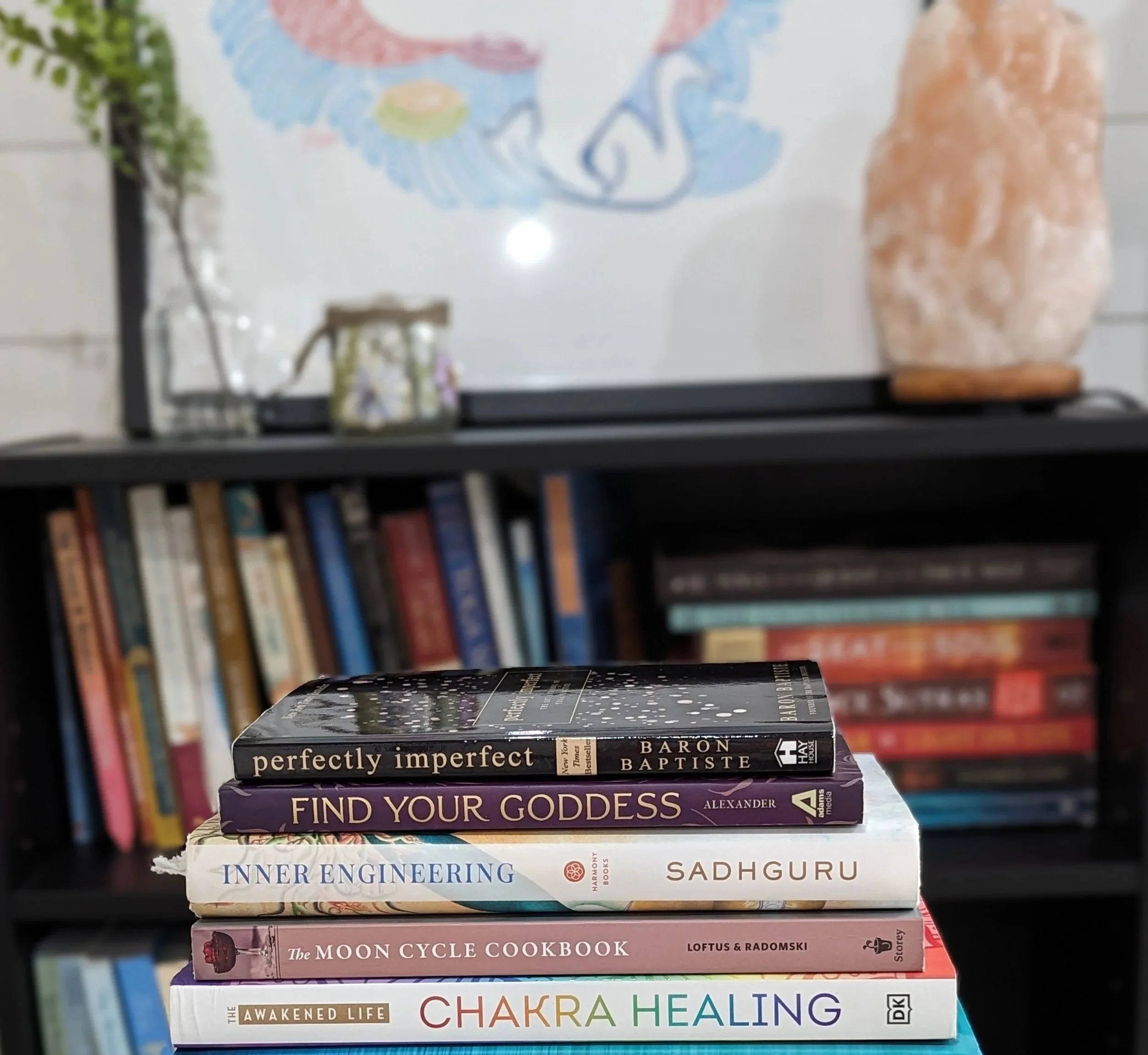
Recommended Reading & Listening
Want to go deeper? Here are some resources:
Books
The Bhagavad Gita, translated by Eknath Easwaran If you've ever wanted to read the source of Karma Yoga, this is the translation to start with. Easwaran was a beloved meditation teacher, and his version is clear, warm, and readable, with helpful introductions to each chapter. Start with Chapters 2 and 3. They're short and they're the heart of this month's teaching.
The Great Work of Your Life by Stephen Cope Cope, a longtime senior scholar at the Kripalu Center, uses the Bhagavad Gita as a guide to finding your dharma, or true calling. He weaves in stories of ordinary and famous people, including some who found their purpose in the second half of life. Accessible, inspiring, and a wonderful bridge between ancient text and modern living.
How Can I Help? by Ram Dass and Paul Gorman A gentle, honest classic on the art of service. Through real stories from caregivers, volunteers, and helpers of every kind, it explores what makes service feel nourishing instead of draining. If One Offering a Day speaks to you, this book will deepen it.
The Serviceberry by Robin Wall Kimmerer A short, beautiful book from the author of Braiding Sweetgrass. Kimmerer, a botanist and member of the Citizen Potawatomi Nation, uses a wild berry tree to explore gratitude, reciprocity, and the idea that abundance grows when we share it. A perfect read for a cold November afternoon, and a lovely gift.
Thanks! by Robert A. Emmons One of the leading researchers on gratitude explains what science actually shows about giving thanks and how it affects our health, relationships, and happiness. Practical and research based, it's a great companion to this month's morning practice.
Podcasts
A Woman's Gita, "The Wheel of Reciprocity: Karma Yoga, Service, and Self-Care" Hosted by Nischala Joy Devi and Kamala Rose, two longtime teachers who read the Bhagavad Gita from a woman's perspective. This episode explores selfless service alongside a message many of us need to hear: true service has to include boundaries, rest, and self-care, especially for women who tend to over-give.
Healing at the Edge, Episode 131: "The Four Paths of Yoga" RamDev Dale Borglum walks through Karma, Bhakti, Jnana, and Raja Yoga, and talks about how most modern practitioners blend the paths together. A great companion to this month's philosophy section if you want to go deeper.
Let music support your practice of harvesting this month. This playlist is curated to feel warm and grateful, like a full table and a kitchen that smells like something good.
A Note from Annie
Dear Friends,
Have you ever walked into class and found just two other mats in the room? Or squeezed your mat into the last open spot on a busy Saturday morning?
If you’ve practiced with us long enough, you’ve probably noticed something. The class is the same either way. Same care. Same attention. Same heart.
That isn’t an accident. It’s one of the principles we teach by at South River: every class is an offering.
It comes straight from this month’s teaching. In the Bhagavad Gita, Krishna reminds us that we have a right to our work, but not to the results of our work. For a teacher, that means we don’t measure a class by how many people show up. We measure it by how fully we show up for the people who are there.
Because every person who walks through our door needs something. Rest. Strength. Quiet. A friendly face. A reason to breathe a little deeper. Whether there are two of you or twenty-two, each one of you deserves to be honored for being there.
This month, I invite you to bring that same spirit off the mat. Give your best to whoever is in front of you. Then let it go, and trust that it was enough.
With gratitude,
Annie
P.S. When you come to class this month, look around the room. Every person there is part of the harvest.
Welcome to November. Welcome to Harvesting. Gather what's grown, give thanks, and share it freely.
Next month, with your harvest gathered and your heart full, we turn toward Stilling: the quiet of winter, the end of our year together, and the deep rest that comes after a season well lived.