

Month: Thriving
Welcome to July!
Whether you have been here since January or you are joining us for the first time this month, you are exactly where you are supposed to be. This journey meets you wherever you arrive.
For those of you who have been here since the beginning: you have been at this for more than half a year now. That is not a small thing. In January, you asked who you are becoming. You planted seeds of intention and practiced the honest, sometimes uncomfortable art of self-study. In February, you recognized that you don't grow alone, and you deepened your connection to yourself, to others, and to this community. In March, you practiced seeing clearly, learning to trust your own inner knowing and to tell the truth about what you actually see. In April, you put roots down, building the foundation that all growth requires. In May, you learned to nourish yourself, to distinguish what genuinely feeds you from what merely fills the space. And in June, you opened. You found your voice. You practiced blooming into what was already trying to become.
Now it is July. The height of summer. The longest days. The fullest light.
This month, the question is not about building something new. It is about what it means to truly thrive in what you have already grown.
Thriving is not the same as pushing harder. It is not about doing more or being at peak performance all the time. Real thriving is sustainable. It is the difference between burning bright for a season and sustaining your fire for a lifetime. It is about learning to direct your energy with the same care and intention you have been bringing to your roots, your nourishment, and your blooming.
Welcome to Thriving. Welcome to the practice of living from your deepest vitality.
-
To thrive is to grow vigorously, to flourish, to reach full aliveness. But the word comes from old Norse, and at its root it means to grasp. To hold on to what matters. Not to grab everything in sight, but to hold wisely, carefully, to what actually sustains life.
That distinction is everything.
In a culture that equates thriving with doing more, achieving more, producing more, the yogic understanding of thriving is quietly radical. In yoga, you do not thrive by draining yourself. You thrive by learning what your energy is for and directing it there with intention.
Think about a river that feeds everything along its banks. Not because it is endless, but because it keeps moving in the right direction. It does not flood every field. It does not scatter into a thousand streams that disappear into the ground. It flows where it is meant to flow, and because of that, everything alongside it lives.
That is what Thriving means this month.
Thriving means:
Directing your energy toward what actually matters to you, not just what is urgent
Recognizing the difference between effort that builds you and effort that depletes you
Practicing consistently enough that your vitality deepens over time, not just spikes and crashes
Learning that rest, restoration, and saying no are not the opposite of thriving, they are what makes it possible
Tending the deep reservoir of vital energy that is the source of everything good you bring to your life
-
Each month of this year builds on the one before it, like a plant moving through its seasons.
January (Becoming): Who am I becoming? We plant the seed of intention. February (Connecting): Who supports my becoming? We recognize we grow in relationship. March (Clarifying): What do I see as my path forward? We gain clarity about our direction. April (Rooting): How do I ground myself? We establish the foundation that will support all future growth. May (Nourishing): What feeds my growth? We learn to tend to ourselves with genuine care and attention. June (Blooming): What does it look like when I blossom? We open into our fullest expression. July (Thriving): What does it mean to sustain this aliveness? We learn to direct energy with wisdom and intention. August (Flowing): Can I trust the current? We practice surrendering to what is, moving with ease.
Here is why this order matters: you cannot flow from a depleted place any more than you can bloom from one. June asked you to open. July asks you to sustain. The work is not to push into full bloom and then collapse. It is to build the kind of deep vitality that keeps you alive and flourishing through all the seasons to come.
The plant does not just bloom and stop. It generates seeds. It produces what is needed for next year's growth. That is what Thriving is about.
-
Winter (Jan-Mar): Becoming, Connecting, Clarifying - We awaken and orient ourselves
Spring (Apr-Jun): Rooting, Nourishing, Flourishing - We establish and grow
Summer (Jul-Aug): Thriving, Flowing - We express and surrender
Fall (Sep-Nov): Grounding, Releasing, Harvesting - We transition and gather
Winter (Dec): Stilling - We rest and integrate
-
THE ART OF LETTING GO A Restorative Workshop with Cindy K Thursday, July 31, 2026
In a month about energy, the most counter-intuitive practice might also be the most essential: stopping.
A restorative yoga practice is Brahmacharya, right use of energy, in its most literal form. We stop efforting. We let the body be fully supported. We give the nervous system permission to complete its recovery cycle. And in doing that, we build the deep reservoir of vitality that sustaining a full life actually requires.
This is how Ojas, the vital essence we will explore this month, is built. Not by doing more. By giving the body genuine space to consolidate and restore.
Cindy K brings a beautiful sensitivity to restorative work, and this workshop will close out July exactly as the month invites us to close it: not by pushing further but by learning to receive.
What to Expect:
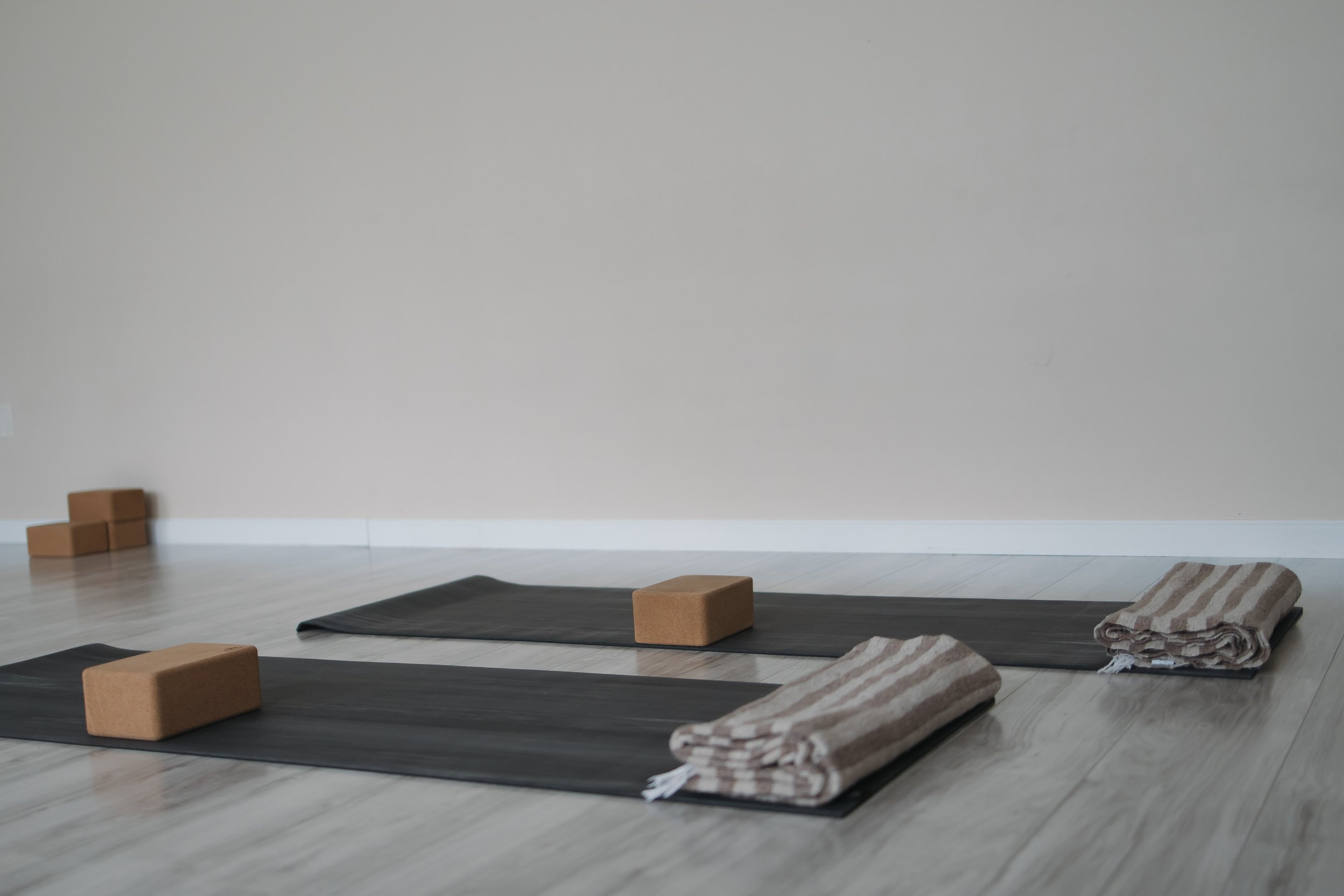
A full restorative yoga practice held in supported poses
Guided breathwork and deep relaxation
An exploration of the difference between active rest and genuine restoration
Space to let the month's practice land in your body
What does it look like to thrive?
I direct my energy toward what truly matters.
Carry this with you throughout July. Say it before you reach for your phone in the morning. Return to it whenever you feel pulled toward something that drains you, or unsure where your energy should go next. That question, answered honestly, is the whole practice of Brahmacharya.
Yoga Philosophy: The Foundation of Thriving
This month's practices draw from some of the richest concepts in the whole yoga tradition. Every idea points toward the same truth: vital energy is a resource to be tended, not a fuel to be burned through. When we understand how to work with our energy rather than against it, something shifts. Thriving stops feeling like an accomplishment and starts feeling like a natural state.
Building on Previous Months
In January, you practiced Svadhyaya, the honest turning of attention inward. You started asking who you actually are. In February, you practiced Ahimsa, non-harming, beginning with how you treat yourself. In March, you practiced Satya, truthfulness, including the truth about where your energy is going and whether it is serving you. In April, you practiced Tapas, the discipline of consistent effort that builds rather than burns. In May, you practiced Saucha, discernment about what you take in. In June, you practiced Santosha, the contentment that allows you to open without forcing.
Now in July, all of that work converges in a single question: how do I sustain it?
All the self-knowledge, connection, clarity, rootedness, nourishment, and openness you have built this year requires fuel. It requires that you tend the source, not just draw from it. July is about learning to do both at once.
The shift to July: January: Who am I becoming? February: Who supports me? March: What do I see clearly? April: What ground am I standing on? May: What feeds all of this? June: What am I becoming as I open? July: How do I keep this alive?

Brahmacharya (Right Use of Energy)
Brahmacharya is one of those concepts that surprises people when they first encounter it. The traditional translation is celibacy, and in ancient monastic contexts, that is exactly what it meant: the conservation of sexual energy as a means of directing it toward spiritual practice. Some teachers still interpret it this way.
But for most of us living full, embodied lives in the world, Brahmacharya is better understood as right use of energy. Not specifically sexual energy, but vital energy in all its forms: physical, mental, emotional, and spiritual.
The question Brahmacharya asks is simple and relentless: is this how you want to spend your energy?
Not in a punishing way. Not in a way that shuts life down. But in a genuinely curious, honest way. You have a finite amount of vitality. Every yes to one thing is a no to something else. Every way you spend yourself is a choice, whether or not you are making it consciously.
The practice of Brahmacharya is the practice of bringing that choice into awareness. It is not about deprivation. It is about discernment. When you know what your energy is for, spending it elsewhere starts to feel like what it is: a loss.
Brahmacharya in the Traditional Sense and the Modern Application:
Even in the monastic tradition, the logic behind Brahmacharya was not really about abstinence. It was about recognizing that every act of dispersing energy, whether through sex, anger, obsessive worry, overwork, or constant scattered attention, is an act of spending your most essential resource. The question was always: what do you want to be doing with this resource?
That question is just as alive today. We live in the most energetically demanding culture in human history. We are asked to be available, productive, connected, and responsive around the clock. We have access to an unlimited supply of things to be anxious about, stimulated by, distracted with. Most of us are running a slow leak somewhere, or several somewheres, and we have been doing it for so long we have forgotten what it feels like to not be.
Brahmacharya asks us to find the leaks.
On the Mat:
When you notice yourself pushing past your edge, stop and ask: is this effort building me, or depleting me? Both are valid sometimes. But asking the question is the practice. Notice what you carry onto your mat: the mental noise, the comparison to yesterday's practice or to the person next to you, the performance of effort rather than the actual experience of it. All of that is energy leaving the building. Every time you come into a pose with genuine presence, you are practicing Brahmacharya. You are here. The energy is here. It is not scattered across the week's to-do list. The affirmation for this month: "I direct my energy toward what truly matters."
Off the Mat:
Look honestly at where your energy is going on a regular day. Not where you want it to go or where you think it should go, but where it actually goes. Notice the difference between how you feel after time spent in ways that align with what you value versus time spent in ways that do not. Both leave a trace. Brahmacharya is not about eliminating pleasure, rest, or ease. It is about making sure the way you spend your vitality is actually yours, chosen rather than habitual. One honest inventory this month: what is the single biggest drain on your energy that you have not examined? That is where the practice lives.
Prana (Life Force)
Prana Translation: Life force, vital energy, the breath and what the breath carries. You may have heard one of your teachers use “Pranayama” techniques in class (the practice of working with prana through breath).
Prana is the animating force in all living things. It is what makes the difference between a living body and a body that has stopped living. It is the intelligence in your cells, the impulse in your heartbeat, the energy that moves through you when you feel fully alive.
In yoga, prana is both the broadest and most practical concept. At the universal scale, prana is the life force that animates all of existence. At the practical scale, prana is working with your breath: breath is the most accessible vehicle for prana, and pranayama, yogic breathwork, is the most direct way to influence how prana flows in your system.
But prana is bigger than breath. It is also present in what you eat (fresh food carries more prana than processed food), in the natural world (time outdoors, near water, in sunlight increases prana), in meaningful connection with others, and in genuine creative expression.
A few things deplete prana: chronic stress, poor sleep, isolated living, excessive screen time, food that is far from its source, and the constant low-grade noise of a mind that never fully rests.
The Pranic Body:
In yogic understanding, the human being is not just a physical body. We also have what is called the pranamaya kosha, the energy body, a layer of our being that is made up of prana and its movement through us. When the energy body is well-tended, the physical body tends to follow. When the energy body is depleted or congested, the physical body eventually reflects that too.
You may already know this intuitively. You have probably felt the difference between being in a room where the energy is alive and being in a room where it is not. You have probably noticed that some places, some activities, and some people add to you while others quietly drain something away. That is your pranamaya kosha giving you information.
On the Mat:
Start paying attention to your breath as a carrier of prana, not just as an inhale-exhale mechanism. A full, conscious breath is a practice of drawing life force in. In poses that feel energizing, breathe deeply and let the energy move. In poses that feel restorative, let the breath slow and receive. Notice the quality of your energy at the beginning and end of each class. That shift, from scattered to settled, from tight to open, is prana reorganizing itself.
Off the Mat:
This month, start noticing what genuinely increases your sense of aliveness and what diminishes it. Make it practical: after one hour of this activity, how do I feel? Spend time outside intentionally this month. Not as exercise. Just as exposure to a world that is full of prana in forms our indoor lives rarely encounter. Morning breath practice: before getting out of bed, take ten deliberate, complete breaths. Inhale fully, pause briefly at the top, exhale completely. That is pranayama. It takes less than two minutes and it shifts the whole tone of the morning.
Ojas (Vital Essence)
Ojas is one of those concepts that people recognize immediately when they hear it, even if they have never had a word for it before.
You know those people who seem to radiate health and aliveness? Who have a brightness in their eyes, a warmth in their presence, an energy that is not frenetic or performed but just genuinely deep and real? That quality is ojas. It is the visible result of a body and a life that has been consistently, wisely tended.
In Ayurveda, ojas is described as the most refined product of good digestion. When your body processes food, experience, and emotion well, when your agni (inner fire) is working cleanly, what remains after all that transformation is a kind of vital essence that accumulates in the body. That essence is ojas.
Ojas is not stamina. It is not the ability to push through. It is deeper than that. Ojas is the reservoir. Stamina draws from the reservoir. When ojas is high, you can meet life fully. When ojas is depleted, even small things feel heavy.
What Builds Ojas:
Consistent practice. Abhyasa, which we will explore in the next section, is one of the primary builders of ojas. Showing up regularly to practice, not perfectly, not dramatically, just steadily. Genuine rest and sleep. Not just hours in bed, but actual restoration. Nourishing food, particularly warm, cooked, whole foods. Meaningful connection and love. Time in nature. Creative expression that comes from a full place rather than a pressured one. Reducing excess. Every act of Brahmacharya, every choosing of what matters over what merely clamors for attention, conserves ojas.
What Depletes Ojas:
Chronic overwork and over-commitment. Too little sleep for too long. Constant stress without completion (the nervous system never getting to rest). Fragmented, scattered attention, the modern condition. Excessive stimulation: screens, noise, information overload. Giving past the point of genuine replenishment. Not this as a shame list. This as an information list. Most of us recognize our main ojas drain if we are honest about it.
A restorative practice is one of the most direct ways to build ojas. When the body is fully supported, the nervous system moves into its recovery mode. The systems that get put on hold during effort and stress, repair, consolidation, deep nourishment, come back online. You are not just resting. You are actively restoring the reservoir.
(This is why the Art of Letting Go workshop on July 31st is such a fitting close to this month. Not a sprint to the finish. A conscious, intentional restoration before we move into August.)
On the Mat:
Approach your practice this month less as performance and more as investment. Each class is adding to your ojas when you practice with presence and appropriate effort rather than grinding or holding back. Savasana is not the end of class. It is the most important part of class. It is the moment when the body integrates everything that happened in practice. Give it your full attention this month. When you are tired, come to class and do a gentle version of what is offered rather than not coming at all. Consistent gentle practice builds ojas. Sporadic intense practice does not.
Off the Mat:
Identify your main ojas drain this month and make one small change. Protect your sleep this month. Not as a health habit but as a practice. Seven to nine hours is not laziness. It is how ojas is built.
Abhyasa (Consistent Practice)
Abhyasa is the practice half of one of yoga's most important pairings (the other one is Vairagya). It means returning, consistently, to the effort of practice. Not once, not when you feel inspired, not when conditions are perfect. Again and again. Over time.
Patanjali defines abhyasa as practice that is done over a long period of time, without interruption, and with full devotion. That is a high bar. It is not meant to be discouraging. It is meant to be clarifying.
The point is not that you never miss a day. The point is that you keep coming back.
Think about the difference between someone who practices yoga intensely for two weeks and then stops, and someone who shows up to class twice a week for ten years. The second person is practicing abhyasa. Not because they never struggled, missed days, went through phases of not feeling it. But because they kept returning.
Abhyasa is what builds the deep grooves in your life, your nervous system, your character. Every return to practice deepens the groove. Every missed session does not erase it. The groove is built through accumulation.
Abhyasa and Thriving:
This is what makes thriving sustainable rather than a temporary peak. Anyone can have a burst of energy, a particularly good month, a phase of feeling really alive. Abhyasa is what turns that aliveness into a permanent address rather than a vacation.
The practices of Brahmacharya, the tending of prana, the building of ojas: none of them are a one-time event. They are the outcome of consistent, devoted return. You cannot build ojas in a weekend. You cannot redirect your energy toward what matters most from a single moment of clarity. These things develop over time, through practice, through the everyday ordinary act of coming back.
On the Mat:
Your studio practice is your abhyasa. Coming to class is the practice, regardless of how you feel when you walk in. This month, notice the quality of your return on days when you did not feel like coming but came anyway. That is abhyasa at work. The postures are not the point. The returning is the point.
Off the Mat:
Identify one practice outside of yoga that you have been consistent with over time, whether it is walking, journaling, prayer, or a morning ritual. Notice what it has built in you. That is abhyasa. Choose one small practice this month to commit to for the full thirty-one days. Not something dramatic. Something simple enough that you can actually do it every day. Morning breathing, five minutes of journaling, drinking water before coffee. Consistency, not impressiveness, is what builds. Abhyasa does not require perfection. It requires return.
Yoga Sutra 1.12: The Two Pillars
Abhyasa vairagyabhyam tan nirodhah.
"Practice and non-attachment are the twin pillars of yoga." Yoga Sutra 1.12, Patanjali
What This Sutra Is Saying:
This sutra is short, and it is doing an enormous amount of work. Patanjali is describing the two things that, together, allow the fluctuations of the mind to settle. The mental noise, the reactivity, the constant chatter: all of it can be stilled, he says, through practice and non-attachment. Neither one alone is enough. They need each other.
Abhyasa is the active half (like we talked about above): show up, practice, return, build. Do the thing consistently over time.
Vairagya is the receptive half: release the grip, let go of outcomes, practice non-attachment to results. Do not cling to how practice is supposed to feel, or what you are supposed to be getting from it, or whether you are doing it right.
Together, they describe a complete posture toward life: active and receptive, building and releasing, showing up and letting go.
Why July and August Are a Pair:
This year, we are exploring this sutra in two halves.
July (Thriving) is the Abhyasa month. We are building the practice of consistent, intentional effort. We are learning what it means to direct energy with wisdom. We are building ojas through devoted return.
August (Flowing) will be the Vairagya month. We will explore what happens when you stop directing and simply trust the current. When you have built something through consistent practice, the next movement is to let it flow rather than hold it tightly.
You cannot flow into August well without having practiced July. And you cannot sustain the practice of July without August's release. They are not opposites. They are partners.
For now, sit with Abhyasa. Come back. Keep coming back.
What This Sutra Asks of You:
Practice is not something you do. It is something you become. A person who practices is not simply someone who goes to yoga class. It is someone who has trained themselves to return to presence, to intention, to themselves. Who does that in small ways every day, without making a big deal of it.
That is what July is building. A practice that is so woven into who you are that thriving stops being a goal and starts being what you simply are.

Reflection Prompts for Journaling
What Does Thriving Mean to Me?
What does thriving feel like in your body? Not what you think it should look like, but what you actually feel when you are living fully and well.
When in your life have you felt most genuinely alive and energized? What was present? What was absent?
What is the difference between thriving and surviving? Where are you on that spectrum right now?
What would have to be true for you to describe this year as one in which you truly thrived
How Am I Using My Energy?
Where does your energy go on a typical day? Make an honest list, not the ideal version.
Which of those places actually aligns with what you care about most?
Where are you leaking energy without fully realizing it? Consider: worry, perfectionism, saying yes when you mean no, managing others' emotions, unresolved situations you are carrying.
If you could redirect even ten percent of your energy toward something that truly matters to you, where would it go?
Building My Vital Energy
What practices in your life, on or off the mat, genuinely restore you? Not just distract you or help you pass time, but actually restore you?
What does rest mean to you right now? Is the way you rest actually restorative, or is it recovery from the next thing?
What is the single biggest thing getting in the way of you tending your own vitality?
What is one small, consistent practice you could commit to this month that would build rather than deplete your energy?
What Am I Carrying Into August?
Where did you most experience the practice of Brahmacharya this month? Where did you struggle with it?
What did you learn about how you use your energy that you did not know before July?
What wants to be released before August begins? What are you ready to stop carrying?
What is the one thing from this month of Thriving that you most want to bring forward as you move into Flowing
Home Practices to Deepen Into the Theme
As you deepen your yoga practice at the studio, these additional home practices are designed to complement what you're learning in class and deepen your connection to this month's theme of Becoming.
Morning Energy Practice (5-10 minutes)
Time: 5-10 minutes | When: Before the day starts | What you need: A quiet moment before your phone
Why This Practice:
The way we begin the morning sets the tone for how we spend our energy for the rest of the day. This is not about a perfect morning routine. It is about creating one moment of conscious intention before the world starts asking things of you.
How to Do It:
Before getting out of bed: Lie still for thirty seconds before reaching for your phone. Notice the quality of your energy this morning. Rested? Anxious? Flat? Alive? Just notice.
Breathing (2-3 minutes): Take ten slow, complete breaths. Inhale fully through your nose, feeling your belly and chest expand. Pause at the top for a moment. Exhale fully and slowly. Let the exhale be a little longer than the inhale. This is pranayama. It is working with prana at the most basic level.
Intention setting (1 minute): Ask yourself one question: How do I want to direct my energy today? Not what do I need to get done. Not what does the world need from me. How do I want to direct my energy today? Answer it simply. Maybe it is "I want to be fully present with my family." Maybe it is "I want to do one thing at a time." Maybe it is "I want to move my body and eat something real." Small and actual.
Affirmation (30 seconds): Say this month's affirmation before you stand up: "I direct my energy toward what truly matters." Let it land.
Altar Practice: Refreshing Your Grow with the Flow Space for Thriving
Last month, your altar honored Vishuddha, the throat chakra, and the element of space. June was about opening into expression and spaciousness.
This month, we are refreshing it for vitality, directed energy, and the warmth of consistent practice.
What Stays:
Your candle Sacred objects that feel meaningful to your practice The Grow with the Flow graphic
What Changes for July:
Remove or Store: June's throat chakra and space items (blue or purple tones, anything that evoked openness or expansion)
Add for Thriving:
Your July Intention: Write this month's affirmation and place it where you will see it: "I direct my energy toward what truly matters."
Vitality Items: Something warm-toned and amber, a stone like carnelian or amber itself, an orange or golden cloth, something that evokes warmth and aliveness rather than fire intensity.
A symbol of prana: Something from the natural world that feels alive to you. A fresh flower or small plant. A feather. A stone that came from water. Prana lives in natural things.
Ojas reminders: Honey is one of the most traditional Ayurvedic symbols of ojas, the refined sweetness of a well-tended life. A small jar of honey on your altar, or a beautiful cup for warm tea, can serve as a daily reminder of what you are building.
Something representing consistent practice: A mala, a journal, or any object that represents your long-term commitment to returning to yourself.
Monthly Altar Ritual (5-10 minutes):
Clear: Remove June's items with gratitude for the space you opened into last month. Arrive: Sit quietly at your altar for a moment before you start rearranging. Notice how you feel. Let that be your starting point. Set: Add your July items mindfully, considering what each one represents for vitality and wise energy use. Dedicate: Place one hand on your heart and one on your belly. Feel both places at once. State your intention aloud: "This space holds my practice of directing my energy toward what truly matters."
Using Your Altar Throughout July:
Daily: Come here for your morning breathing practice. Light the candle intentionally. Energy low points: When you feel scattered or depleted, come to your altar before reaching for your phone. Light the candle. Take five slow breaths. That is the whole practice.
End of month: Return to your altar and write one sentence: What did I learn about my energy this month?
The Energy Audit
Time: 15-20 minutes | When: Once during the month, or whenever you feel scattered or depleted | What you need: Journal and pen
Why This Practice:
Most of us have never actually looked at where our energy is going. We feel depleted without knowing why, or we feel busy without feeling alive. This practice brings Brahmacharya into direct, honest contact with your actual life.
This is not a judgment exercise. It is a clarity exercise.
How to Do It:
Find 15-20 quiet minutes. Sit somewhere without your phone.
Draw a circle in the middle of your journal page. That circle is you, your total available energy.
Around the outside, write down every place your energy goes on a typical week. Be specific and honest: work, the kids' schedules, worrying about your parent's health, your yoga practice, scrolling before bed, that one relationship that takes more than it gives, your creative project you keep pushing to someday.
Now look at the circle and the things around it. Ask three questions:
First: Which of these aligns with what I actually value most? Mark those.
Second: Which of these is pulling energy away from what I value most? Mark those differently.
Third: Is there anything I am spending energy on that no one is actually asking me to? (The habitual worry, the second-guessing, the maintaining of a story that is not even useful anymore.)
You do not have to change everything tonight. The audit is the practice. Just look honestly at what you see.
If one thing becomes clear, write it down: one energy drain that I am willing to examine this month.
Integration: Bringing It to the Studio
Your home practices support what you are building on the mat. Here is how to weave this month's theme into your studio time.
Before Class: Arrive a few minutes early and sit quietly. Take three conscious breaths before the room fills with movement. Ask yourself: what is the state of my energy today? Not what is the state of my performance, but how am I actually arriving? Set an intention about how you want to use your energy in practice today, not what you want to achieve, but how you want to be.
During Class: Notice the difference between effort that feels alive and building versus effort that feels effortful for its own sake. Both are valid information. Practice Brahmacharya on the mat by not pushing past your actual edge just to look or feel a certain way. Stay with what is true for your body today. In savasana, do not plan your afternoon. Actually rest. Give the body the full integration it needs. Ojas is built in these moments.
After Class: Before leaving, stand still for a moment. Notice what has shifted in your energy from when you arrived. If you feel genuinely restored, let yourself acknowledge that. That is Abhyasa working.
Remember: These home practices are the thread that keeps you connected to the work between classes. Come to class. Everything else deepens from there.
Recommended Reading & Listening
Want to go deeper? Here are some resources:
Books:
The Yamas & Niyamas by Deborah Adele (this book was recommended in January, if you have not yet read it, it’s a great time!) The single best accessible book on yoga's ethical framework for people who are not academic about yoga philosophy. Adele takes each of the ten Yamas and Niyamas and explores them in plain, thoughtful language, tracing both their philosophical meaning and how they show up in ordinary life. Her chapter on Brahmacharya is one of the best explanations of right use of energy in print. She presents it not as restraint or deprivation but as the practice of bringing all of yourself to what actually matters. If you want to understand what this month's philosophy is really asking of you, this is where to start.
Burnout: The Secret to Unlocking the Stress Cycle by Emily Nagoski and Amelia Nagoski. Two sisters, one a researcher and one a musician, wrote this book together, and it shows: it is warm, honest, and scientifically grounded in equal measure. Their central argument is that stress and the stressor are different things, and that dealing with the source of stress does not complete the stress cycle in the body. That physiological completion has to happen separately, through movement, connection, breath, and intentional practices. Particularly good on the ways many of us are socialized to keep giving past the point of genuine depletion. For a month focused on right use of energy, this book is direct, evidence-based, and full of practices you can actually use.
Protect Your Energy: A Gentle Guide to Nurture Your Nervous System, Cultivate Rest, and Honor Your Needs by Zahabiyah A. Yamasaki. Yamasaki is a trauma-informed yoga educator and the founder of Transcending Trauma through Yoga, and this new book brings together yogic philosophy and nervous system science in a way that is both grounded and genuinely accessible. Her central premise is one the yoga tradition has always known but that modern life makes easy to forget: most of us actually need less, not more. Zabie walks readers through how the nervous system signals depletion, what an energy drain actually looks and feels like, and how to make the small but real shifts that allow for sustainable living. The practices are restorative and approachable rather than prescriptive, and the tone is warm and honest throughout. A direct companion to this month's exploration of Brahmacharya: it asks the same question the practice asks, just through a different lens.
Sacred Rest: Recover Your Life, Renew Your Energy, Restore Your Sanity by Saundra Dalton-Smith Most of us assume rest means sleep, and then we wonder why we still feel exhausted. Saundra Dalton-Smith, a physician and author, identifies seven distinct types of rest: physical, mental, emotional, sensory, creative, social, and spiritual. The insight that most of us are chronically deficient in several of these types is both unsettling and deeply useful. This book will change how you think about what restoration actually requires. A perfect companion to building ojas and to the Art of Letting Go workshop at the end of this month.
Essentialism: The Disciplined Pursuit of Less by Greg McKeown. Even though this is not a yoga book, it might be the most practical book written about Brahmacharya in a contemporary context. McKeown's argument is direct: almost everything is nonessential. The disciplined practice of doing less, of saying no to almost everything so you can say an unhesitating yes to the very few things that genuinely matter, is not deprivation. It is freedom. When you stop distributing your energy in all directions, what remains is focused, alive, and fully yours. A useful read alongside this month's energy audit practice.
Podcasts:
Yoga Teacher Chats: From Healing to Holding Space. This one is personal. In this episode, Annie sat down with host Ashley to talk about the path that brought her from corporate America and a life-changing health diagnosis into yoga, restorative practice, and eventually South River Yoga. They talk about slowing down, listening to your body, hypermobility, yoga philosophy, and what it means to build a life that actually feels aligned. There is a specific moment in this conversation, a turning point that captures everything this month is asking of you! Give it a liste
Yoga Land Podcast: Nourish Your Vital Essence With Niika Quistgard

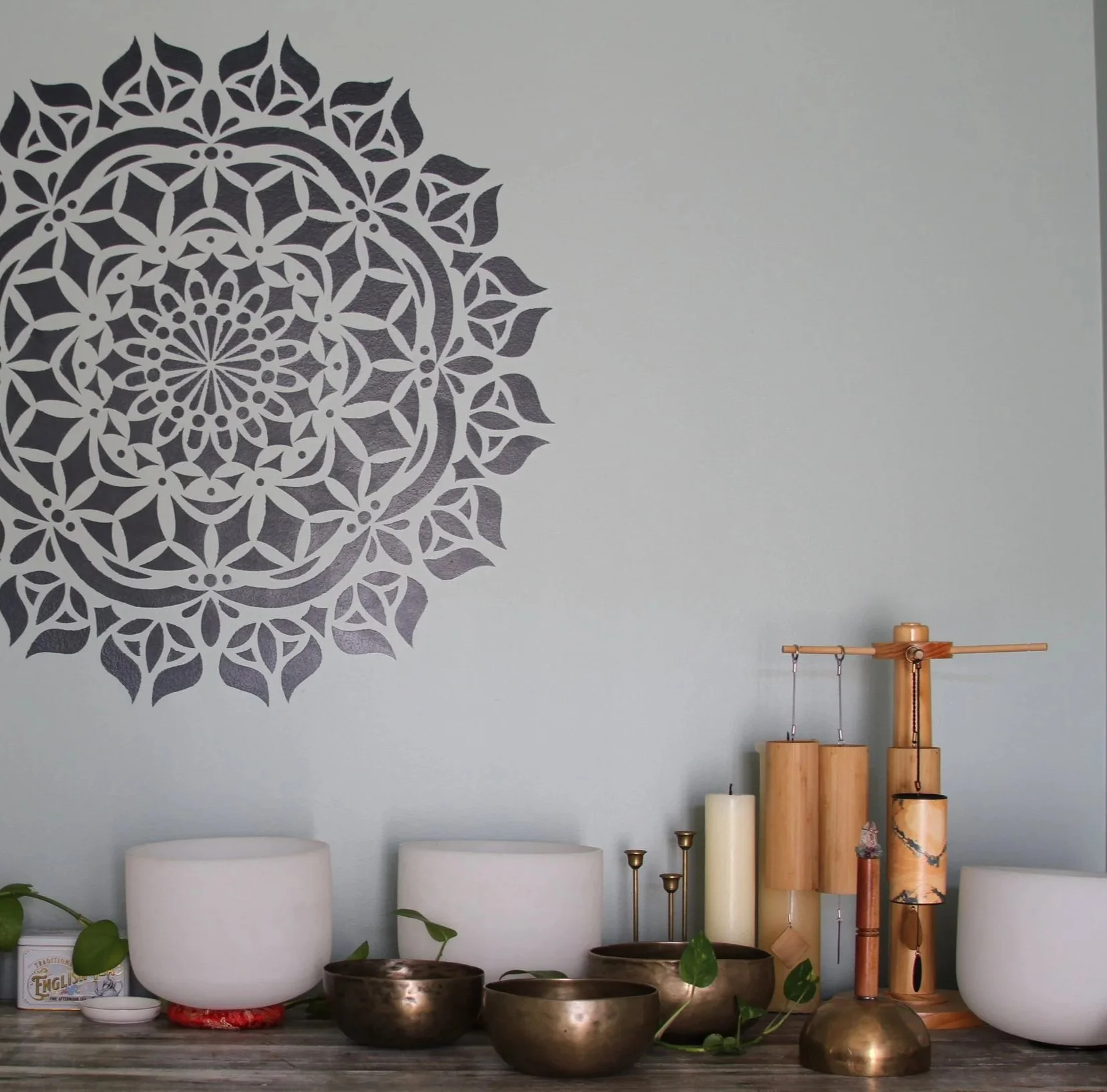
Let the music this month move like summer itself: warm, unhurried, alive. The playlist is built for practice that is full and present without being driven.

A Note from Annie
Dear Friends,
For a long time, my energy was always depleted and always going to the wrong people. I was useful to everyone but myself, and I did not even see it.
Then I was diagnosed with mercury poisoning, and my body made the decision my mind could not. It simply stopped cooperating with the life I had built.
There is a specific day when everything changed. I shared the whole story in a podcast conversation you can find in the resources section. I hope you will listen.
What I can tell you here is that restorative yoga found me in my healing. A bolster, a blanket, stillness. Learning to let my body be supported without doing anything to earn it. That is why I believe so deeply in what we are exploring this month.
Brahmacharya is not about doing less. It is about protecting the source that makes everything else possible.
You deserve a life that does not run you dry.
With love, Annie
P.S. The Art of Letting Go workshop with Cindy K on July 31st is the one I would not miss this month. Restorative yoga gave me my life back. I do not say that lightly. Come let it do something for you.
One more thing before you step into August.
This month has been about building your engine, practicing consistently, tending the deep reservoir of your vitality, learning where your energy goes and choosing to direct it more wisely. That is Abhyasa. That is the practice half of what yoga asks of us.
Next month, we explore the other half.
In August, we are going to practice what it feels like to stop directing and simply trust the current. To let what you have built move through you freely, without gripping, without forcing, without trying to control the direction.
You cannot flow without having first built something to flow from. July is that building.
Welcome to July. Welcome to Thriving. You have more vitality in you than you know.