

February: Connecting
Welcome to February, and welcome to the second month of our year-long journey: Grow with the Flow.
Last month, you explored who you're becoming. You set intentions, reflected on patterns, and planted seeds for the year ahead. Now we ask: Who's supporting that becoming? What relationships nourish your growth? How do you connect to yourself, to others, to community?
We grow in relationships. You don't become who you're meant to be in isolation. You become through connection: with yourself first, then with others, and within the container of community.
This month, we deepen the roots we planted in January by exploring the connections that sustain us.
-
Connecting is about relationship: the quality of attention, presence, and care we bring to ourselves and others. It's not about how many people you know or how busy your social calendar is. It's about depth, authenticity, and mutual support.
In yoga philosophy, the word "yoga" itself means union: to yoke, to join, to connect. Every time you step on your mat, you're practicing connection: breath to movement, mind to body, your individual self to something larger.
This month, we're exploring three dimensions of connection:
1. Connecting to Yourself
The foundation of all relationship. You can't authentically connect with others if you're disconnected from yourself. This means knowing your needs, honoring your boundaries, and maintaining the relationship with the one person you'll be with your entire life: you.2. Connecting to Others
The relationships that support, challenge, and nourish you. Not surface-level interactions, but the deeper connections where you can be seen, held, and supported. This includes asking the hard questions: Which relationships energize me? Which drain me? How can I deepen the connections that matter?3. Connecting to Community (Sangha)
Your spiritual community, the people who walk alongside you on your journey. At South River Yoga, this is your Sangha: the fellow practitioners, the teachers, the collective energy of showing up together. Community practice amplifies individual growth in ways solitary practice cannot.For many of us navigating midlife transitions, our relationships are shifting. Adult children are leaving home. Parents are aging and need more care. Long-term friendships evolve. We're redefining who we are, and that means redefining how we connect. This month honors that evolution and gives you tools to cultivate the connections that support who you're becoming.
-
Last month in January, you planted seeds by asking: "Who am I becoming?" You set intentions, created your sankalpa, and began the practice of self-study (svadhyaya).
This month in February, we recognize that growth doesn't happen in isolation. We grow in relationships. The seed you planted in January needs supportive soil, water, and care…that's what connection provides.
Think about a seedling: it doesn't grow alone. It's connected to the soil through roots, to the sun through leaves, to water through its entire system. It exists in relationship with its environment. You're the same. Your becoming is supported by your connections.
The "Grow with the Flow" progression:
January (Becoming): Who am I becoming? We plant the seed of intention
February (Connecting): Who supports my becoming? We recognize that we grow in relationships
March (Clarifying): Where am I going? We gain clarity about our path forward
April (Rooting): How do I ground myself? We establish the foundation for growth
Connection is the bridge between your individual becoming and the larger journey we're all on together. You're not alone in this transformation, you're held by relationships, supported by community, and nourished by authentic connection.
-
Winter (Jan-Mar): Becoming, Connecting, Clarifying - We awaken and orient ourselves
Spring (Apr-Jun): Rooting, Nourishing, Flourishing - We establish and grow
Summer (Jul-Aug): Thriving, Flowing - We express and surrender
Fall (Sep-Nov): Grounding, Releasing, Harvesting - We transition and gather
Winter (Dec): Stilling - We rest and integrate
-
How do I connect to myself, to others, to community?


Monthly Affirmation: I am connected to myself, to others, and to my community. I grow in relationship
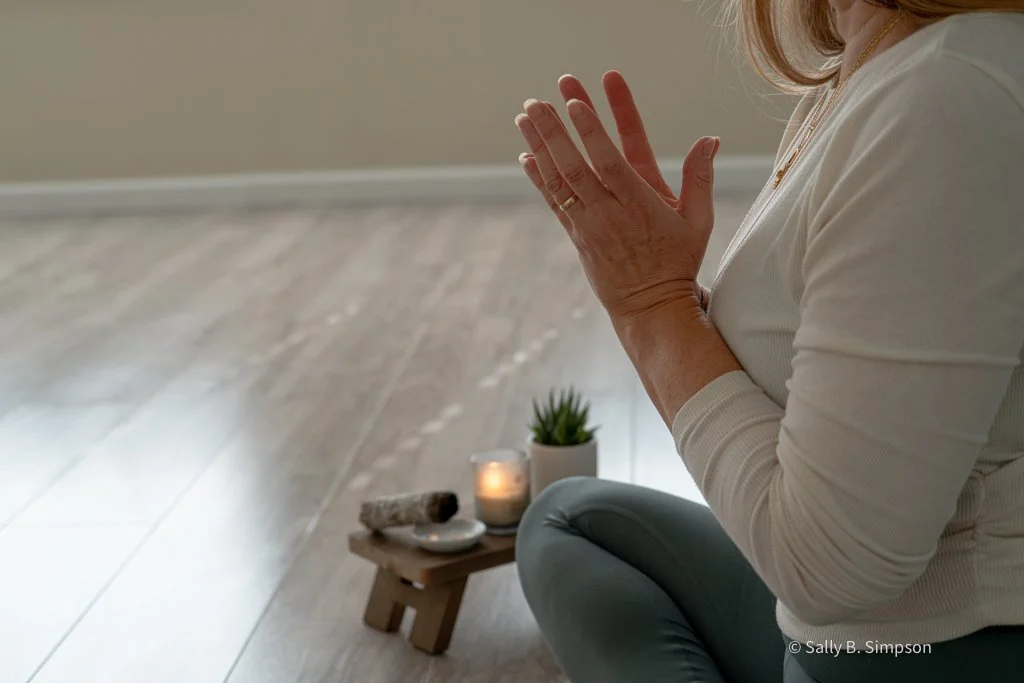
Use this affirmation during meditation, at the beginning of your yoga practice, or anytime you need to remember that you're not alone. You can also create your own affirmation for February based on what connection means to you.
Yoga Philosophy: The Foundation of Connecting
This month's practices are rooted in ancient yoga wisdom that honors relationship as a path to growth and awakening.
Building on January's Foundation
Last month, you practiced Svadhyaya (self-study), learning to witness yourself with compassion rather than judgment. That practice continues this month, because connecting to yourself is the foundation for connecting to others.
You can't authentically show up in relationship if you don't know who you are. The self-awareness you cultivated in January now allows you to connect from a place of truth rather than from people-pleasing, obligation, or old patterns.
The shift from January to February:
January: "Who am I right now? Who am I becoming?"
February: "How do I connect from this place of knowing myself? Who supports my growth?"

Yoga (Union)
The word "yoga" itself means connection. When you practice yoga, you're practicing union: the connection of breath and movement, body and mind, individual self and universal consciousness. Every pose, every breath is an act of connecting.
Sangha (Spiritual Community)
Sangha refers to your spiritual community…the people who support your practice and your growth. In Buddhism, sangha is considered one of the Three Jewels (along with Buddha and Dharma) because community is essential to awakening. You cannot walk the path alone. Kula, meaning family, tribe, or heart family, is also used in yoga communities to describe this same concept of spiritual family or chosen community. The terms are often used interchangeably.
How It Connects to This Month:
Your sangha is here at South River Yoga: the members who show up on their mats beside you, the teachers who guide you, the collective energy of practice together. Sangha provides accountability, inspiration, support, and the mirror you need to see yourself clearly.
In Your Practice: When you walk into the studio, you're not just taking a class…you're joining your sangha. Notice how practicing in community feels different than practicing alone. Let yourself be supported. Let yourself be seen. This is sacred.
Why Community Practice Matters:
Accountability: You show up because others are showing up
Amplification: The collective energy deepens individual practice
Belonging: You're part of something larger than yourself
Mirroring: You see yourself reflected in others' journeys
Support: You're held through transitions and challenges
When we all move through the same monthly themes together, when we're all exploring "Connecting" at the same time, we create shared language and understanding. We become a true sangha, not just people who happen to practice in the same room.
Ahimsa (Non-Violence/Compassion)
Ahimsa is compassion toward all beings, including yourself. It means not causing harm through actions, words, or thoughts. In relationship, ahimsa asks: How can I connect with kindness? How can I honor both my needs and others' needs? How can I communicate truthfully without causing unnecessary harm?
How It Connects to This Month:
Authentic connection requires compassionate honesty. This means speaking your truth (even when it's hard) while respecting the other person's experience. It also means treating yourself with the same compassion you'd offer a dear friend.
In Your Practice:
With Yourself: Notice when you're being harsh or critical. Can you connect to yourself with more gentleness?
With Others: Practice honest communication that doesn't harm. Can you set boundaries with love?
In Community: Create space for others' experiences without needing to fix, judge, or change them.
Metta/Maitri (Loving-Kindness)
Metta is the practice of cultivating unconditional friendliness and goodwill: first toward yourself, then expanding outward to loved ones, neutral people, difficult people, and eventually all beings. It's the active practice of wishing others well.
How It Connects to This Month:
Connection deepens when we approach ourselves and others with genuine care. Metta practice teaches you to extend kindness even when it's difficult, to wish for others' happiness and well-being, and to recognize our shared humanity.
Traditional Metta Phrases:
May I be safe
May I be healthy
May I be happy
May I live with ease
(Then extend to others: "May you be safe, may you be healthy...")
In Your Practice: This month includes a loving-kindness meditation you can practice (see below). Start with yourself (which is often hardest), then extend to those you love, your sangha, and beyond.
Mudita (Sympathetic Joy)
Mudita is the practice of genuinely rejoicing in others' success, happiness, and good fortune…without jealousy, comparison, or resentment. It's the opposite of envy. When someone you know experiences something wonderful, can you feel authentic joy for them?
How It Connects to This Month:
True connection requires celebrating others. In a culture of comparison (especially for women), mudita is radical. It asks: Can you be happy for your friend's success without diminishing your own worth? Can you celebrate another's joy without making it about you?
In Your Practice: Notice when comparison or jealousy arises. Instead of judging yourself for it, practice mudita: "I'm genuinely happy for them. Their joy doesn't diminish mine. There's enough goodness for all of us."
This is especially powerful in community. Celebrating when a fellow yogi achieves a challenging pose, when someone shares good news, when another's practice deepens.
Anahata Chakra (Heart Center)
Anahata is the fourth chakra, located at the heart center. It governs love, compassion, empathy, and connection. "Anahata" means "unstruck sound", the sound that exists without two things striking together, the eternal vibration of the heart.
Anahata is the bridge between the lower three chakras (physical/material) and the upper three chakras (spiritual/consciousness). It's where we balance self-care with care for others, where we hold our own needs while opening to connection.
Qualities of Balanced Anahata:
Compassion for self and others
Healthy boundaries
Capacity to give and receive love
Empathy without losing yourself
Authentic connection
Forgiveness and letting go
Signs of Blocked Anahata:
Difficulty trusting others
Over-giving or people-pleasing
Isolating yourself
Holding grudges
Fear of vulnerability
Codependency or enmeshment
How It Connects to This Month:
Connection lives in the heart. This month, you're practicing opening Anahata, cultivating the capacity to connect authentically while maintaining healthy boundaries. This isn't about being "nice" or making everyone happy. It's about being real, being present, and letting yourself be seen.
In Your Practice Off the Mat:
Breathing into the heart space
Placing hand on heart during meditation
Visualizing green light at heart center
Asking: "What does my heart need right now?"
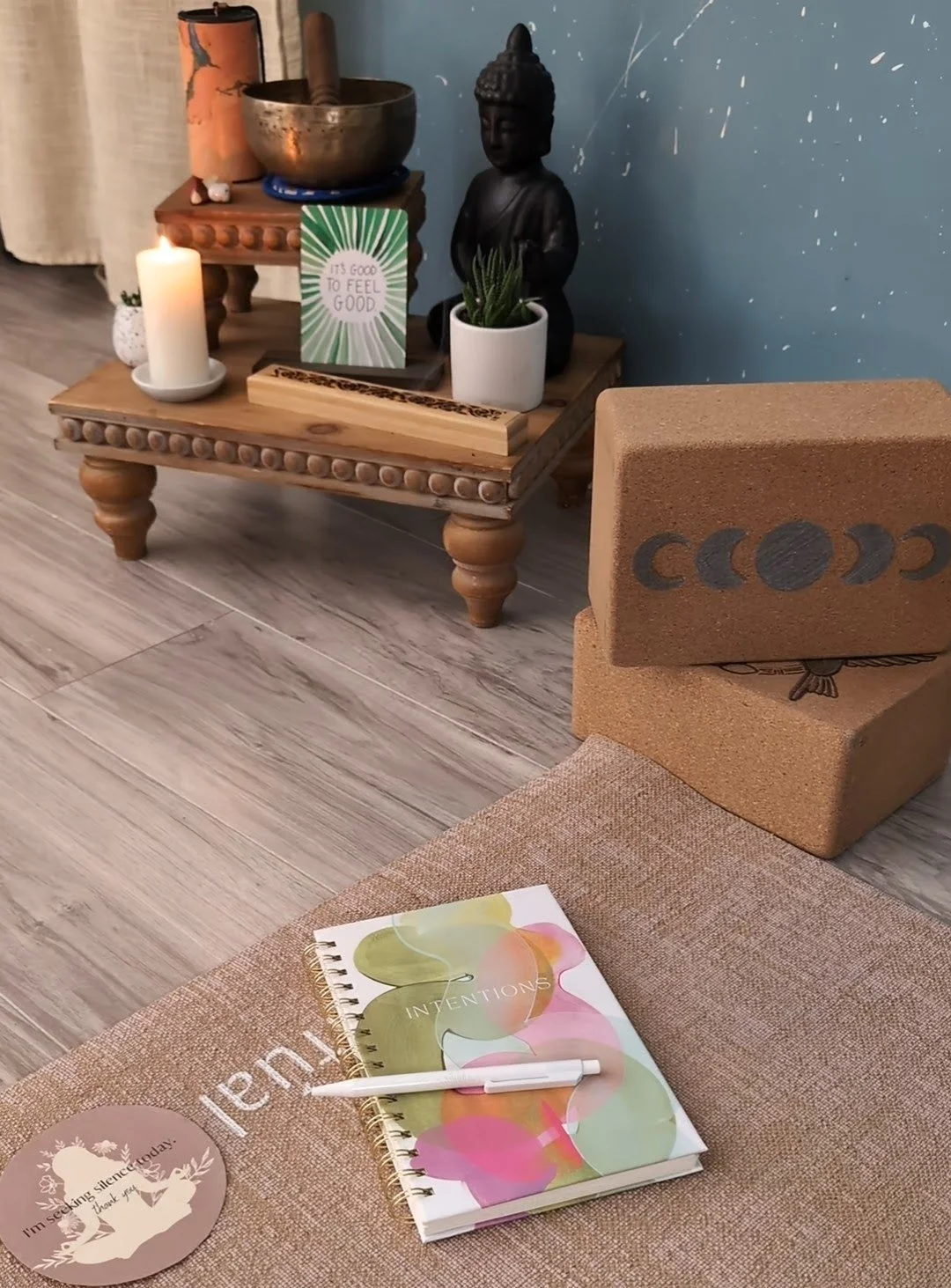
Reflection Prompts for Journaling
Connecting to Myself
How connected do I feel to myself right now? What does that connection feel like (or what does disconnection feel like)?
What are my needs in this season of my life: physically, emotionally, spiritually?
How do I treat myself when I'm struggling? Is there more compassion available?
What does self-connection look like in daily life for me?
Connecting to Other
Which relationships in my life energize me? Which ones drain me?
Where do I long for deeper connection? What's preventing it?
Do I give more than I receive in relationships? Or receive more than I give? What feels out of balance?
What relationship patterns from my past am I still carrying? Are they serving me?
Who supports my becoming? Who truly sees me?
Connecting to Community (Sangha)
What does "community" mean to me? Where do I experience it?
How do I show up in my sangha (at the studio, or in my other communities)? Am I present or just going through the motions?
What prevents me from connecting more deeply with my various communities?
How can I contribute to the community in a way that feels authentic (not obligatory)?
When I practice yoga in community vs. alone, what's different?
Sustaining Connection
What practices help me stay connected to myself when life gets overwhelming?
Which relationships need more attention this month? How will I nourish them?
What boundaries do I need to set to maintain healthy connection?
How will I celebrate the connections that sustain me?
What am I learning about connection this month that I want to carry forward?
Home Practices to Deepen Into the Theme
As you deepen your yoga practice at the studio, these additional home practices are designed to complement what you're learning in class and deepen your connection to this month's theme of Becoming.
Morning Practice: Connecting to Yourself (5-10 minutes)
Arrive (1 min)
Sit comfortably with your morning tea or coffee. Place one hand on your heart. Take three deep breaths.
Journal (3-4 min)
Open your journal and write on one of the journal prompts from above.Notice (1 min)
Close your eyes. Notice what came up. This is self-connection.Set Your Intention (1 min)
Silently state this month's affirmation or your own: "I am connected to myself, to others, and to my community. I grow in relationship.”Close
Place both hands on your heart. Take one deep breath and carry that self-connection into your day.
Altar Practice: Refreshing Your Grow with the Flow Space for Connecting
Last month, you created your Grow with the Flow altar. This month, we're refreshing it for the theme of Connecting.
What Stays:
Your candle (essential for practice)
Sacred objects that ground you
Elements (earth, water, fire, air, space)
The Grow with the Flow graphic or foundation items
What Changes for February:
Remove or Store:
January-specific items
Add for Connecting:
Your February Intention:
Write this month's affirmation (or your own) on beautiful paper
Symbols of Connection:
Photos of people who support your growth (sangha, friends, family)
Objects that represent meaningful relationships (a gift from a friend, a letter, a shared memory)
Heart-shaped stones or objects (Anahata chakra)
Items in pairs or groups (symbolizing relationship, not solitude)
Green items (color of heart chakra)
Nature Items for February:
Early spring buds or branches (growth emerging through connection)
Stones or crystals: rose quartz (love, compassion), green aventurine (heart healing)
Feathers (air element, connected to Anahata)
Community Reminders:
Studio schedule or class reminders
Photo from a workshop or class
Anything that reminds you of your sangha
Monthly Altar Ritual (5-10 minutes):
Set aside time this week to refresh your altar:
Clear: Remove January items with gratitude for last month's journey
Cleanse: Wipe the surface clean, light incense or use essential oil
Reset: Set your February intention: "This space holds my practice of connecting"
Build: Mindfully add your new items, thinking about what each represents
Dedicate: Sit before your altar, light your candle, and state your connection intention
Using Your Altar Throughout February:
Daily: Light your candle for morning practice, meditation, or evening reflection
Weekly: Spend 5 minutes sitting with your altar, noticing what draws your attention
As Needed: When feeling disconnected, come to your altar to reconnect with yourself and your intention
Meditation Practice: Loving-Kindness (Metta) Meditation
This traditional Buddhist practice cultivates loving-kindness toward yourself and others. It's one of the most powerful practices for deepening connection.
How to Practice (10-15 minutes):
Sit comfortably at your altar or anywhere quiet. Close your eyes.
Connect with your breath by bringing awareness to your inhale and exhale.
Begin with yourself (hardest but most important):
Place your hand on your heart. Silently repeat these phrases:May I be safe
May I be healthy
May I be happy
May I live with ease
Repeat 3-5 times, letting the words sink in. Feel what it's like to wish yourself well.
Extend to a loved one:
Bring to mind someone you love easily (not complicated relationship). Visualize them. Repeat:May you be safe
May you be healthy
May you be happy
May you live with ease
Extend to a neutral person:
Someone you see regularly but don't know well (someone at the yoga studio, a neighbor). Send them the same wishes.Extend to someone difficult (optional, advanced):
If you're ready, bring to mind someone you're struggling with. This doesn't mean condoning harm, it means recognizing their humanity. Repeat the phrases.Extend to your sangha:
Visualize your yoga community, all the people who practice beside you. Send loving-kindness to the whole sangha.Extend to all beings:
Expand your awareness to include everyone, everywhere:May all beings be safe
May all beings be healthy
May all beings be happy
May all beings live with ease
Return to yourself:
Come back to your own heart. Hand on heart. One final round for yourself.Close:
Take three deep breaths. Open your eyes slowly.
Practice this 2-3 times per week this month. Notice how it shifts your relationship with yourself and others.
Connection Practice: Reaching Out (Daily Micro-Practice)
What It Is:
Each day this month, reach out to one person with genuine connection. Not obligation, not checking a box…real, authentic connection.
How to Practice:
Option 1: Gratitude Text/Call
Send a text or make a quick call to someone who has supported you. Be specific:
"I was thinking about you today and wanted to say thank you for..."
"I'm grateful for how you..."
"Your support with [specific thing] meant so much to me"
Option 2: Check In
Reach out to someone you've been thinking about:
"How are you? (And I really want to know)"
"I haven't talked to you in a while and wanted to check in"
"Thinking of you…what's exciting in your world?"
Option 3: Celebrate Them
Notice something about someone and tell them:
"I love how you..."
"I admire your ability to..."
"I see you showing up for..."
Option 4: Be Vulnerable
Share something real with someone you trust:
"I'm struggling with [thing] and wanted to share that with you"
"Can I tell you what's been on my mind?"
"I need support with..."
The Practice:
Do this once a day (or as often as you can)
Keep it brief—30 seconds to 2 minutes
Don't expect anything in return
Notice how it feels to initiate connection
Track in your journal or on your phone
Why This Matters:
Connection requires action. This practice moves you out of isolation and into relationship, one small gesture at a time.
Creative Practices for Connecting
Relationship Inventory: Take 20 minutes to map your relationships:
Draw three circles (concentric, like a target):
Inner circle: Closest relationships, people who truly see you
Middle circle: Important relationships, regular connection
Outer circle: Acquaintances, surface connections
Place people's names in the appropriate circles
Reflect:
Is my energy balanced across these circles?
Are the people in my inner circle actually supporting my growth?
Who do I wish was in a different circle?
Where am I giving more than I'm receiving (or vice versa)?
Who's missing from my circles that I want to connect with more?
Choose one action based on what you notice:
Deepen a relationship (move someone from middle to inner circle)
Set a boundary (acknowledge someone drains you)
Reconnect with someone you miss
Appreciate someone in your inner circle
Integration: Bringing It to the Studio
Your home practices support your studio practice. Here's how to integrate this month's theme when you come to class:
Before Class:
Set an intention to connect: to yourself, to the teacher's guidance, to the community energy
Notice if you're isolating (corner of the room, avoiding eye contact) or opening to connection
Greet someone, make eye contact, let yourself be seen
During Class:
When the teacher mentions "connecting" or "sangha," let it sink in
Notice moments of connection: breath to movement, your awareness to your body
Feel the collective energy of practicing together. How is it different than practicing alone?
Practice Anahata awareness in heart-opening poses
After Class:
Stay for an extra minute instead of rushing out
Thank the teacher (connection through gratitude)
Talk to the person next to you
Notice how you feel having practiced in community
Community Commitment:
This month, choose ONE way to deepen your connection to the studio sangha:
☐ Arrive 5 minutes early to class and chat with other students
☐ Stay 5 minutes after class instead of rushing out
☐ Introduce yourself to someone new
☐ Attend the February signature event
☐ Post or interact on the Community Facebook Group
☐ Say yes to a post-class coffee invitation
☐ Invite someone from class to join you at another class.
Choose what feels authentic (not forced), then commit to it for the month.
Recommended Reading & Listening
Want to go deeper? Here are some resources:
Books
Atlas of the Heart by Brené Brown
A comprehensive exploration of 87 emotions and experiences that define what it means to be human. Perfect for understanding the nuances of connection, vulnerability, and relationship.
The Good Life: Lessons from the World's Longest Scientific Study of Happiness by Robert Waldinger & Marc Schulz
Based on Harvard's 80+ year study showing that good relationships are the key to happiness and health. Relationship quality matters more than wealth, fame, or achievement.
Together: The Healing Power of Human Connection in a Sometimes Lonely World by Vivek Murthy
The former U.S. Surgeon General explores the loneliness epidemic and how human connection is essential to health and well-being.
The Gifts of Imperfection by Brené Brown
Explores how to cultivate courage, compassion, and connection by embracing vulnerability and letting go of who we think we're supposed to be.
The Four Agreements by Don Miguel Ruiz
Ancient Toltec wisdom about how to create healthy, authentic relationships through awareness and integrity.
Connect: Building Exceptional Relationships with Family, Friends, and Colleagues by David Bradford and Carole Robin
A resource for anyone hoping to improve existing relationships and build new ones at any stage of life.
Podcasts/Talks
"How Our Relationships Can Impact Our Health and Longevity"
The Doctor's Farmacy with Dr. Mark Hyman (featuring Dr. Robert Waldinger)
Deep dive into the Good Life study and the science of how relationships literally affect our health and lifespan.
"Friendship is Vital! Why We Need Platonic Love with Dr. Marisa G. Franco"
Thick Thighs Save Lives Podcast
Why platonic relationships are essential for our mental, emotional, and physical health, and why our culture has quietly taught us to deprioritize them.
"The Power of Vulnerability"
TEDTalk Brené Brown
Classic conversation about how vulnerability is the birthplace of connection.
"The Awesome Power of "Touchy-Feely" | Carole Robin and David Bradford”
10% Happier with Dan Harris
The hallmarks of exceptional relationships.
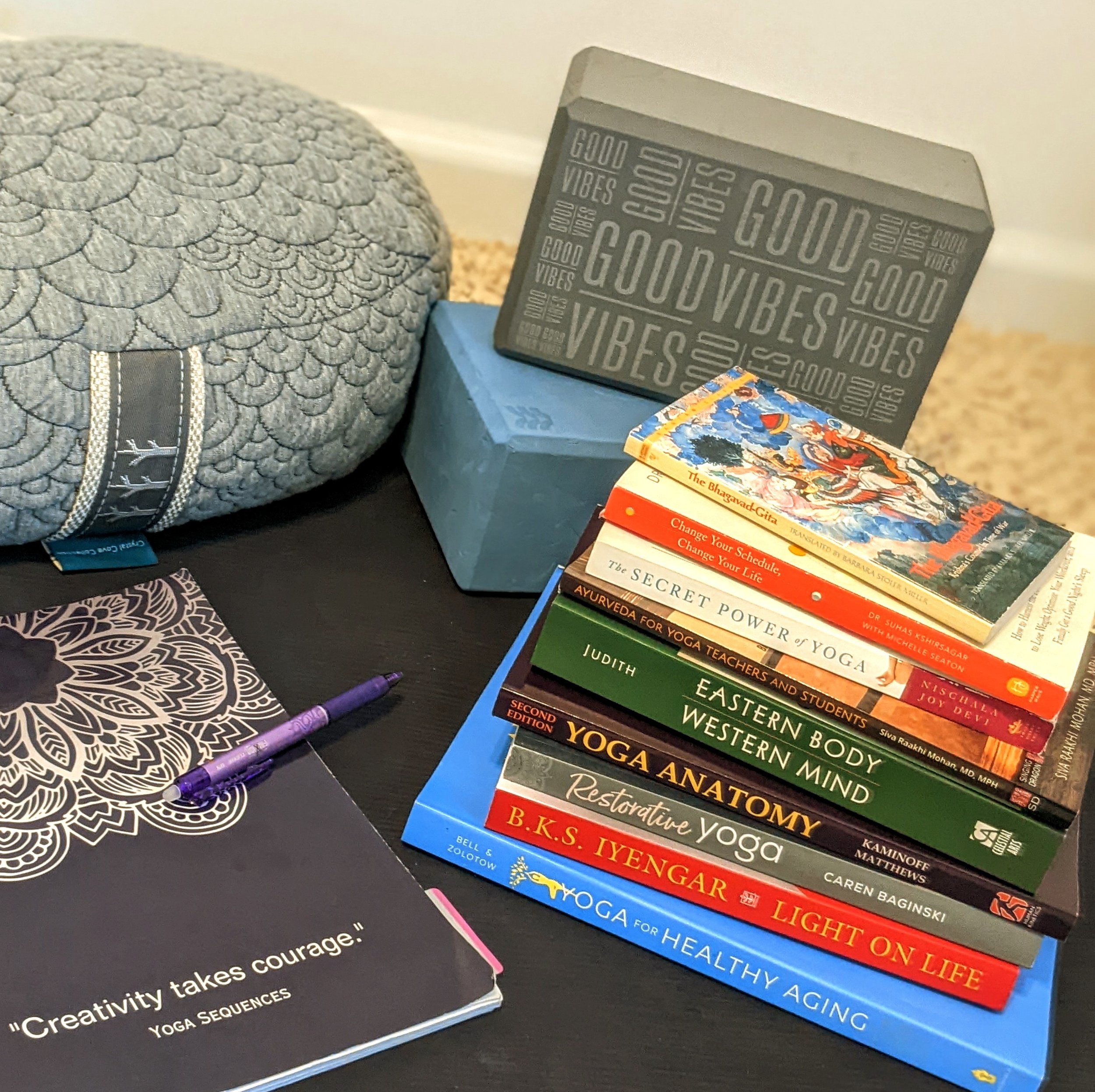
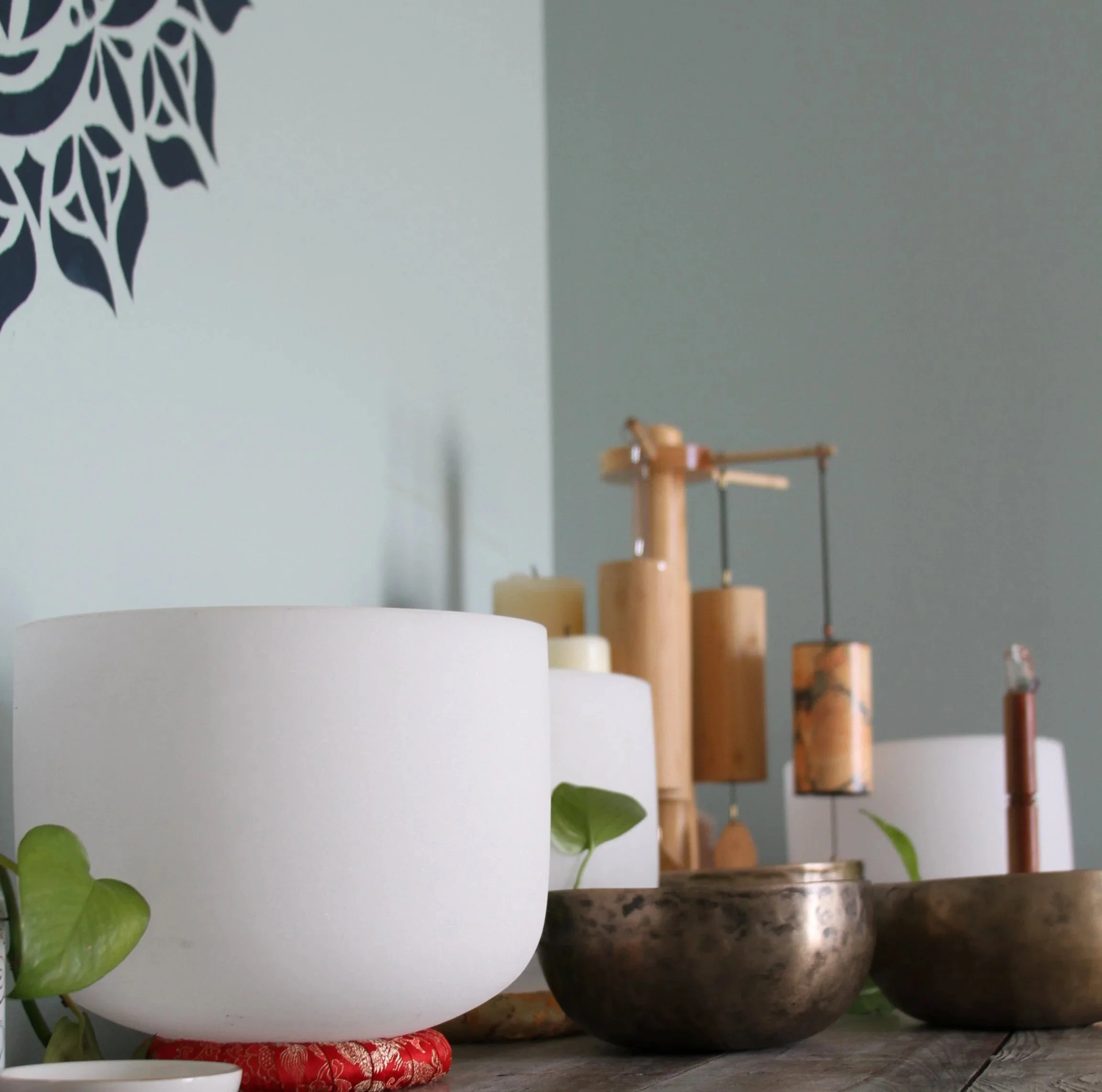
Let music support your connecting practice. This playlist is curated to inspire reflection, movement, and transformation throughout February.
A Note from Annie
Dear Friends,
I've been thinking a lot about connection this month, and specifically about the difference between collecting people and cultivating depth.
For years, I thought having a lot of friends meant I was well-connected. A full social calendar, dozens of acquaintances, people I could wave to at Target. But somewhere late in my 40s, I went through a Brené Brown training that taught me that "fitting in is the enemy of belonging." And suddenly I realized: I'd been trying to fit in everywhere, but I didn't always truly belong. My energy changed. My capacity changed. And I didn't want to keep up with the breadth of relationships I'd been maintaining anymore.
I started realizing that I'd rather have five people who truly know me than fifty who know the version of me I perform in public.
Then I learned something that changed how I think about relationships entirely: the idea that people come into your life for a Reason, a Season, or a Lifetime.
Reason: Some people show up to teach you something specific, to support you through a particular challenge, or to meet a need in that moment. Once that reason is fulfilled, the relationship naturally completes. And that's okay.
Season: Some people are meant to be part of a specific chapter of your life: a few months, a year, maybe several years. They're perfect for that season, but not meant for the whole journey.
Lifetime: These are the deep, enduring connections that last through all your transitions and transformations. The ones who see you, hold you, and grow alongside you.
Understanding this framework gave me so much freedom. I stopped trying to force "reason" or "season" people into "lifetime" roles. I stopped feeling guilty when friendships naturally faded. I started honoring what each connection was meant to be, rather than what I thought it should be.
Here's what I discovered: The more connected I am to myself, the more I can recognize which relationships truly nourish me.
When I know my needs, I can communicate them. When I honor my boundaries, I can show up without resentment. When I'm honest about my struggles, I create space for others to be honest too. Self-connection is the foundation for everything else.
The women I practice with at South River? Many of them have become my "lifetime" people. Not because we text every day or see each other outside the studio (though some of us do), but because we show up on our mats together, week after week, witnessing each other's journeys. That's sangha. That's the kind of connection that sustains growth.
This month, I'm not asking you to expand your social circle. I'm asking you to honor the connections that truly matter, and to release the guilt around letting others go.
If you're feeling lonely or disconnected, please know: Your sangha is here. We're practicing beside you. You're not alone.
Come to class. Stay after instead of rushing out. Talk to the person next to you. Let us see you. Because we don't grow in isolation. We grow in relationship.
You are part of this sangha. You belong here. And we're connecting together.
With deep gratitude,
Annie
P.S. If this month's theme is bringing up feelings of isolation or loneliness, please reach out. Send me an email, talk to me after class, or simply show up…your presence is connection, even when it doesn't feel like it.