

Month: Rooting
Welcome to April!
"The creation of a thousand forests is in one acorn." - Ralph Waldo Emerson
Welcome to the forth month of our year-long journey: Grow with the Flow. Don’t forget you can always go back and revisit previous months if you want to review or you’re new here!
You've been on quite a journey already. In January, you explored who you're becoming. You planted seeds of intention and began the practice of self-study. In February, you recognized that you don't become alone. You grow in relationship, supported by connection to yourself, to others, and to your sangha. In March, you gained clarity about your path forward, learning to see what's true and trust your inner vision.
Now in April, it's time to root.
Here's what you've learned over these first three months: you can have beautiful intentions, deep connections, and crystal-clear vision. But without roots, without a strong foundation, without practices that ground you, everything becomes unstable. You can't grow up without growing down first.
This month is about establishing the foundation that will support all future growth. It's about grounding yourself in practices, routines, and discipline. It's about connecting to the earth beneath your feet and letting your roots go deep.
Welcome to Rooting. Welcome to the foundation.
-
Rooting is the practice of establishing a strong, stable foundation. It's about grounding yourself in what supports you, creating routines and practices that anchor you, and letting your roots grow deep enough to sustain your growth.
Think about a tree. Before it can reach toward the sky, before it can branch out and bloom, it must first establish a root system. The roots anchor it against wind and storm. The roots draw nourishment from the earth. The roots provide the stability that allows everything else to flourish.
You are the same. Your becoming (January), your connections (February), and your clarity (March) all need a foundation to grow from. Without roots, you're easily blown off course. Without grounding, you lose your center. Without a strong base, growth becomes unstable.
Rooting is about:
Foundation: What practices, routines, and commitments anchor you?
Stability: What keeps you grounded when life feels chaotic?
Nourishment: What feeds your growth from deep within?
Discipline: What daily actions support your long-term vision?
Earth connection: How do you ground yourself in your body and the physical world?For many of us navigating midlife, this is crucial. Life can feel ungrounded. Routines that once worked no longer serve us. The foundation we built in our 20s and 30s may be crumbling. We need to re-root ourselves, establishing practices that support who we're becoming NOW, not who we were.
This month honors that work. You're not just maintaining old habits. You're consciously choosing what roots to grow, what foundation to build, what ground to stand on.
-
In January, you asked: "Who am I becoming?" You set intentions, created your sankalpa, and began cultivating self-awareness. You planted seeds.
In February, you recognized: "I grow in relationship." You practiced connecting to yourself, to others, and to your sangha. You acknowledged that growth doesn't happen in isolation.
In March, you gained clarity: "What do I see as my path forward?" You practiced discernment, trusted your intuition, and clarified your vision. You could see where you're headed.
Now in April, you recognize: I need strong roots to support this growth. All the intentions, connections, and clarity in the world won't matter if you don't have the foundation to sustain them.
The "Grow with the Flow" progression:
January (Becoming): Who am I becoming? We plant the seed of intention
February (Connecting): Who supports my becoming? We recognize we grow in relationship
March (Clarifying): What do I see as my path forward? We gain clarity about our direction
April (Rooting): How do I ground myself? We establish the foundation that will support all future growth
May (Nourishing): What feeds my growth? We learn to tend ourselves with care
April is the turning point. You've done the internal work. You've clarified your vision. Now you're building the structure that makes it all sustainable. You're establishing the practices that will carry you through the entire year.
Roots grow in the dark, beneath the surface, unseen. But without them, nothing above ground can survive.
-
Winter (Jan-Mar): Becoming, Connecting, Clarifying - We awaken and orient ourselves
Spring (Apr-Jun): Rooting, Nourishing, Flourishing - We establish and grow
Summer (Jul-Aug): Thriving, Flowing - We express and surrender
Fall (Sep-Nov): Grounding, Releasing, Harvesting - We transition and gather
Winter (Dec): Stilling - We rest and integrate
-
Earth Day Celebration and Vendor Fair
Sunday, April 19, 2026 | 10:30amWhat to expect:
Outdoor Yoga class at 10:30am in our parking lot
Vendor fair with 20+ small, local businesses
Special SRY swag and new merchandise in the boutique
Member-Only Deals and gifts!
Be sure to register for the free class!
How do I ground myself? What is the foundation I need to sustain growth?
"I am rooted. I am grounded. I trust the foundation I am building."
Use this affirmation during meditation, in standing poses, when you feel ungrounded, or anytime you need to remember that you are supported and stable.
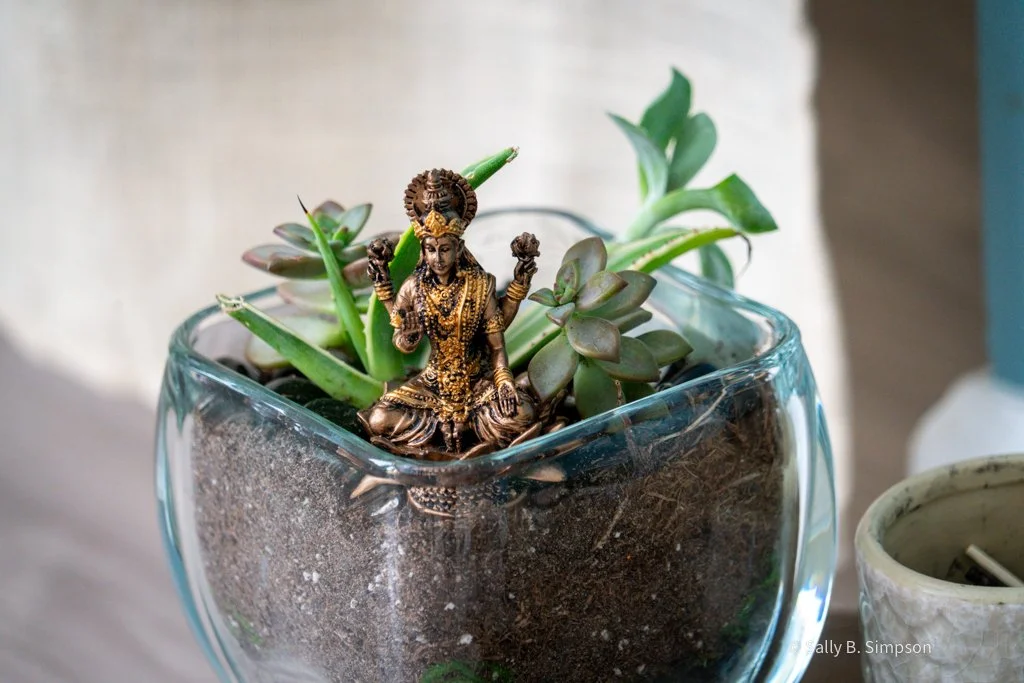
Yoga Philosophy: The Foundation of Rooting
This month's practices are rooted in ancient yoga wisdom that honors foundation, stability, and the earth as our ultimate ground.
Building on Previous Months
In January, you practiced Svadhyaya (self-study), learning to witness yourself with compassion. In February, you practiced connection to yourself, others, and community. In March, you practiced Viveka (discernment) and Satya (truthfulness), gaining clarity about your path.
Now in April, all of that inner work needs a container. It needs structure. It needs a foundation strong enough to hold your growth.
The shift to April:
January: "Who am I becoming?"
February: "Who supports me?"
March: "What do I see clearly?"
April: "What ground am I standing on? What foundation supports all of this?"

Muladhara Chakra (Root Chakra)
Muladhara is the first chakra, located at the base of the spine. It governs our sense of safety, security, stability, and groundedness. When Muladhara is balanced, we feel rooted, secure, and able to meet our basic needs. We trust that we are supported and have what we need to survive and thrive.
This chakra is literally our foundation. Everything else, all six chakras above it, rests on the stability of Muladhara. If your root chakra is unbalanced, everything else becomes shaky.
Qualities of Balanced Muladhara:
Feeling grounded and stable
Sense of safety and security
Ability to meet basic needs
Trust in yourself and life
Physical vitality and health
Connection to your body
Presence in the here and now
Healthy boundaries
Signs of Imbalanced Muladhara:
Feeling ungrounded, spacey, disconnected
Anxiety about survival (money, housing, food)
Physical issues (lower back pain, digestive issues, fatigue)
Difficulty being present
Hoarding or excessive attachment to material things
Fear and insecurity
Restlessness, inability to settle
How It Connects to This Month:
April is about strengthening Muladhara. You're cultivating the sense of being rooted, grounded, and supported. You're establishing practices that help you feel safe and stable. You're building trust that you have what you need.
In Your Practice:
Standing poses that root down through the feet
Forward folds that ground you
Seated meditation connecting to the earth
Visualizing red light at the base of spine
Affirmations: "I am grounded. I am safe. I am supported."
Physical grounding: barefoot walking, time in nature
This Month's Focus:
Every practice, every meditation, every moment on your mat is an opportunity to strengthen your root. When you feel ungrounded, come back to Muladhara. Plant your feet. Feel the earth. Remember: you are supported.
Tapas (Discipline, Heat, Austerity)
Tapas literally means "heat" or "to burn." In yoga philosophy, it refers to the discipline and sustained effort required to create transformation. Tapas is the fire of practice, the commitment to show up even when you don't feel like it, the willingness to do what needs to be done.
Think of it like this: when you want to forge metal, you need heat. When you want to transform yourself, you need tapas. It's the friction, the effort, the discipline that creates change.
But tapas isn't about punishment or forcing yourself. It's about devotion to your practice. It's about building the kind of discipline that supports your highest good.
How It Connects to This Month:
Roots don't grow from sporadic effort. They grow from consistent, sustained practice. Tapas is what allows you to show up day after day, building the routines and practices that become your foundation.
Without tapas, your intentions remain wishes. With tapas, they become reality.
In Your Practice:
Showing up to your mat even when you don't feel like it
Committing to your weekly practices
Aim for 3-4 days of yoga (including a restorative practice if possible)
Morning and evening rituals that might include meditation, journaling, pranayama (breathing techniques)
Building sustainable routines
Choosing discipline over distraction
Staying with difficulty instead of avoiding it
The "heat" of challenging poses that build strength
Tapas is NOT:
Punishment or self-criticism
Forcing yourself past healthy limits
Perfectionism or rigidity
Discipline that harms you
Tapas IS:
Loving commitment to your growth
Showing up consistently
Building practices that serve you
The willingness to do what matters
The Balance:
Tapas must be balanced with compassion (ahimsa-see February) and non-attachment (aparigraha-will dive into this more in a later month!). Yes, you need discipline. But you also need kindness toward yourself. Yes, you need to show up. But you also need to rest when your body needs it.
Tapas is the fire that roots need to grow strong. Not the fire that burns everything down, but the warmth that nourishes growth.
Sthira and Sukha (Stability and Ease)
Patanjali's Yoga Sutra 2.46 states: "Sthira sukham asanam" which translates to "Asana should be steady and comfortable" or "The posture should be stable and easeful."
This is one of the most important teachings in all of yoga. Every pose, every practice, every moment of your life should balance these two qualities: stability AND ease, effort AND surrender, grounding AND softness.
How It Connects to This Month:
Rooting isn't about becoming rigid or inflexible. It's about finding the balance between being grounded (sthira) and being at ease (sukha). Your foundation should be strong enough to support you, but not so rigid that it can't adapt.
Think about a tree again. Its roots are stable, anchored deep. But they're also flexible enough to move with the earth, to adjust around rocks, to bend without breaking.
In Your Practice:
On the mat:
In standing poses: root down through your feet (sthira) while softening your shoulders and jaw (sukha)
In balance poses: find your stable base while breathing easily
In challenging poses: stay grounded in your foundation while releasing unnecessary tension
Off the mat:
Building routines that are consistent (sthira) but adaptable (sukha)
Discipline that feels sustainable, not punishing
Grounding yourself while remaining open to change
Creating structure without rigidity
The Questions to Ask:
Am I stable or am I rigid?
Am I easeful or am I collapsing?
Where can I find more grounding?
Where can I soften?
The Practice:
Every time you're on your mat this month, ask: "Where is my sthira? Where is my sukha?" Find both. Hold both. This is mastery.
Prithvi (Earth Element)
In yoga philosophy, everything in the universe is made up of five elements (pancha mahabhutas): earth, water, fire, air, and space. Earth (Prithvi) is the most solid, the most grounding, the foundation of all the others.
Earth represents:
Stability and structure
Physical body and matter
Groundedness and presence
Nourishment and support
Fertility and growth
The tangible and material
Prithvi is associated with Muladhara chakra, with the sense of smell, and with the legs and feet, the parts of us that literally connect to earth.
How It Connects to This Month:
When you need to ground yourself, you connect to the earth element. You feel your body (earth). You stand on the ground (earth). You eat nourishing food (earth). You notice what's solid and real.
Earth is the element of manifestation. Your intentions and visions are air and space. Your clarity is fire. But earth is what makes it all real, tangible, grounded in the physical world.
In Your Practice:
Standing poses that emphasize grounding through feet
Mountain pose (Tadasana): literally becoming a mountain
Squats and lunges that build strength in legs
Barefoot practice to feel the earth
Spending time in nature
Eating root vegetables (literally food from the earth)
Working with your hands, gardening, pottery
Body awareness practices
Earth Meditation:
Sit or lie down. Feel the parts of your body touching the earth (or floor). Notice the solidity beneath you. You are held. You are supported. The earth is always there, stable and constant. You can trust it. Let yourself be held.
The Wisdom of Earth:
Earth teaches us: patience (things grow in their own time), stability (earth doesn't move quickly), nourishment (everything we need comes from earth), and presence (earth is always right here, right now).
This month, be like the earth. Solid. Grounded. Nourishing. Present.

Reflection Prompts for Journaling
What Grounds Me?
When do I feel most grounded? What conditions create that feeling?
What are my current daily routines and practices? Which ones support me? Which ones don't?
Where in my body do I feel grounded? Where do I feel ungrounded or disconnected?
What does "home" mean to me? Where do I feel most rooted?
What Foundation Do I Need?
What practices or routines would support my growth if I committed to them daily?
Where in my life do I need more stability right now?
How do I want to feel in my body? What would help me feel more connected to it?
What does discipline mean to me? How is my relationship with discipline (tapas)?
Building Sustainable Practice
What gets in the way of my consistent practice? Time? Energy? Belief?
What would make daily practice feel sustainable (not punishing)?
How can I balance discipline (sthira) with ease (sukha) in my routines?
What support do I need to maintain my practices?
What's one small practice I can commit to every single day this month?
Trusting My Foundation
What have I learned about myself this month through building foundation?
Which practices have become easier with repetition?
Where do I feel more grounded now than I did on April 1?
What foundation am I carrying into May (Nourishing)?
How has my relationship with my body changed through grounding practices?
Home Practices to Deepen Into the Theme
As you deepen your yoga practice at the studio, these additional home practices are designed to complement what you're learning in class and deepen your connection to this month's theme of Rooting.
Morning Practice: Grounding Your Day (5-10 minutes)
Start each day by grounding yourself before the world pulls you in different directions.
Before getting out of bed (1 min)
Notice your body. Feel the weight of your body on the bed. You are supported. Take three deep breaths.Stand barefoot (2 min)
When you get up, stand barefoot on the floor (or earth if possible). Feel your feet on the ground. Wiggle your toes. Press down through all four corners of each foot. Feel the earth supporting you.Mountain Pose (1 min)
Stand tall with feet hip-width apart. Root down through your feet. Lengthen up through your spine. Feel yourself as a mountain: rooted below, reaching above. Say your affirmation: "I am rooted. I am grounded."Journal (3-4 min)
Write on one prompt from the journaling section. Or simply write: "Today I am grounded in..." and list three things.Set your intention (1 min)
What one practice will ground you today? (It can be as simple as "I will notice my feet on the earth three times today")
Altar Practice: Refreshing Your Grow with the Flow Space for Rooting
Last month, your altar focused on clarity and vision. This month, we're refreshing it for grounding, stability, and earth connection.
What Stays:
Your candle
Sacred objects that ground you
The Grow with the Flow graphic
What Changes for April:
Remove or Store:
March clarity items (clear crystals, mirrors, indigo items)
Add for Rooting:
Your April Intention:
Write your rooting intention or this month's affirmation on paper
Earth Element Items:
Stones, rocks, or crystals (especially red or brown ones: red jasper, hematite, smoky quartz)
Soil or sand in a small bowl
A living plant with visible roots
Items from nature (pinecones, acorns, tree bark)
Something red (Muladhara color)
Symbols of Foundation:
Images of trees with strong root systems
Photos of mountains, rocks, stable structures
Something from your childhood home (what first rooted you?)
Items that represent stability to you
Grounding Tools:
Your journal (daily practice builds foundation)
Habit tracker (see below!)
Something that smells like earth (patchouli, vetiver, cedarwood)
Monthly Altar Ritual (5-10 minutes):
Clear: Remove March items with gratitude for the clarity you gained
Cleanse: Wipe the surface, perhaps with earth-scented essential oil
Ground: Sit or stand before your altar barefoot. Feel your connection to earth
Build: Add your April items mindfully, thinking about what each represents for your foundation
Dedicate: Light your candle. Place both hands on the earth (or floor). State your rooting intention: "This space holds my practice of grounding and building strong roots"
Using Your Altar Throughout April:
Daily: Sit at your altar for morning practice
Weekly: Light your candle and review your habit tracker or practices
When ungrounded: Come to your altar, touch the earth items, remember you are supported
Earth Day (April 22): Add something new from nature to honor the earth
Grounding Meditation: Roots Growing Deep
[This is a simple visualization meditation for grounding]
How to Practice (10-15 minutes):
Sit comfortably with your spine long, either on the floor or in a chair with feet flat on the ground
Close your eyes and take three deep breaths
Feel your sit bones (if sitting on floor) or your feet (if in a chair) connecting to the earth
Visualize roots:
Imagine roots growing from the base of your spine down into the earth
Or imagine roots growing from the soles of your feet
See them growing slowly, steadily, going deeper and deeper
They wind around rocks, through layers of soil, finding their way down
As your roots grow deeper:
You feel more stable, more grounded
You draw nourishment from the earth up through your roots
You feel held, supported, safe
Nothing can blow you over because your roots are so deep
Breathe:
Inhale: draw nourishment up from the earth through your roots
Exhale: let your roots grow even deeper
Continue for several minutes
Affirmation:
Silently repeat: "I am rooted. I am grounded. I am supported."
Return slowly:
Begin to deepen your breath
Wiggle fingers and toes
Open your eyes
Practice this 3-5 times per week. Anytime you feel ungrounded, come back to your roots
Earthing Practice: Physical Grounding
Earthing (or grounding) is the practice of making direct physical contact with the earth. Research shows it can reduce inflammation, improve sleep, and decrease stress.
How to Practice:
Option 1: Barefoot Walking (10-20 min)
Walk barefoot on grass, soil, sand, or stone
Pay attention to the sensations in your feet
Notice temperature, texture, moisture
Walk slowly, feeling each step
Let the earth support each footfall
Option 2: Sitting or Lying on Earth (15-30 min)
Find a spot outside (grass, beach, forest floor)
Sit or lie down directly on the earth
Feel as much of your body touching the ground as possible
Breathe, relax, let yourself be held
Option 3: Gardening or Working with Earth (30+ min)
Plant something, dig in soil, tend a garden
Let your hands touch the earth directly
Feel the soil, notice its qualities
This is both grounding and creative
When to Practice:
Try to do some form of earthing at least 3 times per week
Even 10 minutes makes a difference
Best times: early morning or late afternoon
Can be combined with meditation or simply rest
Why This Matters: When you're ungrounded, spend time with the earth. Let it remind you that you are supported, that you are part of nature, that you have everything you need.
Creating Daily Routines: Building Your Foundation
Strong roots come from consistent practice. This month is about establishing routines that ground you.
The Practice: Choose 3 Grounding Anchors
These are non-negotiable practices you commit to every day. They become the foundation of your day.
Examples of Grounding Anchors:
Morning meditation or breathing practice (5-10 min)
Journaling (5 min)
Barefoot time on earth (10 min)
Mindful tea or coffee ritual (5 min)
Evening gratitude practice (5 min)
Standing in mountain pose (2 min)
Body scan before sleep (10 min)
Your 3 Grounding Anchors for April:
Time of day: ________ Duration: _______
Time of day: ________ Duration: _______
Time of day: ________ Duration: _______
Tips for Success:
Start small (5-10 min each)
Stack with existing habits (after coffee, before bed)
Same time each day builds consistency
Track them (see habit tracker below)
Be compassionate when you miss a day
What matters is coming back, not perfection
This is tapas in action. Showing up day after day builds the foundation that supports everything else.
Habit Tracker: Tracking Your Roots
We’ve created this printable Habit Tracker for you to monitor your daily grounding practices throughout April.
Integration: Bringing It to the Studio
Your home practices support your studio practice. Here's how to integrate this month's theme when you come to class:
Before Class:
Arrive a few minutes early
Take off your shoes and feel your bare feet on the floor
Stand in mountain pose, feel your foundation
Set an intention to ground and root
During Class:
Every standing pose: feel your feet, root down
Every balance pose: find your steady base
When teacher mentions "grounding" or "rooting," really listen
Notice sthira (stability) and sukha (ease) in each pose
In challenging moments, come back to your foundation
After Class:
Before rushing out, stand in mountain pose for 30 seconds
Feel how grounded your body is after practice
Notice the difference between how you feel now vs. when you arrived
Remember: Your studio practice is where you physically build your foundation. Strong legs, stable core, grounded feet—this is Muladhara work. Your home practices simply help you maintain that groundedness off the mat.
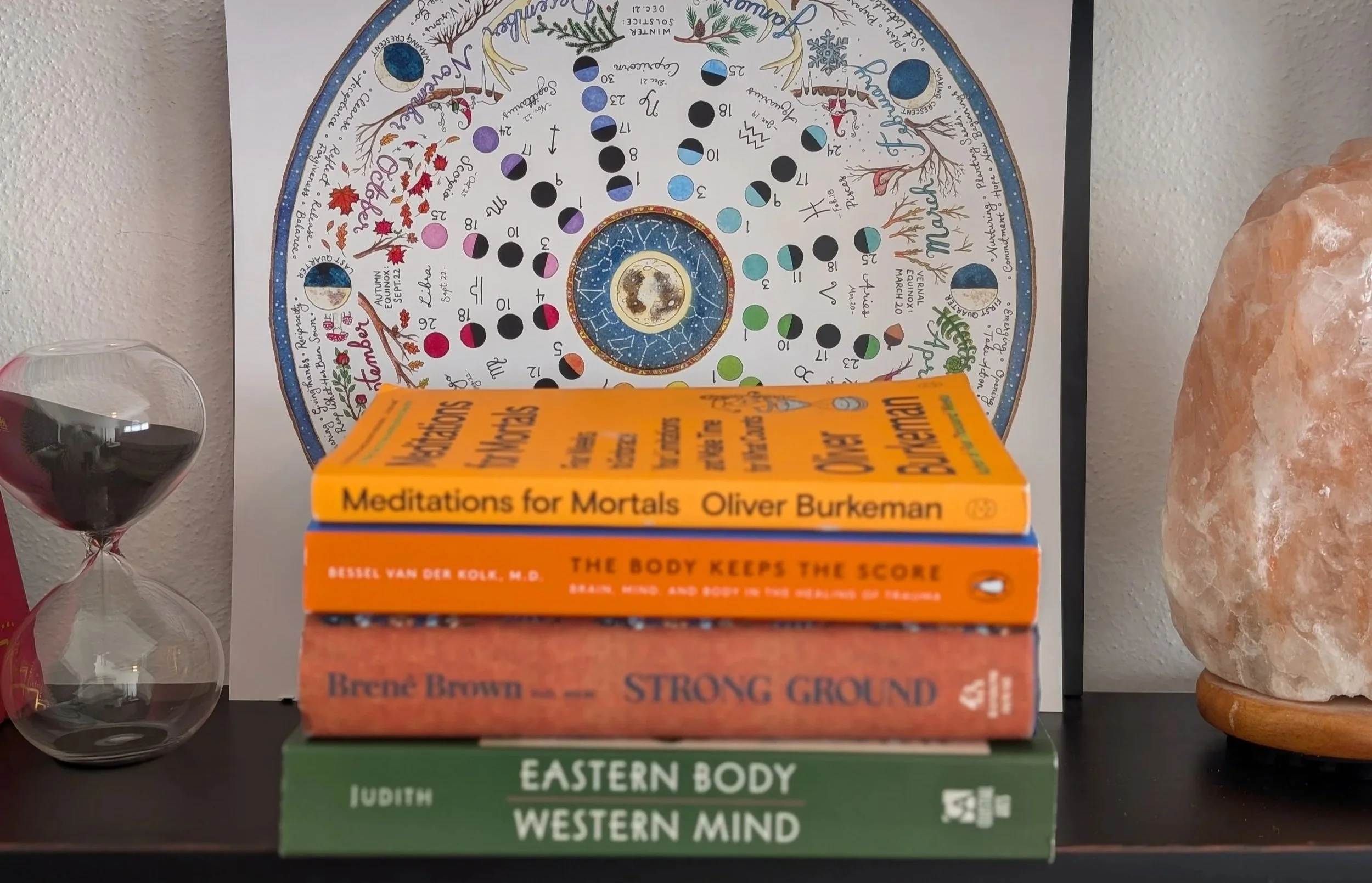
Recommended Reading & Listening
Want to go deeper? Here are some resources:
Books:
Meditations for Mortals: Four Weeks to Embrace Your Limitations and Make Time for What Counts by Oliver Burkeman
A guide to building sustainable daily practices through "imperfectionism." Burkeman teaches you to create routines that ground you without perfectionism, embracing discipline that feels sustainable rather than punishing.The Body Keeps the Score: Brain, Mind, and Body in the Healing of Trauma by Bessel van der Kolk
Groundbreaking work on how trauma is stored in the body and how grounding practices, yoga, and somatic work can heal. Essential reading for understanding the body as your foundation.Eastern Body, Western Mind: Psychology and the Chakra System as a Path to the Self by Anodea Judith
Comprehensive guide to the chakra system, including extensive work on Muladhara (root chakra). Judith connects Western psychology with Eastern wisdom, offering practices for grounding and healing.Strong Ground by Brené Brown
Practical, actionable insights that illuminate the mindsets and skill sets essential to reclaiming focus and driving growth through connection, discipline, and accountability.Atomic Habits: An Easy & Proven Way to Build Good Habits & Break Bad Ones by James Clear
Practical, research-backed strategies for building the daily practices that become your foundation. Clear shows how small, consistent actions compound into remarkable results.Rooted: Life at the Crossroads of Science, Nature, and Spirit by Lyanda Lynn Haupt
This book explores how to deepen our connection to the earth through "rootedness," blending science and mysticism to show how we are inextricably linked to the natural world.The Artist's Way by Julia Cameron
While focused on creativity, Cameron's morning pages practice is one of the best grounding rituals you can establish. Daily writing builds foundation.
Podcasts:
On Being - Episode 793: Bessel van der Kolk — How Trauma Lodges in the Body
The Rich Roll Podcast: James Clear on Why Habits are the Compound Interest of Self-Improvement
Unlocking Us with Brené Brown: Brené on Strong Backs, Soft Fronts, and Wild Hearts
Let music support your rooting practice. This playlist is curated to inspire grounding, stability, and the feeling of being held by the earth throughout April.
A Note from Annie
Dear Friends,
I'm writing this from my kitchen table on a Tuesday afternoon, and my house is completely silent.For many years, my life had a rhythm. Kids' schedules, carpools, dinner at 6. My husband worked, I worked. I knew who I was in that rhythm. My boys have now “grown and flown”, and this month, my husband retires. It’s a time of major transition in my life.
This month's theme is rooting. And I'm realizing that midlife is a time of re-rooting. The roots I grew in my 30s and 40s served me well. But they were grown for a different season. Now I need to grow new roots for this phase of life. What grounds me now that I'm not grounding everyone else first. I don't have all the answers. But I'm asking: What are my non-negotiables now? Not five years ago. Right now. Morning practice. Coffee with my husband without rushing. Afternoon walks. Saying no to things that don't serve this phase. Being grounded doesn't mean staying in the same place forever. It means being willing to pull up the old roots, honor how they served you, and plant new ones where you actually are. Midlife isn't a crisis. It's a re-rooting. And that takes patience and the willingness to stand in the uncertainty while new roots grow.
You might be in this season too. Or navigating a completely different transition. Wherever you are, know this: it's okay to be re-rooting. It's okay to not have it figured out. It's okay to be in the messy middle. The earth is patient. It will hold us while we grow.
With roots and resilience,
Annie